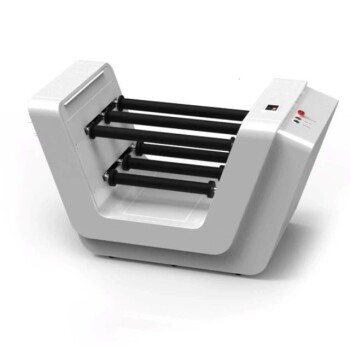
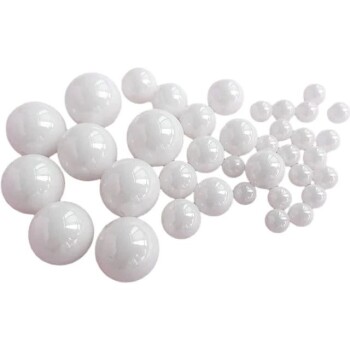
Minimizing chemical contamination is the primary driver for selecting stainless steel grinding balls and jars when processing ODS ferritic stainless steel. By choosing grinding media that matches the composition of the base material, you ensure that any inevitable wear debris generated during the high-energy milling process is chemically compatible with the alloy matrix. This allows the media to provide the necessary hardness and kinetic energy for mechanical alloying without introducing foreign impurities that would degrade the final powder's purity.
The selection of stainless steel media is a strategic alignment of the tool with the material. It ensures that inevitable media wear results in compatible alloying elements rather than harmful contaminants, preserving the integrity of the ferritic matrix.
The Principle of Compositional Compatibility
The "Like-for-Like" Strategy
Mechanical alloying is an inherently abrasive process. Even the most durable grinding media will experience wear over extended milling durations.
If you were to use a dissimilar material—such as ceramic or a different metal—microscopic shards of that media would contaminate your powder. By using stainless steel media to mill stainless steel powder, you effectively neutralize this risk.
Managing Trace Impurities
The primary reference indicates that trace impurities generated by the wear of the media are compatible with the ferritic stainless steel matrix.
Instead of introducing a defect, the worn material becomes a seamless part of the alloy solution. This is critical for ODS steels, where the purity of the matrix is essential for the correct dispersion of oxide nanoparticles.
Mechanical Energy and Efficiency
Sufficient Hardness and Wear Resistance
While compatibility is key, the media must still perform mechanically. Stainless steel media possess sufficient hardness to withstand the intense collisions inside the ball mill.
This hardness ensures that the media transfers kinetic energy effectively without fracturing or deforming significantly itself.
Facilitating the Alloying Mechanism
The process relies on a continuous cycle of fracturing and cold welding.
High-hardness stainless steel balls transfer the kinetic energy required to crush powder particles and weld them back together. This repetitive impact is what embeds the oxide additives into the metal matrix and refines the grain structure to the micron level.
Understanding the Trade-offs
Hardness vs. Contamination Risk
It is important to acknowledge that stainless steel is not the hardest grinding material available. Materials like Tungsten Carbide (WC) offer superior hardness and lower wear rates.
However, using WC introduces the risk of tungsten or carbon contamination. In the specific context of ODS ferritic stainless steel, the trade-off favors compositional purity over absolute hardness. You accept slightly higher media wear rates to guarantee that the chemical composition of your final alloy remains uncompromised.
The Necessity of Hardened Steel
Not all stainless steel is suitable. The media selected is typically hardened to maximize energy transfer.
If the steel media were too soft, it would absorb the impact energy (plastic deformation) rather than transferring it to the powder. This would halt the fracturing and cold welding process necessary for creating a homogeneous alloy.
Making the Right Choice for Your Goal
When setting up your mechanical alloying parameters for ODS steel, consider these factors:
- If your primary focus is Chemical Purity: Prioritize stainless steel jars and balls that closely match your target alloy's grade to ensure any wear debris integrates seamlessly into the matrix.
- If your primary focus is Process Efficiency: Ensure the stainless steel media is sufficiently hardened and utilize a high ball-to-powder weight ratio (e.g., 15:1) to maximize kinetic energy transfer.
By aligning your grinding media with your base material, you turn a potential source of contamination into a variable you can control, ensuring a high-quality foundation for your final sintered product.
Summary Table:
| Feature | Requirement | Benefit in ODS Steel Processing |
|---|---|---|
| Material Compatibility | Like-for-Like (Stainless Steel) | Eliminates foreign chemical contamination from media wear. |
| Energy Transfer | Hardened Steel Media | Efficiently facilitates powder fracturing and cold welding. |
| Wear Management | Integrated Wear Debris | Worn particles become a seamless part of the alloy matrix. |
| Performance Balance | Hardness vs. Purity | Prioritizes chemical integrity over extreme hardness (e.g., WC). |
| Process Goal | Homogeneous Dispersion | Ensures stable embedding of oxide nanoparticles in the matrix. |
Elevate Your Materials Research with KINTEK
Precision in mechanical alloying starts with the right equipment. KINTEK specializes in high-performance laboratory solutions tailored for advanced metallurgy and ODS steel development. From hardened stainless steel jars and balls to our robust crushing and milling systems, we provide the tools necessary to ensure zero-contamination and maximum kinetic efficiency.
Beyond milling, explore our comprehensive range of high-temperature furnaces (muffle, vacuum, CVD), hydraulic presses, and high-pressure reactors designed to take your research from powder to finished alloy.
Ready to optimize your alloying process? Contact KINTEK today for expert guidance and premium laboratory consumables!
References
- Dharmalingam Ganesan, Konda Gokuldoss Prashanth. Vacuum Hot Pressing of Oxide Dispersion Strengthened Ferritic Stainless Steels: Effect of Al Addition on the Microstructure and Properties. DOI: 10.3390/jmmp4030093
This article is also based on technical information from Kintek Solution Knowledge Base .
Related Products
- Laboratory Ball Mill Jar Mill with Metal Alloy Grinding Jar and Balls
- Laboratory Jar Mill with Agate Grinding Jar and Balls
- Laboratory Jar Ball Mill with Alumina Zirconia Grinding Jar and Balls
- Laboratory Single Horizontal Jar Mill
- Laboratory Four-Body Horizontal Jar Mill
People Also Ask
- What is the function of a laboratory ball mill in the preparation of AMMCs? Optimize Dispersion & Grain Refinement
- What is the primary function of a laboratory ball mill in the modification of sulfide-based solid electrolytes with LiPO2F2?
- What is the function of a laboratory ball mill in the pretreatment of waste tire char (WTC)? Optimize Material Reactivity
- What is the primary function of a laboratory ball mill in Rice Husk Ash (RHA) modification? Achieve Peak Densification
- How do laboratory ball mills facilitate the mechanochemical synthesis of ZIF-8? Solvent-Free Synthesis Explained