Type B thermocouples and alumina insulation sleeves are the standard for high-pressure experiments because they provide unmatched chemical stability and electrical isolation at temperatures exceeding 1000°C. This specific combination ensures that the sensor remains accurate and physically intact while shielded from the aggressive chemical environments common in high-pressure apparatuses.
The use of Type B thermocouples with alumina sleeves is a strategic choice to ensure signal integrity; the thermocouple provides stable readings in extreme heat, while the alumina acts as a critical chemical and electrical barrier against the surrounding pressure media and heating elements.
The Role of Type B Thermocouples in Extreme Conditions
Superior Thermal Stability above 1000°C
Type B thermocouples, composed of Platinum-Rhodium 30% and Platinum-Rhodium 6%, are specifically designed for high-temperature applications. They offer excellent thermoelectric stability, meaning their voltage output remains consistent over long periods, even when temperatures fluctuate wildly.
High Resistance to Oxidation
In high-pressure laboratory settings, materials are often subjected to reactive environments that can cause standard sensors to degrade. Type B thermocouples possess exceptional oxidation resistance, allowing them to function reliably in environments where other base-metal thermocouples would quickly fail.
The Critical Function of Alumina Insulation
Electrical Isolation and Mechanical Support
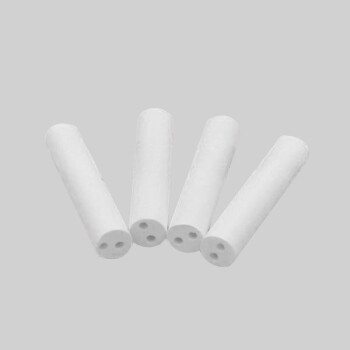
High-pressure cells are dense, crowded environments where thermocouple wires are often in close proximity to conductive materials. Alumina (Al2O3) sleeves provide the necessary dielectric strength to prevent electrical short-circuits between the wires or the outer containment.
Chemical Isolation from Graphite and Pressure Media
Many high-pressure experiments utilize graphite heaters, which can chemically react with platinum-group metals at high temperatures. Alumina acts as a robust physical barrier, preventing the thermocouple from "poisoning" or becoming brittle due to carbon migration or reactions with the surrounding pressure-transmitting media.
Understanding the Trade-offs
Brittleness and Mechanical Stress
While alumina is an excellent insulator, it is inherently brittle. In high-pressure experiments where the pressure is not perfectly hydrostatic, alumina sleeves can crack or shatter, potentially leading to a loss of insulation or mechanical failure of the thermocouple wires.
Sensitivity at Lower Temperatures
Type B thermocouples are optimized for heat; however, they have very low sensitivity below 50°C. This means they are unsuitable for monitoring experiments that require high precision at room temperature, making them a specialized tool for high-heat research only.
Optimizing Your High-Pressure Sensor Assembly
Selecting the right materials for a high-pressure cell depends on your specific temperature range and the chemistry of your sample.
- If your primary focus is long-term stability above 1000°C: Use Type B thermocouples with high-purity alumina to ensure the sensor does not drift during extended heating cycles.
- If your primary focus is preventing contamination from graphite heaters: Ensure the alumina sleeve is thick enough to provide a complete physical barrier between the wires and the carbon source.
- If your primary focus is experiments under 600°C: Consider a different thermocouple type (such as Type K or N) as Type B is insufficiently sensitive at these lower ranges.
By carefully pairing Type B sensors with alumina shielding, researchers can achieve the precise thermal control necessary for successful high-pressure material synthesis and geological modeling.
Summary Table:
| Component | Key Property | Benefit in High-Pressure Environments |
|---|---|---|
| Type B Thermocouple | Platinum-Rhodium Alloy | Exceptional stability and oxidation resistance above 1000°C. |
| Alumina Sleeve | High Dielectric Strength | Provides electrical isolation and prevents chemical poisoning. |
| Combined System | Chemical Inertness | Protects sensors from graphite heaters and reactive pressure media. |
| Temperature Range | Optimized for >600°C | Ensures precision during high-heat material synthesis. |
Elevate Your High-Pressure Research Precision with KINTEK
Success in extreme laboratory environments demands equipment that never compromises on integrity. KINTEK specializes in providing high-performance laboratory solutions tailored for the most demanding applications. Whether you are conducting geological modeling or advanced material synthesis, our expertise ensures your thermal management is flawless.
Our comprehensive portfolio includes:
- High-Pressure & High-Temperature Systems: Advanced high-pressure high-pressure reactors, autoclaves, and a diverse range of furnaces (muffle, vacuum, CVD, and PECVD).
- Precision Sample Preparation: Hydraulic presses (pellet, hot, isostatic), crushing and milling systems, and sieving equipment.
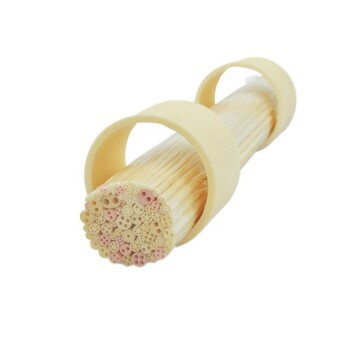
- Essential Consumables: High-purity alumina sleeves, ceramics, crucibles, and PTFE products designed to withstand aggressive chemical environments.
- Specialized Lab Tools: Electrolytic cells, battery research tools, and cooling solutions like ULT freezers and freeze dryers.
Don't let sensor drift or material failure compromise your data. Partner with KINTEK for reliable, high-quality laboratory equipment and consumables that deliver results under pressure.
Contact our technical experts today to optimize your laboratory setup!
References
- Nicholas Farmer, Hugh O’Neill. The miscibility gap between the rock salt and wurtzite phases in the MgO–ZnO binary system to 3.5 GPa. DOI: 10.5194/ejm-35-1051-2023
This article is also based on technical information from Kintek Solution Knowledge Base .
Related Products
- Hexagonal Boron Nitride HBN Thermocouple Protection Tube
- High Temperature Aluminum Oxide (Al2O3) Protective Tube for Engineering Advanced Fine Ceramics
People Also Ask
- Why are Boron Nitride Tubes selected as reaction vessels for Na3SbS4? Ensure Purity in High-Temp Synthesis
- What are the symptoms of a bad thermocouple? Diagnose a Pilot Light That Won't Stay Lit
- What information does a thermocouple at the substrate bottom provide in LCVD? Master Precise Temperature Control
- What are the specific temperature control requirements for high-precision thermocouples? Achieve ±0.3°C Precision
- What is the most common type of temperature sensor? The Unmatched Versatility of Thermocouples