The utilization of freeze drying is essential for preserving the three-dimensional porous structure of NiCo@SCF electrodes. By removing moisture through sublimation rather than evaporation, this process bypasses the liquid phase entirely, preventing the destructive capillary forces that cause structural collapse and material agglomeration during traditional heat drying.
The primary advantage of freeze drying in electrode fabrication is the preservation of architectural integrity. By avoiding liquid surface tension, it ensures the final material retains the high porosity and active surface area necessary for efficient ion transport and electrochemical performance.
The Mechanics of Structural Preservation
The Role of Sublimation
Freeze drying, or lyophilization, operates by transitioning moisture directly from a solid (ice) to a gas under vacuum conditions.
This process avoids the liquid phase, which is the stage where the most significant physical damage to delicate nanostructures typically occurs.
Because the water does not transition through a liquid state, the solid framework of the NiCo-decorated melamine foam remains physically supported by ice until it is removed.
Eliminating Capillary Forces
Traditional heat drying relies on evaporation, which creates a receding liquid meniscus within the material’s pores.
This meniscus generates intense capillary forces and surface tension that act on the pore walls, often leading to "capillary collapse" or severe shrinking.
Freeze drying eliminates these forces, allowing the SCF (Super-aligned Carbon Framework) to maintain its original, expanded volume and intricate pore network.
Impact on Electrode Performance
Maintaining the 3D Porous Network
For NiCo@SCF electrodes, the three-dimensional porous structure is critical for ensuring deep penetration of the electrolyte.
Preserving this open architecture provides abundant channels for ion migration, which is vital for high-rate capability and low internal resistance.
If these channels were to collapse during heat drying, the accessible surface area would drop significantly, stifling the electrode's electrochemical activity.
Preventing Material Agglomeration
Heat drying often causes metal ions or nanoparticles to cluster together as the solvent disappears, a phenomenon known as hard agglomeration.
Freeze drying preserves the original dispersion state of the NiCo particles as they existed in the precursor solution.
This results in a loose, high-surface-area powder or framework that maximizes the exposure of active sites for redox reactions.
Understanding the Trade-offs
Process Complexity and Cost
While technically superior for structure preservation, freeze drying is significantly more time-consuming and energy-intensive than simple thermal drying.
The requirement for high-vacuum pumps and specialized refrigeration units increases the capital expenditure and operational costs for laboratory or industrial setups.
Scale and Throughput
Heat drying is easily scalable for continuous production, whereas freeze drying is often a batch process that can take several days to complete.
For applications where structural precision is secondary to volume—such as bulk carbon black production—the benefits of freeze drying may not always justify the added overhead.
Making the Right Choice for Your Goal
How to Apply This to Your Project
Choosing between drying methods depends on your specific performance requirements and resource constraints.
- If your primary focus is Maximum Electrochemical Activity: Utilize freeze drying to ensure the highest possible surface area and unhindered ion access to active NiCo sites.
- If your primary focus is Structural Integrity of Nanomaterials: Use a vacuum freeze dryer to prevent the collapse of delicate 3D networks like melamine foam or graphene-based composites.
- If your primary focus is High-Volume, Low-Cost Production: Consider traditional heat drying or spray drying, provided that the resulting loss in porosity does not compromise the device's core functionality.
By prioritizing the preservation of the 3D porous architecture through freeze drying, you ensure that the NiCo@SCF electrode achieves its full potential for ion transport and catalytic efficiency.
Summary Table:
| Feature | Freeze Drying (Lyophilization) | Traditional Heat Drying |
|---|---|---|
| Phase Change | Sublimation (Solid to Gas) | Evaporation (Liquid to Gas) |
| Physical Forces | Eliminates capillary forces | High surface tension/capillary collapse |
| Structure | Preserves 3D porous network | Causes shrinkage and structural collapse |
| Particle State | Prevents agglomeration | Leads to hard material clustering |
| Performance | High surface area & ion transport | Reduced activity & blocked channels |
Elevate Your Electrode Research with KINTEK Precision
Achieving the perfect 3D porous architecture for NiCo@SCF electrodes requires reliable, high-performance equipment. KINTEK specializes in high-quality laboratory solutions, providing the tools you need for advanced material synthesis and characterization.
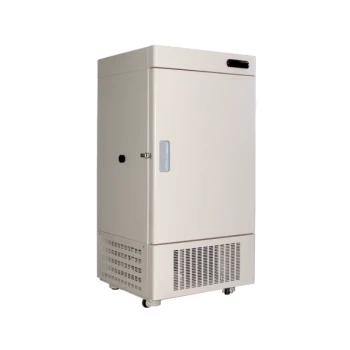
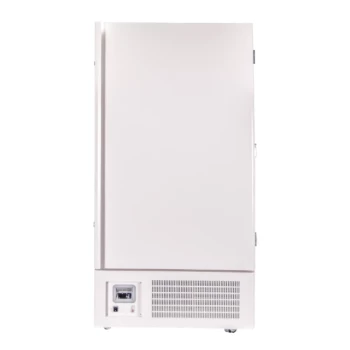
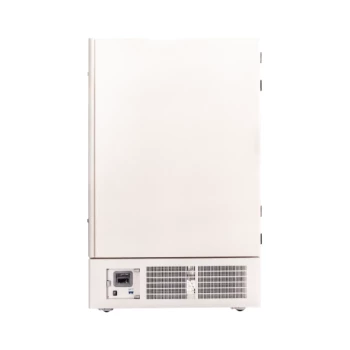
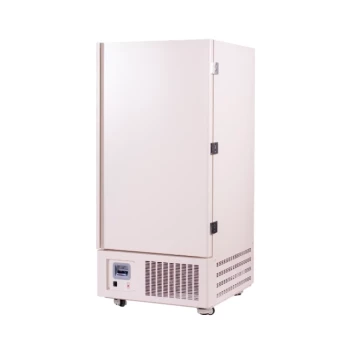
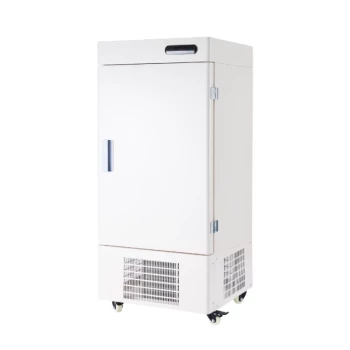
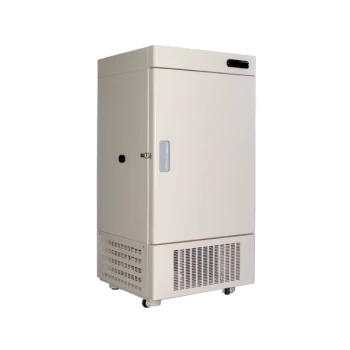
Our portfolio features advanced freeze dryers and cooling solutions (ULT freezers, freeze dryers) designed to prevent structural collapse, alongside a comprehensive range of high-temperature furnaces (muffle, vacuum, CVD, PECVD), hydraulic presses for pelletizing, and essential consumables like ceramics and crucibles. Whether you are working on battery research or catalytic frameworks, KINTEK ensures your materials maintain their integrity and electrochemical potential.
Ready to optimize your material preparation? Contact KINTEK Experts Today to find the ideal equipment for your specific application and enhance your lab's research efficiency.
References
- Mengyang Dong, Huijun Zhao. NiCo alloy‐anchored self‐supporting carbon foam as a bifunctional oxygen electrode for rechargeable and flexible Zn–air batteries. DOI: 10.1002/bte2.20220063
This article is also based on technical information from Kintek Solution Knowledge Base .
Related Products
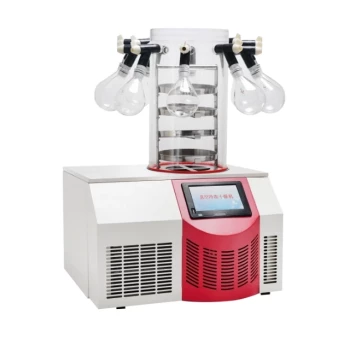
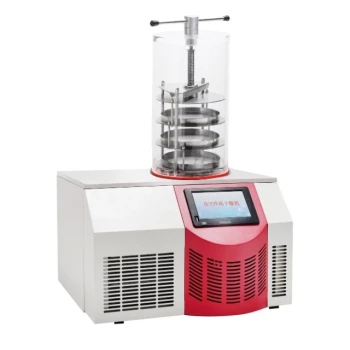
- High Performance Laboratory Freeze Dryer
- Benchtop Laboratory Vacuum Freeze Dryer
- High Performance Laboratory Freeze Dryer for Research and Development
- Benchtop Laboratory Freeze Dryer for Lab Use
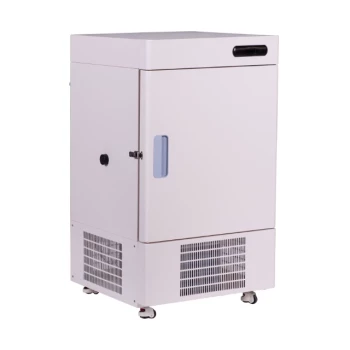
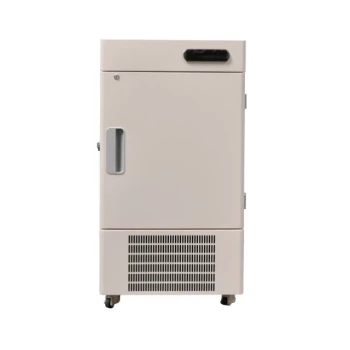
- 108L Vertical Ultra Low Temperature ULT Freezer
People Also Ask
- What role does a laboratory freeze dryer play in the synthesis of graphene-based electrocatalysts? Preserve 3D Structures
- What are the technical advantages of using a laboratory freeze dryer for porous carbon precursors? Preserve 3D Networks
- What types of liquid samples can be processed using a laboratory freeze dryer? Preserve Your Sensitive Materials
- How do laboratory freeze dryers support scientific research? Preserve Sample Integrity for Reproducible Results
- Why is a laboratory freeze dryer preferred over traditional heating? Preserve Biochar Structure & Maximize Porosity