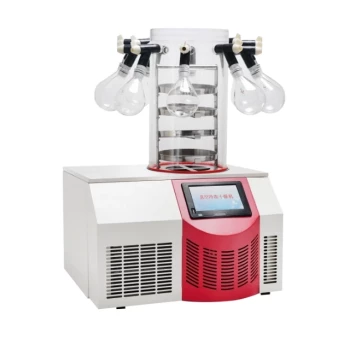
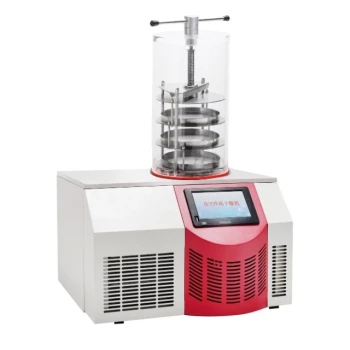
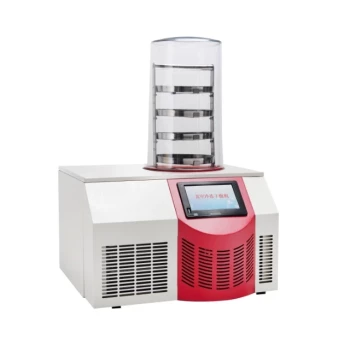
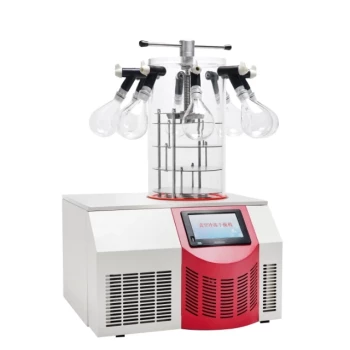
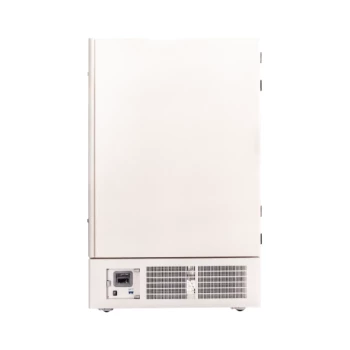
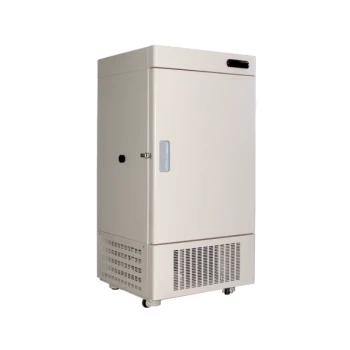
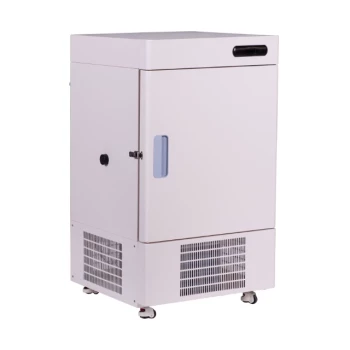
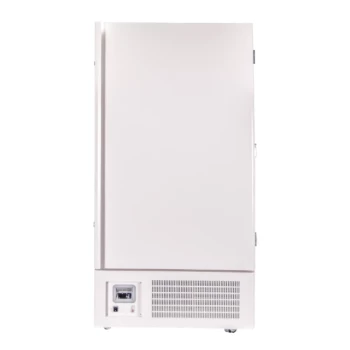
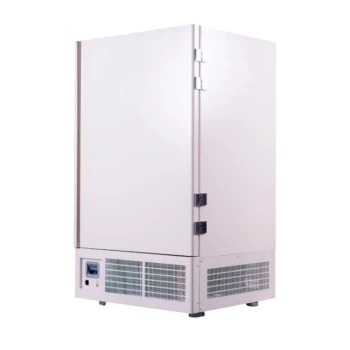
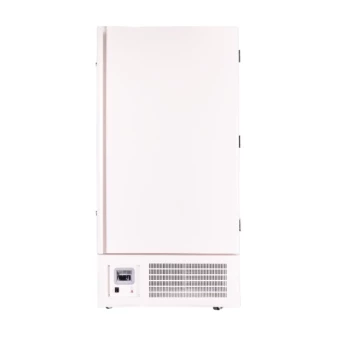
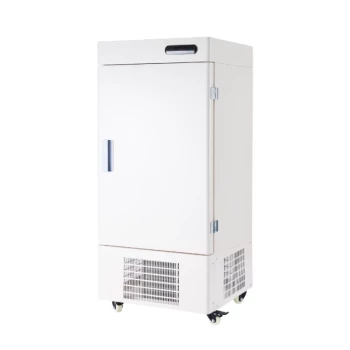
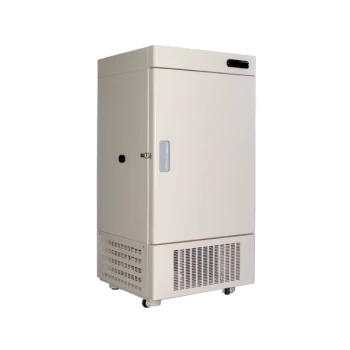
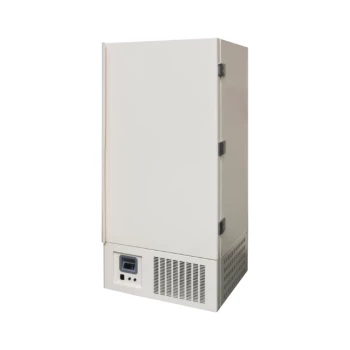
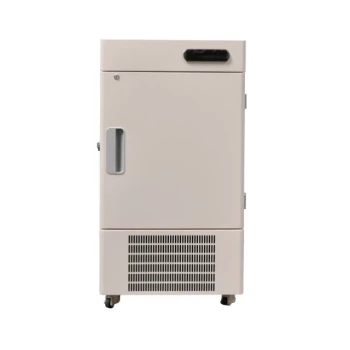
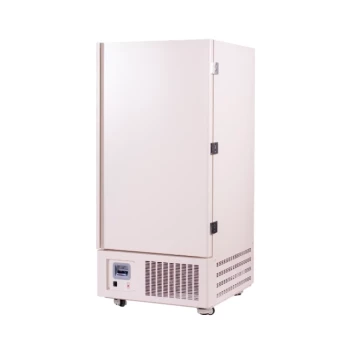
The laboratory freeze dryer is the only tool capable of removing solvents while preserving the delicate internal architecture of a lignin-based cryogel. By utilizing the process of sublimation, it transitions solvents directly from a solid to a gaseous state under ultra-low temperatures and high vacuum, effectively bypassing the liquid phase.
Core Takeaway: To produce a successful lignin cryogel, you must avoid the destructive capillary forces inherent in liquid evaporation. A freeze dryer preserves the material’s high porosity and 3D interconnected framework by removing ice templates without collapsing the micron-scale pore channels.
The Mechanism of Structural Preservation
Bypassing Liquid-Phase Surface Tension
Traditional thermal drying involves the evaporation of liquid solvents, which creates significant surface tension and capillary forces. In a lignin gel, these forces act like a vacuum, pulling the delicate pore walls inward and causing the entire structure to shrink or collapse.
A freeze dryer operates at ultra-low temperatures (often -60 °C to -80 °C) and high vacuum levels (such as 0.2 mbar or 10 Pa). This environment allows ice crystals to sublimate—turning straight into vapor—which exerts no physical pull on the surrounding lignin framework.
Maintaining the 3D Interconnected Framework
The "cryo" in cryogel refers to the ice crystals that form during the initial freezing of the lignin suspension. These crystals act as sacrificial templates that define the shape and size of the eventual pores.
By using a freeze dryer, you remove these templates gently. This ensures the final material retains its oriented honeycomb microstructure and the precise architecture etched by the ice, resulting in a stable, 3D interconnected fiber network.
Impact on Material Performance
Achieving High Porosity and Low Density
Lignin cryogels are valued for their high specific surface area and extremely low density. If the pore structure collapses during drying, these technical advantages are lost, and the material becomes a dense, non-functional solid.
The freeze-drying process, or lyophilization, prevents volumetric shrinkage. This allows researchers to create ultra-lightweight materials that are ideal for applications in insulation, carbon fiber precursors, or catalyst supports.
Protecting Active Ingredients and Stability
In many laboratory settings, lignin is hybridized with other sensitive components, such as MOF nanoparticles or biological molecules. The low-temperature environment of the freeze dryer protects these active ingredients from thermal degradation.
Furthermore, removing the moisture completely through sublimation enhances the long-term stability of the sample. This makes the resulting cryogel easier to store, transport, and analyze without the risk of structural decay over time.
Understanding the Trade-offs and Pitfalls
Time and Energy Requirements
Freeze drying is a time-intensive process compared to oven drying, often requiring 24 to 72 hours to ensure complete sublimation. The equipment also consumes significant energy to maintain ultra-low temperatures and a consistent vacuum.
The Risk of Incomplete Sublimation
If the vacuum is broken or the process is stopped before the "drying front" has passed through the entire sample, residual ice will melt into liquid water. This leads to localized structural collapse, ruining the uniformity of the cryogel's porosity.
Influence of Freezing Rates
The freeze dryer handles the removal of the solvent, but the initial freezing rate determines the size of the pores. If the sample is frozen too slowly, large ice crystals can form and rupture the lignin walls before the drying process even begins.
Applying Freeze Drying to Your Research Goals
Making the Right Choice for Your Goal
- If your primary focus is high specific surface area: Ensure the vacuum level remains below the triple point of your solvent to prevent any liquid phase formation during the cycle.
- If your primary focus is oriented microstructures: Use the freeze dryer in conjunction with directional freezing techniques to preserve the honeycomb channels etched by ice templates.
- If your primary focus is long-term storage and stability: Use extended secondary drying phases in the freeze dryer to remove bound water, ensuring the lignin framework remains chemically inert.
By mastering the sublimation process, you transform a fragile liquid suspension into a robust, high-performance 3D solid.
Summary Table:
| Feature | Freeze Drying (Lyophilization) | Traditional Thermal Drying |
|---|---|---|
| Phase Change | Solid to Gas (Sublimation) | Liquid to Gas (Evaporation) |
| Physical Force | Zero capillary pressure | High surface tension/capillary forces |
| Structural Impact | Preserves 3D interconnected framework | Causes pore collapse and shrinkage |
| Final Density | Ultra-low density, high porosity | High density, non-functional solid |
| Best For | Delicate cryogels, sensitive additives | Robust, non-porous materials |
Elevate Your Material Research with KINTEK Precision
Achieving the perfect 3D architecture in lignin-based cryogels requires more than just a process—it requires precision equipment. KINTEK specializes in high-performance laboratory solutions designed to protect your most delicate samples.
Beyond our advanced freeze dryers, cold traps, and ULT freezers essential for cryogel preservation, we offer a comprehensive portfolio including:
- High-Temperature Furnaces: Muffle, tube, and vacuum furnaces for carbonization and heat treatment.
- Material Processing: Hydraulic pellet presses, crushing systems, and high-pressure reactors.
- Lab Essentials: Specialized ceramics, crucibles, and electrochemical tools.
Whether you are a researcher developing next-generation catalysts or a laboratory manager optimizing production workflows, KINTEK provides the reliability and technical support you need to succeed.
Ready to optimize your drying process? Contact our technical experts today for a tailored solution!
References
- Rui Lou, Xiao Zhang. Metal–Organic-Framework-Mediated Fast Self-Assembly 3D Interconnected Lignin-Based Cryogels in Deep Eutectic Solvent for Supercapacitor Applications. DOI: 10.3390/polym15081824
This article is also based on technical information from Kintek Solution Knowledge Base .
Related Products
- High Performance Laboratory Freeze Dryer
- High Performance Laboratory Freeze Dryer for Research and Development
- Benchtop Laboratory Vacuum Freeze Dryer
- Benchtop Laboratory Freeze Dryer for Lab Use
- 938L Vertical Ultra Low Temperature Freezer for Advanced Laboratory Storage
People Also Ask
- What role does a laboratory freeze dryer play in the synthesis of graphene-based electrocatalysts? Preserve 3D Structures
- What are the technical advantages of using a laboratory freeze dryer for porous carbon precursors? Preserve 3D Networks
- What types of liquid samples can be processed using a laboratory freeze dryer? Preserve Your Sensitive Materials
- How do laboratory freeze dryers support scientific research? Preserve Sample Integrity for Reproducible Results
- Why is a laboratory freeze dryer preferred over traditional heating? Preserve Biochar Structure & Maximize Porosity