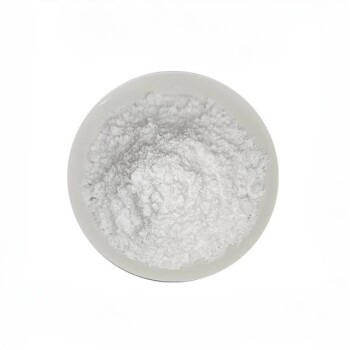
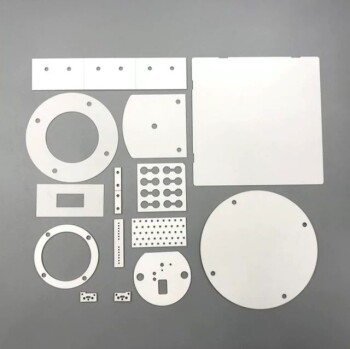
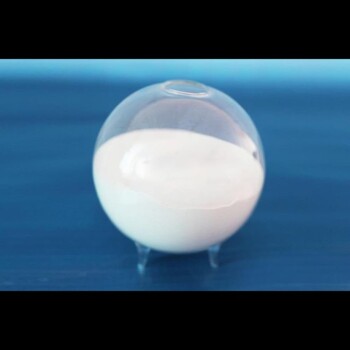
The use of coarse zirconia powder is a critical safeguard against chemical cross-contamination. At extreme temperatures such as 1450 °C, direct contact between alumina (Al₂O₃) and Strontium Titanate (SrTiO₃) triggers a solid-state reaction that alters the chemical composition of the sample. By acting as a chemical isolation membrane, the zirconia layer ensures that the sample remains pure and chemically distinct from its supporting structural materials.
Core Takeaway: Coarse zirconia powder serves as an inert buffer that prevents destructive chemical reactions and physical adhesion between samples and kiln furniture, ensuring the accuracy of experimental data at high temperatures.
Preventing Solid-State Chemical Reactions
The Risk of Direct Alumina Contact
When Strontium Titanate is placed directly on alumina plates at high temperatures, the materials can bond and react at their interface.
These solid-state reactions change the local stoichiometry of your sample, effectively turning a controlled experiment into an unpredictable multi-material interaction.
Zirconia as a Chemical Barrier
Zirconia (ZrO₂) possesses exceptional high-temperature chemical stability compared to many other refractories.
It does not readily react with either alumina or Strontium Titanate at 1450 °C, making it an ideal "neutral zone" for isolation.
Preserving Sample Purity
Maintaining the integrity of the sample's chemical makeup is the primary goal of any high-temperature thermal cycle.
By using zirconia, researchers ensure that the electrical or mechanical properties they measure later are inherent to the Strontium Titanate, not a result of alumina contamination.
Maintaining Physical Integrity and Specimen Recovery
Avoiding High-Temperature Adhesion
At temperatures exceeding 1400 °C, materials can become "sticky" due to the formation of trace liquid phases or intense surface diffusion.
Without an isolation layer, the sample may fuse to the alumina plate, making it impossible to remove without fracturing the specimen.
Protecting the Oxide Scale
In many experiments, the development of a surface oxide scale is the primary object of study.
Coarse powder prevents the sample from "welding" to the crucible or plate, allowing you to recover the sample with its delicate surface layers intact for kinetic analysis.
The Role of Particle Morphology
Using a "coarse" powder rather than a fine one reduces the surface area available for any potential slow-motion reaction.
The coarse grains provide a minimal contact area, essentially "propping up" the sample while allowing gas flow around the contact points.
Understanding the Trade-offs and Pitfalls
The Risk of Powder Embedding
While the powder prevents chemical bonding, coarse grains can occasionally become physically embedded in the sample if it undergoes significant softening or sintering.
This can create surface irregularities or "pits" that may interfere with precise surface measurements or aesthetic requirements.
Thermal Gradient Interference
A thick layer of zirconia powder acts as an insulator, which can create a slight temperature difference between the heating plate and the sample.
Researchers must ensure their soak times are long enough to allow the sample to reach thermal equilibrium despite this extra layer.
Applying This Technique to Your High-Temperature Setup
Making the Right Choice for Your Goal
Success in high-temperature experiments requires matching the isolation material to the specific chemistry of your sample and the limits of your equipment.
- If your primary focus is preventing chemical contamination at 1450 °C+: Use high-purity coarse zirconia powder to ensure the sample remains chemically isolated from alumina supports.
- If your primary focus is recovering intact specimens after oxidation: Ensure the powder layer is thick enough to prevent liquid oxidation products from reaching and bonding with the crucible floor.
- If your primary focus is avoiding surface indentation: Consider using a stabilized zirconia felt or a thinner layer of slightly finer powder, provided it remains chemically inert.
Selecting the correct isolation membrane is not just a secondary detail; it is the fundamental bridge between a failed reaction and a successful, repeatable experiment.
Summary Table:
| Feature | Function in High-Temp Experiments | Key Benefit |
|---|---|---|
| Chemical Barrier | Prevents solid-state reactions between Al₂O₃ and SrTiO₃ | Maintains sample stoichiometry and purity |
| Physical Isolation | Stops samples from "welding" or adhering to kiln furniture | Enables damage-free specimen recovery |
| Coarse Morphology | Minimizes contact area while allowing gas circulation | Reduces risk of chemical bonding at 1450°C+ |
| Thermal Stability | Remains inert at extreme processing temperatures | Ensures experimental accuracy and repeatability |
Secure the Integrity of Your High-Temperature Research
Precision in thermal processing requires more than just heat; it requires the right materials to prevent contamination and ensure data accuracy. KINTEK specializes in high-performance laboratory equipment and consumables designed for the most demanding applications.
Whether you need advanced high-temperature furnaces (muffle, vacuum, or CVD), high-purity ceramics and crucibles, or specialized consumables like zirconia and PTFE products, we provide the reliable solutions your lab depends on.
Ready to optimize your experimental setup? Contact our technical experts today to discover how KINTEK can enhance your material processing and protect your valuable samples.
References
- Jan‐Helmut Preusker, Wolfgang Rheinheimer. Impact of AC and DC Electric Fields on the Microstructure Evolution in Strontium Titanate. DOI: 10.1002/adem.202201848
This article is also based on technical information from Kintek Solution Knowledge Base .
Related Products
- Advanced Engineering Fine Ceramics Low Temperature Alumina Granulation Powder
- Custom-Made Alumina Zirconia Special-Shaped Ceramic Plates for Engineering Advanced Fine Ceramics Processing
- High Purity Alumina Granulated Powder for Engineering Advanced Fine Ceramics
People Also Ask
- How should alumina powder be selected for polishing a disc electrode, and what is the procedure for removing scratches? Achieve a Perfect Mirror Finish
- What are the properties and handling precautions for alumina powder as a polishing material? Achieve a Flawless Finish with Precision
- Why is it necessary to apply alumina powder to graphite molds for TiC10/Cu-Al2O3? Ensure Smooth Release.
- What measures should be taken to prevent cross-contamination when using different sizes of alumina powder?
- What is the most common industrial ceramic? Discover Why Alumina Dominates Countless Applications