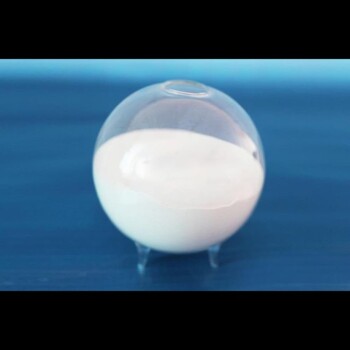
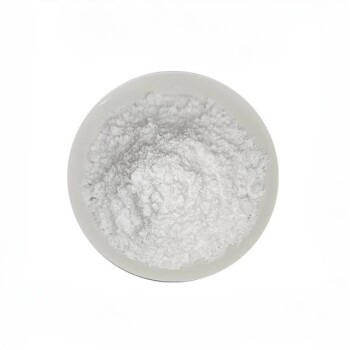
The primary function of applying alumina powder to the internal surfaces of graphite molds is to act as a high-temperature release agent.
When sintering TiC10/Cu-Al2O3 composites at temperatures around 950°C, the metal powder matrix becomes highly reactive and prone to bonding with the carbon-rich graphite. The alumina powder serves as an inert isolation barrier, preventing this adhesion and ensuring the final specimen can be removed without damaging the mold or the composite's surface.
Core Takeaway The application of alumina powder creates a physical barrier between the reactive metal matrix and the graphite mold. This isolation is critical for preventing chemical reactions and mechanical bonding at high temperatures, thereby ensuring smooth demolding and preserving the surface integrity of the sintered composite.
The Physics of the Mold-Composite Interface
Preventing High-Temperature Adhesion
During the sintering process, temperatures often reach 950°C. At these elevated levels, metal powders (specifically the copper-based matrix in this composite) soften and become chemically active.
Without a barrier, these metals tend to react with or adhere mechanically to the graphite surface. The alumina coating effectively blocks this interaction, acting as a non-stick interface.
Preserving Surface Integrity
If the composite material bonds to the mold wall, the demolding process becomes destructive. Forcing the sample out would likely tear the surface of the composite or crack the mold.
By preventing this bond, the alumina layer ensures the sample retains its intended dimensional precision and surface quality upon removal.
Why Graphite Molds Require Isolation
Excellent Conductors, Poor Release Agents
Graphite molds are selected for their high-temperature mechanical strength and excellent thermal conductivity. They ensure heat transfers rapidly and uniformly to the powder, which is essential for densification.
However, because graphite functions as a pressure-transmission medium under axial loads, the composite is pressed firmly against the mold walls. This pressure increases the likelihood of sticking, making the alumina isolation layer a mandatory component of the process.
Facilitating Vacuum Hot Pressing
In vacuum hot press sintering, the mold must withstand significant mechanical pressure. The graphite provides the structural containment necessary to shape the powder.
The alumina powder complements this by handling the surface chemistry. It allows the graphite to perform its structural and thermal roles without becoming permanently fused to the workpiece.
Understanding the Trade-offs
Application Consistency
The effectiveness of the release agent depends on uniform application. If the alumina layer is too thin or patchy, localized bonding can occur, leading to surface defects.
Impact on Dimensions
While the alumina prevents sticking, it introduces a physical layer between the mold and the part. If the powder is applied too thickly or unevenly, it can slightly alter the final geometric dimensions of the sintered component.
Making the Right Choice for Your Goal
To optimize your sintering process, consider the following application strategies:
- If your primary focus is Surface Finish: Ensure the alumina powder is applied as a fine, uniform mist or wash to prevent texture transfer to the composite.
- If your primary focus is Mold Longevity: Apply a slightly more robust layer of alumina to guarantee zero contact between the metal and graphite, minimizing wear on the mold walls.
Correctly applying the alumina barrier turns a potential demolding failure into a routine, repeatable manufacturing step.
Summary Table:
| Feature | Purpose of Alumina Coating |
|---|---|
| Primary Function | High-temperature release agent and isolation barrier |
| Sintering Temp | Effective up to 950°C and above |
| Protection Target | Prevents bonding between copper-based matrix and graphite |
| Surface Quality | Preserves dimensional precision and prevents surface tearing |
| Mold Longevity | Reduces mechanical wear and chemical erosion of graphite |
Elevate Your Advanced Material Sintering with KINTEK
Precision sintering requires more than just high temperatures—it demands the right environment and protection. At KINTEK, we specialize in providing laboratory excellence through our comprehensive range of high-temperature furnaces (vacuum, hot press, and atmosphere) and precision graphite molds.
Whether you are developing TiC composites or advanced ceramics, our expertise in vacuum hot pressing and high-pressure reactors ensures your materials achieve maximum density with zero surface defects. From high-purity alumina consumables to specialized crushing and milling systems, KINTEK provides the tools needed for repeatable, high-performance results.
Ready to optimize your sintering process? Contact our technical experts today to find the perfect equipment and consumable solutions for your research and production needs.
Related Products
- High Purity Alumina Granulated Powder for Engineering Advanced Fine Ceramics
- Advanced Engineering Fine Ceramics Low Temperature Alumina Granulation Powder
- Advanced Engineering Fine Ceramics Alumina Ceramic Saggar for Fine Corundum
- High Temperature Wear-Resistant Alumina Al2O3 Plate for Engineering Advanced Fine Ceramics
- High Quality Alumina Ceramic Screw for Engineering Advanced Fine Ceramics with High Temperature Resistance and Insulation
People Also Ask
- What is the function of high-purity alumina powder in pack cementation? Ensure Uniform Aerospace Blade Coatings
- How should alumina powder be selected for polishing a disc electrode, and what is the procedure for removing scratches? Achieve a Perfect Mirror Finish
- What are the properties and handling precautions for alumina powder as a polishing material? Achieve a Flawless Finish with Precision
- What measures should be taken to prevent cross-contamination when using different sizes of alumina powder?
- What is the most common industrial ceramic? Discover Why Alumina Dominates Countless Applications