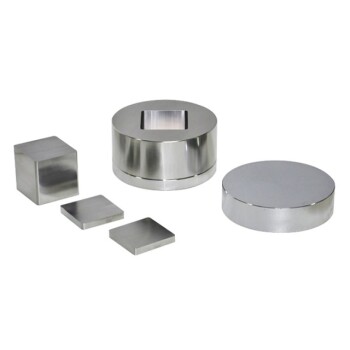
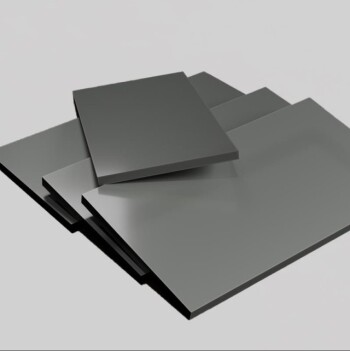
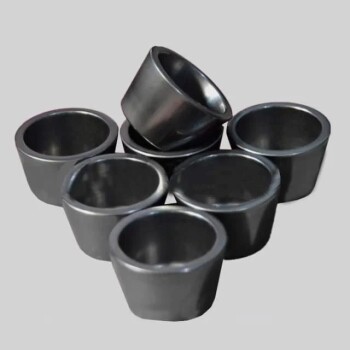
High-strength graphite molds provide the critical mechanical stability and thermal uniformity required for the successful hot press sintering of Ti6Al4V-based composites. Their primary advantage lies in their ability to withstand a continuous axial pressure of 35 MPa at extreme sintering temperatures of 1150°C without suffering deformation or fracture.
The Core Utility of Graphite Molds
Beyond acting as a simple containment vessel, high-strength graphite serves as an active process medium that balances extreme mechanical loads with precise thermal regulation. This ensures the composite material achieves full densification and microstructural homogeneity without compromising the geometric integrity of the part.
Mechanical Stability Under Extreme Conditions
The sintering of Ti6Al4V-based composites requires an environment where high pressure and high heat coexist. The graphite mold must act as a rigid constraints system during this phase.
High-Temperature Strength
Standard mold materials often soften or creep when exposed to temperatures required for sintering titanium alloys. High-strength graphite retains its structural integrity at 1150°C, ensuring that the mold does not warp or collapse during the heating cycle.
Resistance to Axial Pressure
To achieve proper density, the composite powder must be compressed significantly. These molds are engineered to endure continuous axial pressures of 35 MPa. This capability allows for the effective consolidation of the powder without the mold failing catastrophically under the load.
Preservation of Dimensional Accuracy
Because the mold resists deformation under both heat and pressure, it maintains the precise shape of the component throughout the process. This ensures the final sintered sample matches the intended design specifications, reducing the need for extensive post-process machining.
Thermal Dynamics and Microstructure
Achieving a high-quality composite is not just about pressing powder together; it requires specific thermal conditions to ensure the material properties are consistent throughout the billet.
Uniform Heat Transfer
Graphite possesses excellent thermal conductivity. This property allows the mold to transfer heat from the furnace environment to the internal powder rapidly and evenly.
Microstructural Consistency
Uneven heating can lead to defects, residual stresses, or variable grain sizes within the titanium composite. By ensuring heat is distributed uniformly, the graphite mold facilitates a consistent internal microstructure. This leads to a final product with reliable mechanical properties across the entire sample.
Understanding the Trade-offs
While high-strength graphite is superior for this application, it is not without limitations. Understanding these constraints is vital for process reliability.
Pressure Limits and Fracture Risk
Although these molds are "high-strength," they are brittle ceramics, not ductile metals. While they can withstand 35 MPa, exceeding this specific threshold or applying shock loads can lead to sudden fracture. The pressure must be applied progressively and kept within the rated limits of the specific graphite grade used.
Surface Interaction
While the primary focus is on strength and conductivity, the mold also acts as the interface for the composite. The mold surface determines the surface finish of the sintered part. Wear on the mold surface over repeated cycles can degrade the dimensional accuracy of subsequent batches.
Making the Right Choice for Your Goal
When selecting mold materials and parameters for Ti6Al4V sintering, consider your specific end-goals.
- If your primary focus is Dimensional Precision: Prioritize graphite grades with the highest compressive strength to ensure zero deformation at 35 MPa.
- If your primary focus is Material Homogeneity: Ensure the mold design and wall thickness are optimized to leverage graphite's thermal conductivity for even heating.
High-strength graphite is the definitive choice for Ti6Al4V sintering because it creates a stable, conductive environment that turns loose powder into a dense, precision-engineered composite.
Summary Table:
| Feature | Advantage for Ti6Al4V Sintering | Impact on Final Composite |
|---|---|---|
| High-Temp Strength | Retains structural integrity at 1150°C | Prevents mold warping and collapse |
| Pressure Resistance | Withstands continuous 35 MPa axial load | Enables full densification of powder |
| Thermal Conductivity | Rapid and uniform heat transfer | Ensures consistent microstructure |
| Dimensional Stability | Resists deformation under heat/pressure | Reduces need for post-process machining |
| Material Purity | Low reactivity with titanium alloys | Maintains chemical integrity of the part |
Optimize Your Composite Research with KINTEK Precision Solutions
Achieving full densification in Ti6Al4V-based composites requires the perfect balance of pressure and thermal control. KINTEK specializes in advanced laboratory equipment designed for extreme environments. From high-temperature vacuum and atmosphere furnaces to heavy-duty hydraulic pellet presses, we provide the tools necessary for high-performance material sintering.
Our extensive portfolio includes:
- Sintering Excellence: Muffle, tube, and vacuum furnaces capable of precise thermal regulation.
- Compaction Tools: Isostatic and hot presses tailored for high-strength mold applications.
- Essential Consumables: Premium graphite products, ceramics, and crucibles engineered for durability.
Ready to enhance your lab’s efficiency and material quality? Contact KINTEK today for a tailored consultation and let our experts support your next breakthrough.
Related Products
- Special Shape Press Mold for Lab
- Ball Press Mold for Lab
- Anti-Cracking Press Mold for Lab Use
- Lab Infrared Press Mold
- Double Plate Heating Press Mold for Lab
People Also Ask
- How to use a press mold? Master the Art of Creating Consistent Ceramic Forms
- What is the press mould method? A Guide to Consistent, Detailed Ceramic Forms
- Why are pressure molds with non-conductive resin inner walls required for battery testing? Ensure Data Accuracy
- What is the purpose of specialized pressure devices in sulfide solid-state batteries? Ensure Chemo-Mechanical Stability
- What is the function of press molds during the preparation of SiCf/Ti-43Al-9V composites? Achieve Structural Precision