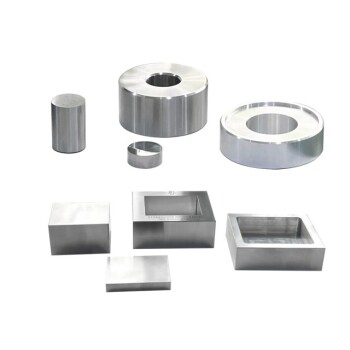
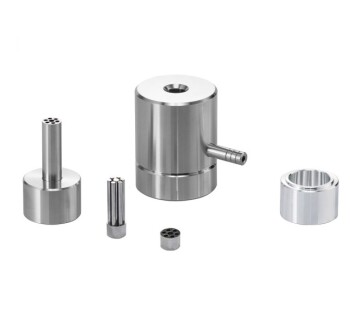
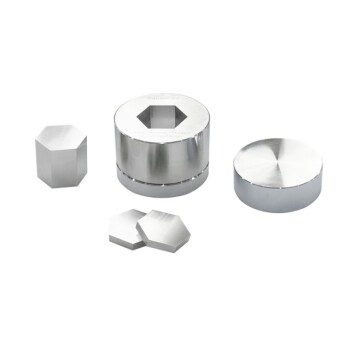
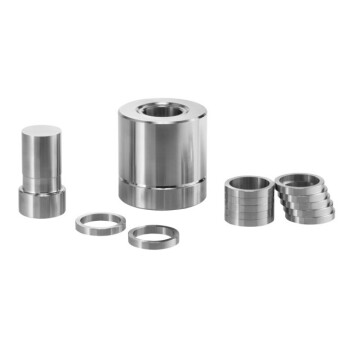
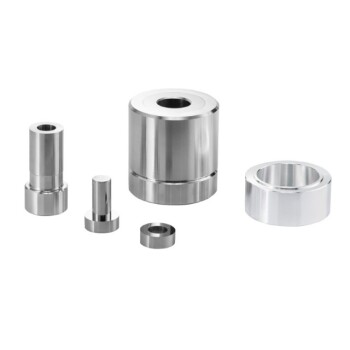
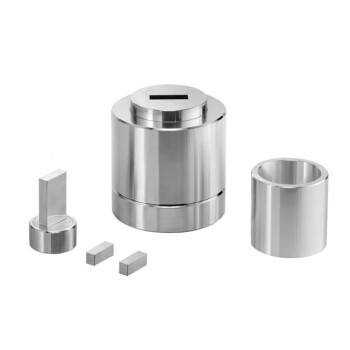
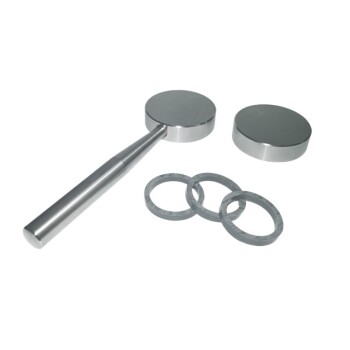
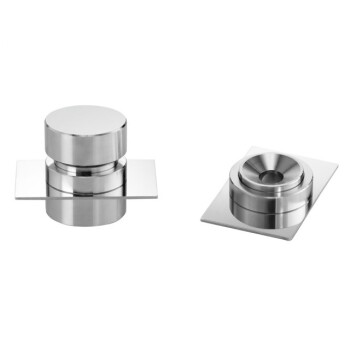
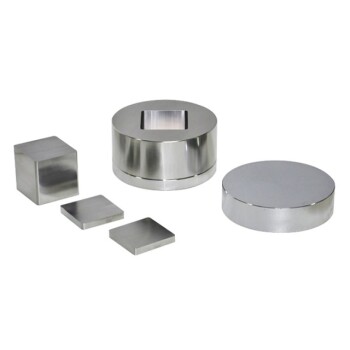
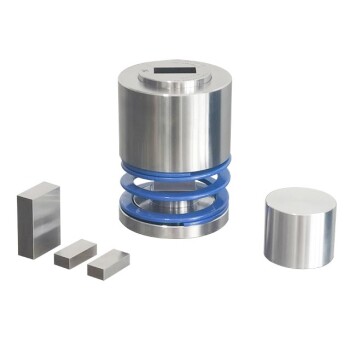
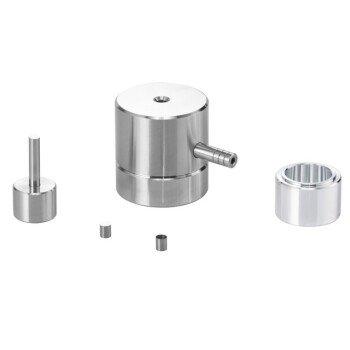
Custom pressure molds are the critical control mechanism used to manage the physical behavior of polymers under heat and pressure. They specifically function to restrict polymer rheology (flow), forcing the material to adopt exact geometric dimensions and thickness precision while preventing material overflow or edge deformation during the manufacturing process.
The primary value of these molds lies in their ability to transform a chaotic melt into a uniform, high-density component. By physically constraining the polymer, they enable the creation of solid electrolyte membranes that are free of the structural defects common in other casting methods.
The Mechanics of Structural Control
Restricting Material Flow
When solid polymer electrolytes are heated, they enter a fluid or semi-fluid state. Without containment, the material would spread unpredictably.
Custom molds apply a physical boundary that restricts this rheology. This ensures the material remains concentrated in the target area rather than thinning out or flowing away.
Defining Geometric Precision
Battery assembly requires components with exacting tolerances. The mold acts as a master template that defines the final shape of the membrane.
This guarantees thickness precision across the entire surface. A uniform thickness is vital for ensuring consistent ion transport paths throughout the finished battery cell.
Preventing Physical Defects
During compression, unchecked materials often suffer from "edge effects" where the perimeter becomes thin or irregular.
Molds prevent edge deformation and overflow. This results in a clean, net-shape component that requires minimal post-processing and is immediately ready for battery assembly.
The Electrochemical Impact
Eliminating Pores and Voids
The use of these molds facilitates a hot pressing process that does not require organic solvents. Traditional solution casting often leaves behind pores or bubbles due to solvent evaporation.
By applying high pressure within a confined mold, you create a dense, void-free pellet. This density is essential for maximizing the material's ionic conductivity.
Reducing Internal Resistance
The structural density achieved by the mold directly impacts electrochemical performance. Tightly packed particles reduce grain boundary resistance.
This ensures that the material's intrinsic properties are utilized fully. High-quality molding prevents physical gaps that would otherwise impede the flow of ions.
Understanding the Trade-offs
Material Durability Requirements
The molds themselves are subjected to extreme stress. They must maintain total structural integrity under high heat and immense pressures (often hundreds of MPa).
Standard metals may deform or degrade under these conditions. Consequently, molds are often fabricated from superalloys for standard powders or graphite when processing refractory metals requiring higher thermal resistance.
Complexity of Process
Using custom molds adds a layer of mechanical complexity compared to simple casting. The equipment requires precise alignment and hydraulic systems capable of delivering uniform force.
If the mold material is incompatible with the powder, or if the pressure is uneven, it can lead to density gradients within the electrolyte disc.
Making the Right Choice for Your Goal
To maximize the effectiveness of your solid polymer electrolyte fabrication:
- If your primary focus is electrochemical performance: Prioritize mold designs that allow for maximum pressure application to minimize grain boundary resistance and eliminate pores.
- If your primary focus is manufacturing consistency: Ensure your mold material is a high-grade superalloy capable of resisting deformation over repeated high-temperature cycles to maintain thickness precision.
Using custom pressure molds turns the variable of polymer flow into a constant, controlled parameter for superior battery reliability.
Summary Table:
| Feature | Function in Hot Pressing | Impact on Solid Electrolytes |
|---|---|---|
| Flow Restriction | Constrains polymer rheology | Prevents material overflow and edge deformation |
| Geometric Precision | Defines master template shape | Ensures uniform thickness and consistent ion transport |
| High-Pressure Containment | Facilitates solvent-free pressing | Eliminates pores, voids, and reduces internal resistance |
| Structural Density | Compresses particles tightly | Maximizes ionic conductivity and reduces grain boundary resistance |
| Material Selection | Superalloys or graphite construction | Maintains integrity under high heat and immense pressure |
Elevate Your Battery Research with KINTEK Precision
Achieving the perfect solid polymer electrolyte requires more than just heat; it demands the mechanical precision of high-quality containment. KINTEK specializes in advanced laboratory solutions, offering a comprehensive range of hydraulic presses (pellet, hot, isostatic) and custom-engineered pressure molds designed to withstand the rigors of high-temperature material synthesis.
From superalloy molds for standard polymers to graphite systems for refractory materials, our tools ensure your electrolytes are void-free and geometrically perfect. Beyond pressing, KINTEK supports your entire workflow with high-temperature furnaces, crushing and milling systems, battery research consumables, and PTFE/ceramic components.
Ready to eliminate structural defects and maximize ionic conductivity?
Contact KINTEK Today for a Custom Solution
Related Products
- Special Heat Press Mold for Lab Use
- Double Plate Heating Press Mold for Lab
- Anti-Cracking Press Mold for Lab Use
- Cylindrical Lab Electric Heating Press Mold for Laboratory Applications
- Ball Press Mold for Lab
People Also Ask
- How to use a press mold? Master the Art of Creating Consistent Ceramic Forms
- What is the press mould method? A Guide to Consistent, Detailed Ceramic Forms
- What is a press mold used for? Achieve Repeatable Precision and Efficiency
- What is the function of press molds during the preparation of SiCf/Ti-43Al-9V composites? Achieve Structural Precision
- What is the purpose of specialized pressure devices in sulfide solid-state batteries? Ensure Chemo-Mechanical Stability