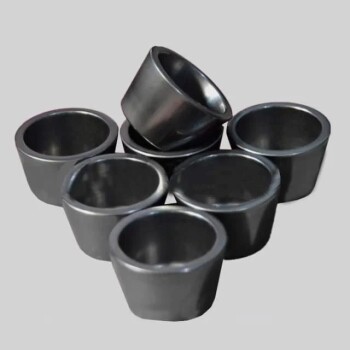
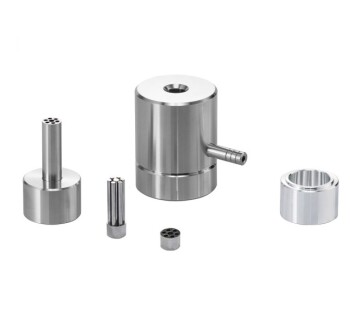
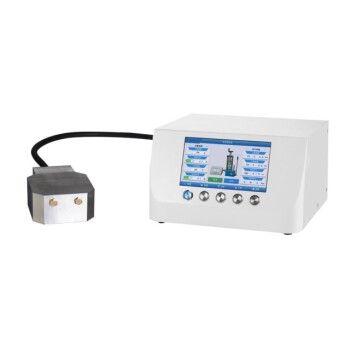
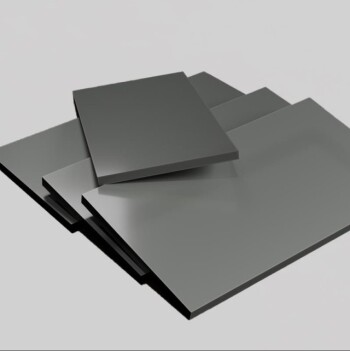
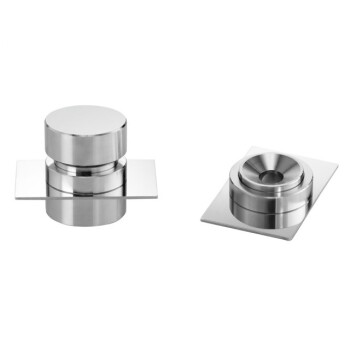
High-purity graphite molds act as the critical interface between the sintering equipment and the Indium Zinc Oxide (IZO) material. During the hot-press sintering process, these molds serve a dual primary function: they transmit massive mechanical pressure to densify the powder and simultaneously homogenize the thermal field to protect the structural integrity of the target. Without the specific properties of high-purity graphite, IZO targets would suffer from insufficient density or catastrophic fracturing due to thermal stress.
Core Takeaway The success of sintering IZO targets relies entirely on the graphite mold's ability to withstand tens of megapascals of pressure without deformation while acting as a thermal equalizer. This unique combination prevents the uneven thermal stresses that lead to cracking, ensuring the final target achieves both high density and dimensional precision.
The Role of Pressure Transmission
The first critical function of the graphite mold is mechanical. It serves as the physical vessel that translates the force of the machine into the density of the material.
Withstanding Extreme Forces
Hot-press sintering requires significant force to compact loose powder into a solid state. The graphite mold must possess sufficient mechanical strength to withstand pressures of several tens of megapascals (MPa).
Preventing Structural Deformation
Crucially, the mold must maintain this strength at elevated sintering temperatures. If the mold deforms under load, the IZO target will lose its required shape and dimensional accuracy. High-purity graphite is selected specifically because it retains rigidity when other materials might soften or buckle.
Facilitating Densification
By effectively transmitting the axial pressure from the hydraulic system to the powder, the mold forces the material to compact. This pressure is essential for closing pores and achieving the high density required for conductive IZO targets.
Thermal Field Homogenization
The second function is thermal regulation. This is particularly vital for ceramic-based materials like IZO, which can be sensitive to rapid temperature changes.
Leveraging Thermal Conductivity
High-purity graphite exhibits excellent thermal conductivity. This allows heat to flow rapidly and efficiently through the mold walls and into the IZO powder.
Ensuring a Uniform Temperature Field
The mold acts as a thermal buffer, smoothing out temperature gradients. It ensures that the heat distribution within the mold is uniform, preventing "hot spots" or "cold zones" during the heating process.
Mitigating Thermal Stress Cracking
This is the most critical protective function for IZO targets. If the temperature field is uneven, the material experiences differential expansion, leading to thermal stress. By ensuring uniformity, the graphite mold prevents the development of these stresses, thereby stopping the IZO target from cracking during the sintering cycle.
Geometric Definition and Containment
Beyond heat and pressure, the mold serves a fundamental physical role in the manufacturing process.
Macroscopic Shaping
The mold acts as a precise container that defines the macroscopic shape of the target. Whether the goal is a specific diameter or thickness, the mold confines the loose powder to these dimensions throughout the transition from powder to solid.
Ease of Removal
While primarily a containment vessel, the nature of graphite also aids in post-processing. Its surface properties typically facilitate the easy removal of the sintered sample, preventing damage to the target during extraction.
Understanding the Trade-offs
While high-purity graphite is the standard, it is important to understand the operational limits and requirements inherent in its use.
The Necessity of High Purity
You cannot substitute lower-grade graphite. Impurities in the mold can react with the IZO powder at high temperatures or alter the thermal conductivity profile, leading to the very cracking or contamination you are trying to avoid.
Atmosphere Sensitivity
Graphite oxidizes rapidly in air at sintering temperatures. Therefore, the use of these molds necessitates a controlled environment—typically a vacuum or inert gas atmosphere—to preserve the mold's structural integrity over repeated cycles.
Making the Right Choice for Your Goal
To optimize your sintering process, you must prioritize specific mold characteristics based on your primary failure mode.
- If your primary focus is preventing target cracking: Prioritize graphite grades with the highest available thermal conductivity to maximize field homogenization and minimize thermal stress.
- If your primary focus is dimensional accuracy: Select high-density graphite with superior high-temperature compressive strength to ensure zero deformation under peak hydraulic loads.
- If your primary focus is purity: Ensure the graphite ash content is negligible to prevent chemical interaction with the Indium Zinc Oxide matrix.
Ultimately, the graphite mold is not just a container; it is an active thermal and mechanical component that defines the quality of the final IZO target.
Summary Table:
| Function | Description | Key Benefit |
|---|---|---|
| Pressure Transmission | Translates tens of MPa to the IZO powder | Achieves high densification and closes pores |
| Thermal Regulation | Evenly distributes heat via high thermal conductivity | Prevents thermal stress and cracking |
| Structural Support | Maintains rigidity at high temperatures | Ensures dimensional accuracy and prevents deformation |
| Geometric Definition | Defines the macroscopic shape (diameter/thickness) | Produces precise near-net-shape targets |
| Contamination Control | Uses high-purity (low ash) graphite grades | Prevents chemical reactions with the IZO matrix |
Elevate Your IZO Target Production with KINTEK Precision
Achieve flawless sintering results with KINTEK’s high-performance laboratory solutions. As experts in crushing and milling systems, high-temperature furnaces, and hydraulic pellet presses, we provide the specialized equipment needed to master Indium Zinc Oxide (IZO) fabrication.
Our comprehensive range of high-purity graphite molds and crucibles is designed to withstand extreme thermal and mechanical stresses, ensuring your materials reach peak density without cracking. Whether you need advanced vacuum furnaces, sieve shakers, or PTFE consumables, KINTEK delivers the reliability and precision your research demands.
Ready to optimize your sintering process? Contact our technical experts today to discover how KINTEK can enhance your lab's efficiency and material quality!
Related Products
- High Purity Pure Graphite Crucible for Evaporation
- High Purity Pure Graphite Crucible for Electron Beam Evaporation
- Special Shape Press Mold for Lab
- Anti-Cracking Press Mold for Lab Use
- Ball Press Mold for Lab
People Also Ask
- Why are high-purity graphite crucibles preferred for sulfide solid electrolytes? Achieve Superior Material Purity
- Why is a high-purity graphite crucible required for Chromel-TaC composites? Ensure Peak Purity at 1400°C
- What role do high-purity graphite crucibles play in molten salt corrosion research? Ensure Reactor-Grade Precision
- Why are high-purity graphite crucibles used for magnesium distillation? Ensure 3N8 Purity & Thermal Stability
- Why is a high-purity graphite crucible ideal for nitrogen-doped graphene at 1500 °C? Maximize Purity and Stability