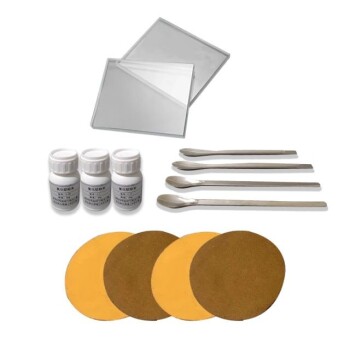
To achieve effective densification of sulfide solid electrolytes, specialized pressure-bearing molds must meet three strict technical criteria: extreme mechanical strength, superior surface finish, and specific chemical properties. Most notably, the mold must possess high yield strength to withstand pressures up to 360 MPa without deformation, alongside chemically inert, smooth interior walls to prevent reaction with the active powders and ensure clean demolding.
Core Takeaway The effectiveness of a densification mold relies on a balance of mechanical rigidity and surface chemistry. The tool must be strong enough to transfer massive loads (360 MPa) into the powder without warping, yet chemically passive enough to prevent contaminating the highly reactive sulfide material.
Mechanical Integrity Under Extreme Load
High Yield Strength and Hardness
The primary function of the mold is to facilitate the compression of powder into a dense pellet. To do this, the mold material must possess extremely high hardness and yield strength.
If the mold material lacks sufficient yield strength, it will undergo plastic deformation (permanent warping) under load. This compromises the dimensional accuracy of the solid electrolyte layer and eventually leads to tool failure.
Withstanding Specific Pressure Thresholds
Sulfide solid electrolytes require significant force to minimize porosity and ensure particle-to-particle contact. The mold must be rated to withstand pressures up to 360 MPa.
At these pressures, standard mold materials may bulge or crack. Consequently, specialized alloys or hardened steels are often required to maintain structural integrity during the densification cycle.
Surface Properties and Material Compatibility
Interior Wall Smoothness
The interior walls of the mold must feature a high degree of smoothness. This is not merely for aesthetic purposes; it is a functional requirement for the pressing process.
Rough surfaces increase friction between the powder and the mold wall. This friction reduces the effective pressure applied to the center of the pellet (pressure gradients) and makes demolding difficult, potentially causing the fragile electrolyte pellet to crack upon removal.
Chemical Inertness
Sulfide powders are highly active and chemically sensitive. The mold material must be chemically inert relative to the sulfide compounds.
If the mold surface is reactive, it can degrade the electrolyte at the interface or introduce impurities. This necessitates the use of specific non-reactive materials or coatings to prevent chemical reactions during the high-pressure contact.
Understanding the Trade-offs
Mechanical Strength vs. Chemical Stability
A common pitfall is selecting a material solely for its mechanical hardness while neglecting its chemical reactivity. For example, certain high-strength steels may contain elements that react with sulfides under pressure.
Conversely, materials that are perfectly inert (like certain ceramics) may be too brittle to withstand the shear forces associated with 360 MPa of pressure. The engineering challenge lies in selecting a material—or a coating system—that compromises neither mechanical durability nor chemical purity.
The Risk of Insufficient Pressure
While it is tempting to use lower pressures to preserve mold life, failing to reach the necessary pressure threshold results in poor densification.
As implied by the behavior of battery materials, insufficient contact between particles leads to physical detachment and increased interfacial resistance. The mold must be robust enough to allow for the pressures required to prevent these issues, rather than limiting the process due to tool weakness.
Making the Right Choice for Your Goal
Selecting the correct mold requires prioritizing your specific processing parameters.
- If your primary focus is Maximum Conductivity: Prioritize Yield Strength. You must ensure the mold can reliably reach 360 MPa to minimize porosity and maximize particle contact without deformation.
- If your primary focus is Electrolyte Purity: Prioritize Chemical Inertness. Ensure the interior walls are polished and composed of (or coated with) materials that will not react with active sulfide powders.
Success depends on a mold that acts as an immovable vessel for pressure while remaining invisible to the chemistry of your electrolyte.
Summary Table:
| Technical Criterion | Requirement Detail | Impact on Densification |
|---|---|---|
| Mechanical Strength | High Yield Strength & Hardness | Prevents mold deformation at pressures up to 360 MPa |
| Surface Finish | High Interior Wall Smoothness | Reduces friction and pressure gradients; ensures clean demolding |
| Chemical Stability | Chemical Inertness | Prevents contamination and degradation of reactive sulfide powders |
| Load Capacity | Rating > 360 MPa | Minimizes porosity to maximize particle-to-particle contact |
Maximize Your Battery Research Precision with KINTEK
Achieving the perfect densification of sulfide solid electrolytes requires equipment that can withstand extreme mechanical stress without compromising chemical purity. KINTEK specializes in high-performance laboratory solutions, providing the specialized hydraulic presses (pellet, hot, isostatic) and precision-engineered pressure-bearing molds needed to reach 360 MPa with ease.
Our portfolio is designed for the rigorous demands of advanced material science, featuring:
- High-strength crushing and milling systems for optimal powder preparation.
- Chemically inert ceramic and PTFE consumables to maintain electrolyte purity.
- Advanced battery research tools tailored for next-generation solid-state development.
Don't let inferior tooling limit your conductivity results. Contact KINTEK today to discover how our high-pressure systems and specialized laboratory equipment can enhance your research efficiency and material performance.
Related Products
- Round Bidirectional Press Mold for Lab
- Square Lab Press Mold for Laboratory Applications
- Electrode Polishing Material for Electrochemical Experiments
- Ball Press Mold for Lab
- Cylindrical Press Mold with Scale for Lab
People Also Ask
- How to use a press mold? Master the Art of Creating Consistent Ceramic Forms
- What is the press mould method? A Guide to Consistent, Detailed Ceramic Forms
- What is the function of press molds during the preparation of SiCf/Ti-43Al-9V composites? Achieve Structural Precision
- What is a press mold used for? Achieve Repeatable Precision and Efficiency
- What is the purpose of specialized pressure devices in sulfide solid-state batteries? Ensure Chemo-Mechanical Stability