Vacuum freeze drying is the superior method because it preserves the intricate internal architecture of biomass through the process of sublimation.
Unlike traditional thermal drying, which uses heat to evaporate liquid water, freeze drying transitions ice directly into vapor under a vacuum. This bypasses the liquid phase entirely, preventing the capillary forces and surface tension that typically cause biomass structures to shrink, collapse, or undergo "hornification" during dehydration.
By utilizing low-temperature sublimation, vacuum freeze drying prevents structural collapse and chemical migration, ensuring the resulting porous carbon maintains the high specific surface area and interconnected pore networks essential for advanced electrochemical and catalytic applications.
Preserving Structural Integrity through Sublimation
Eliminating Capillary Pressure and Surface Tension
Traditional thermal drying relies on liquid evaporation, which exerts immense capillary pressure on the delicate cell walls of biomass. This pressure often pulls the internal pores shut, leading to a hardened, dense material with significantly reduced accessibility. Vacuum freeze drying removes moisture from a solid state, effectively "locking" the pores in place and preventing this collapse.
Maintaining Original Morphology and Microstructure
The low-temperature environment ensures that the original physical framework of the biomass—such as the cellulose network or cellular scaffolding—remains intact. This provides a stable physical foundation for the formation of nitrogen-doped structures or interconnected flakes during the subsequent high-temperature pyrolysis.
Preventing "Hornification" and Surface Hardening
In thermal drying, the surface of the biomass often hardens prematurely, a phenomenon known as hornification. This creates a barrier that limits further moisture removal and reduces the ability of the material to bond with other agents. Freeze drying maintains a loose, open structure that ensures high accessibility throughout the entire volume of the material.
Ensuring Chemical and Component Uniformity
Preventing the Migration of Activation Agents
When biomass mixtures contain activation agents (like potassium hydroxide or phosphoric acid), thermal drying causes these chemicals to migrate toward the surface as liquid water evaporates. This leads to an uneven distribution of the agent. Freeze drying keeps these components pinned in their original locations, ensuring a uniform chemical environment prior to carbonization.
Avoiding Agglomeration and Restacking
For high-performance materials like carbon nanosheets, liquid-phase migration during traditional drying often causes the sheets to stick together or "restack." This agglomeration drastically reduces the available surface area. Freeze drying maximizes the dispersion of these components, preserving the ultra-high surface area required for active sites.
Optimizing Channels for Ion Transport
The preservation of an interconnected network of micropores and mesopores is critical for the final product's performance in batteries or supercapacitors. Because freeze drying prevents structural collapse, the resulting carbon possesses abundant channels for efficient ion migration and storage.
Understanding the Trade-offs
High Operational Costs and Complexity
While technically superior, vacuum freeze dryers are significantly more expensive to purchase and maintain than standard thermal ovens. The process requires a high-vacuum environment and precise temperature control, leading to higher energy consumption per kilogram of material processed.
Extended Processing Timelines
Freeze drying is a time-intensive process that often requires 24 to 72 hours to complete, depending on the moisture content and thickness of the sample. For large-scale industrial production where high-throughput is the primary concern, the slow pace of sublimation can become a significant bottleneck.
Strategic Implementation for Your Material Goals
When deciding on a drying strategy, consider the specific performance requirements of your final porous carbon product.
- If your primary focus is maximizing specific surface area: Vacuum freeze drying is essential to prevent the restacking of nanosheets and the collapse of micropores.
- If your primary focus is electrochemical performance (e.g., Li-S batteries): Use freeze drying to ensure an interconnected porous structure that facilitates rapid ion transport and exposes more active sites.
- If your primary focus is uniform chemical doping: Choose freeze drying to prevent the migration and agglomeration of activation agents or precursors during the dehydration phase.
- If your primary focus is low-cost, bulk production: Traditional thermal drying may be more viable if the loss of fine pore structure does not critically undermine the material's end-use.
By prioritizing the preservation of the biomass's natural architecture, you establish the necessary foundation for high-performance, specialized carbon materials.
Summary Table:
| Feature | Vacuum Freeze Drying | Traditional Thermal Drying |
|---|---|---|
| Mechanism | Sublimation (Solid to Gas) | Evaporation (Liquid to Gas) |
| Structural Integrity | Prevents collapse/hornification | Causes shrinkage and pore closure |
| Surface Area | Maintains high specific surface area | Reduced due to restacking/agglomeration |
| Chemical Uniformity | Prevents migration of activation agents | Agents migrate to surface with liquid |
| Best For | High-performance electrochemical labs | Bulk, low-cost industrial production |
Elevate Your Material Synthesis with KINTEK Precision
Unlock the full potential of your porous carbon research by ensuring structural integrity at every stage. KINTEK specializes in high-performance laboratory equipment designed for advanced material science. Whether you need to preserve delicate biomass structures with our high-efficiency vacuum freeze dryers or require precise thermal control with our muffle, tube, and CVD furnaces for carbonization, we have the solution.
Our comprehensive portfolio supports your entire workflow, including:
- Sample Preparation: High-energy crushing and milling systems.
- Thermal Processing: Vacuum, atmosphere, and rotary furnaces.
- Electrochemical Testing: High-pressure reactors, autoclaves, and battery research tools.
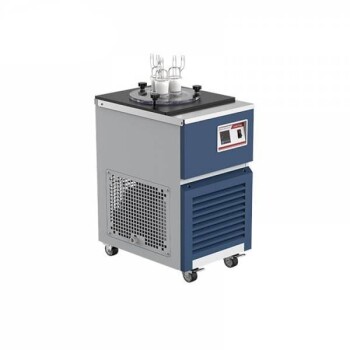
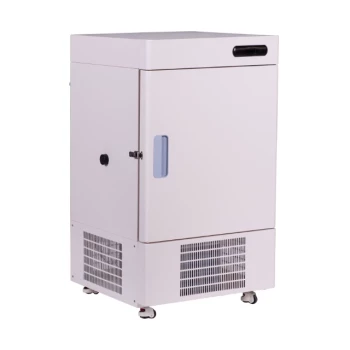
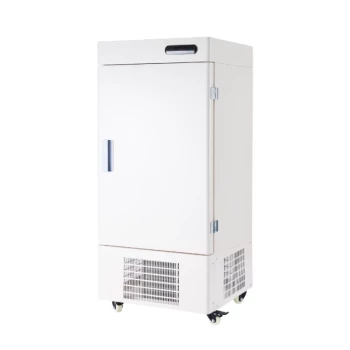
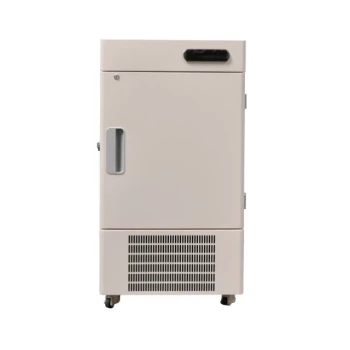
- Post-Processing: Specialized cooling solutions like ULT freezers and freeze dryers.
Ready to optimize your lab’s efficiency and material performance? Contact KINTEK today to consult with our experts on the perfect equipment configuration for your specific research goals.
References
- Wenlin Zhang, Jianmin Tang. Sweet-Potato-Vine-Based High-Performance Porous Carbon for Methylene Blue Adsorption. DOI: 10.3390/molecules28020819
This article is also based on technical information from Kintek Solution Knowledge Base .
Related Products
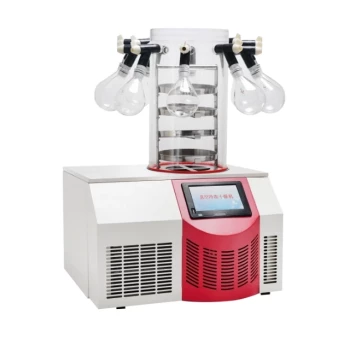
- Benchtop Laboratory Vacuum Freeze Dryer
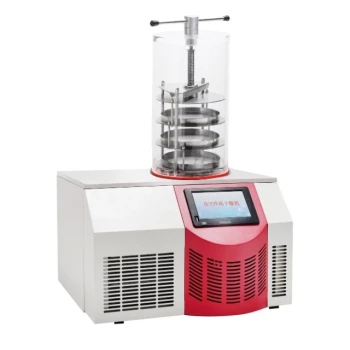
- High Performance Laboratory Freeze Dryer
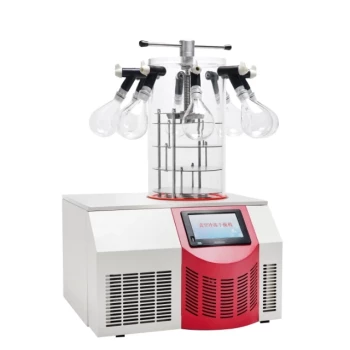
- High Performance Laboratory Freeze Dryer for Research and Development
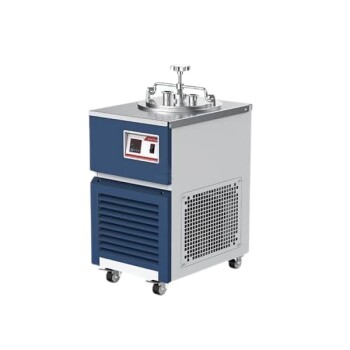
- Benchtop Laboratory Freeze Dryer for Lab Use
- Vacuum Cold Mounting Machine for Sample Preparation
People Also Ask
- What are the technical advantages of using a laboratory freeze dryer for porous carbon precursors? Preserve 3D Networks
- How do laboratory freeze dryers support scientific research? Preserve Sample Integrity for Reproducible Results
- Why is a laboratory freeze dryer preferred over traditional heating? Preserve Biochar Structure & Maximize Porosity
- What types of liquid samples can be processed using a laboratory freeze dryer? Preserve Your Sensitive Materials
- What role do laboratory freeze dryers play in the food industry? Unlock Superior Food Preservation