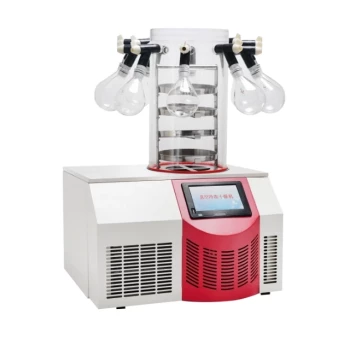
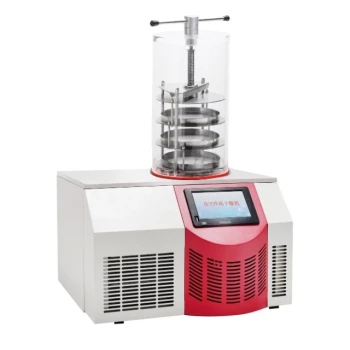
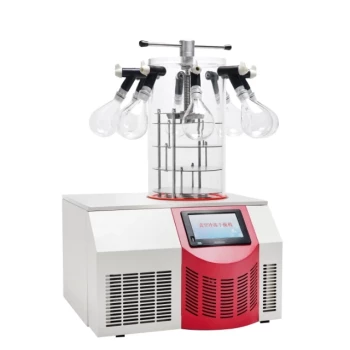
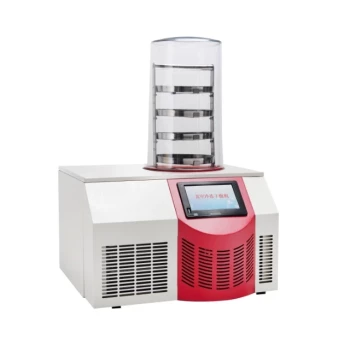
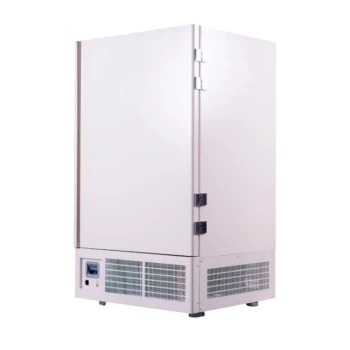
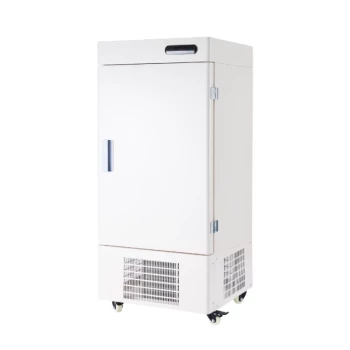
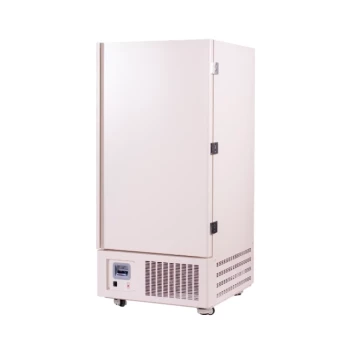
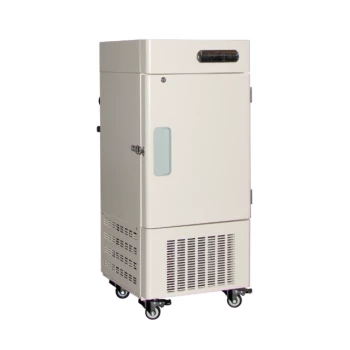
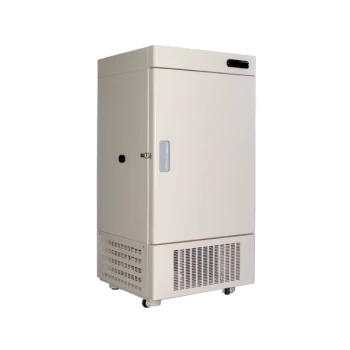
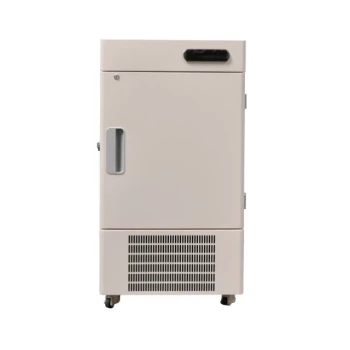
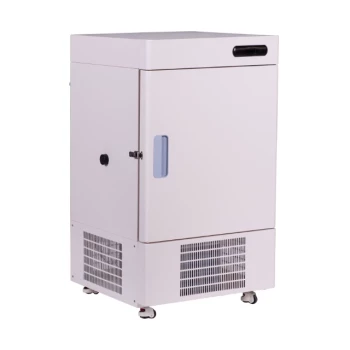
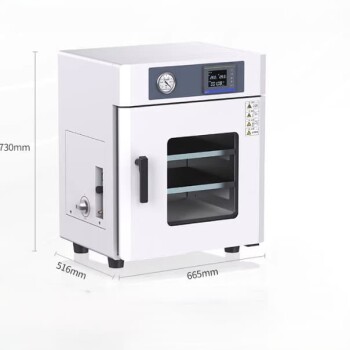
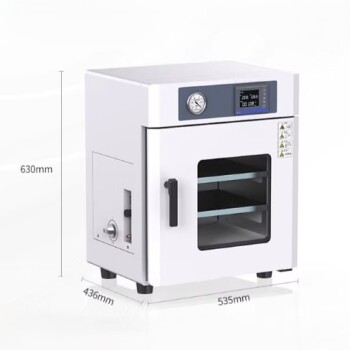
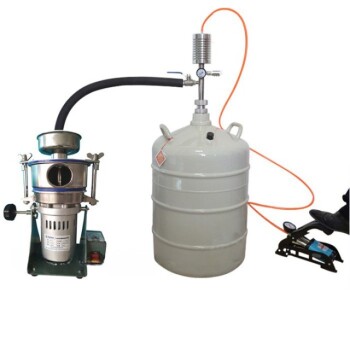
A laboratory freeze dryer serves as a critical structural preservation unit during the synthesis of alginate-based photocatalytic aerogels. Its primary function is to remove the solvent from the wet gel matrix via sublimation, transitioning directly from solid ice to vapor. This bypasses the liquid phase entirely, ensuring the material transitions from a hydrogel to a solid aerogel without physical distortion.
By eliminating the surface tension associated with liquid evaporation, freeze drying preserves the delicate, three-dimensional porous skeleton of the alginate and titanium dioxide composite. This creates the high-surface-area environment necessary for pollutants to access catalytic sites.
The Mechanics of Structural Preservation
Avoiding Capillary Collapse
In traditional thermal drying, the evaporation of liquid creates significant physical stress within a material.
As the liquid leaves the pores, surface tension generates strong capillary pressure.
This pressure pulls the pore walls inward, typically causing the delicate internal structure to collapse or shrink significantly.
The Role of Sublimation
The freeze dryer solves this by utilizing sublimation rather than evaporation.
The process begins by rapidly freezing the hybrid suspension, which effectively "locks" the structure in place.
Under a vacuum, the frozen solvent (ice) converts directly into water vapor. Because there is no liquid phase, there is no surface tension to crush the microporous structure.
Enhancing Photocatalytic Efficiency
Creating Accessible Active Sites
The ultimate goal of this aerogel is to facilitate chemical reactions, specifically the degradation of pollutants using titanium dioxide (TiO2).
For this to work, pollutant molecules must be able to physically reach the catalyst.
The freeze-drying process preserves the complex, interconnected porous skeleton formed by the alginate and TiO2.
Maximizing Specific Surface Area
A successful aerogel must feature extremely high porosity and low density.
By preventing collapse, the freeze dryer ensures the material retains a large specific surface area.
This allows pollutants to freely penetrate the material and come into full contact with the active catalytic sites, dramatically improving performance.
Common Pitfalls to Avoid
The Failure of Thermal Drying
It is important to recognize why alternatives, such as conventional oven drying, generally fail for this specific application.
Thermal drying subjects the material to the liquid-to-solid phase transition tensions mentioned earlier.
This leads to severe agglomeration of the internal components (similar to issues seen in graphene hydrogels).
The result is a dense, non-porous solid that blocks mass transfer channels, rendering the photocatalyst ineffective.
Making the Right Choice for Your Goal
To maximize the effectiveness of your alginate-based aerogels, consider the following:
- If your primary focus is structural integrity: Rely on freeze drying to eliminate capillary pressure, preventing the shrinkage and pore collapse inevitable with heat drying.
- If your primary focus is catalytic performance: Use this process to guarantee the high porosity and low density required for pollutants to deeply penetrate the material and react with the catalyst.
The freeze dryer is not just a drying tool; it is the key enabler of the material's functional architecture.
Summary Table:
| Feature | Freeze Drying (Sublimation) | Thermal Drying (Evaporation) |
|---|---|---|
| Phase Transition | Solid to Vapor | Liquid to Vapor |
| Capillary Pressure | Negligible / Eliminated | High (Causes structural collapse) |
| Structural Result | High porosity, low density | Dense, agglomerated solid |
| Catalytic Impact | Accessible active sites | Blocked mass transfer channels |
| Aerogel Quality | Preserved 3D skeleton | Shrunken and distorted |
Elevate Your Material Science with KINTEK Precision
Unlock the full potential of your photocatalytic research with KINTEK’s advanced laboratory freeze dryers and cooling solutions. Our equipment is engineered to eliminate capillary collapse, ensuring your aerogels maintain the high-surface-area architecture required for peak catalytic performance.
Beyond freeze drying, KINTEK specializes in a comprehensive range of high-performance laboratory equipment, including:
- High-Temperature Furnaces (Muffle, Tube, Vacuum, and CVD systems)
- High-Pressure Reactors & Autoclaves for complex synthesis
- Crushing, Milling, and Sieving Systems for material preparation
- Hydraulic Presses (Pellet, Hot, Isostatic) for precision molding
- Specialized Consumables (PTFE, Ceramics, and Crucibles)
Whether you are developing next-generation batteries or advanced environmental catalysts, KINTEK provides the tools necessary for scientific breakthroughs. Contact us today to optimize your lab's workflow and material quality!
References
- Nina Maria Ainali, Dimitra A. Lambropoulou. Insights into Biodegradable Polymer-Supported Titanium Dioxide Photocatalysts for Environmental Remediation. DOI: 10.3390/macromol1030015
This article is also based on technical information from Kintek Solution Knowledge Base .
Related Products
- High Performance Laboratory Freeze Dryer
- High Performance Laboratory Freeze Dryer for Research and Development
- Benchtop Laboratory Freeze Dryer for Lab Use
- Benchtop Laboratory Vacuum Freeze Dryer
- 808L Precision Laboratory Vertical Ultra Low Temperature Freezer
People Also Ask
- What role does a laboratory freeze dryer play in the synthesis of graphene-based electrocatalysts? Preserve 3D Structures
- What are the technical advantages of using a laboratory freeze dryer for porous carbon precursors? Preserve 3D Networks
- What types of liquid samples can be processed using a laboratory freeze dryer? Preserve Your Sensitive Materials
- How do laboratory freeze dryers support scientific research? Preserve Sample Integrity for Reproducible Results
- Why is a laboratory freeze dryer preferred over traditional heating? Preserve Biochar Structure & Maximize Porosity