Knowledge Why is a freeze dryer preferred over thermal drying for Fe-ZTA cermets? Ensure Pure, Homogeneous Slurry Processing
Author avatar

Tech Team · Kintek Solution

Updated 3 weeks ago

Why is a freeze dryer preferred over thermal drying for Fe-ZTA cermets? Ensure Pure, Homogeneous Slurry Processing


The preference for freeze drying over thermal drying in processing Fe-ZTA cermet slurries stems primarily from its ability to preserve chemical purity and structural homogeneity. By removing solvents like tert-butanol in a low-temperature vacuum environment, this method eliminates the risk of oxidizing the iron (Fe) powder while ensuring the ceramic and metal components remain evenly mixed.

The core advantage lies in replacing evaporation with sublimation; this locks the material structure in place, preventing the component segregation and chemical alteration that typically compromise final sintering results.

Preventing Chemical Degradation

Eliminating Oxidation Risks

Thermal drying exposes materials to elevated temperatures, which accelerates chemical reactions. For Fe-ZTA cermets, the iron (metal) powder is highly susceptible to oxidation when heated.

Freeze drying operates under vacuum at low temperatures. This oxygen-deprived, cold environment ensures the metal powders remain in their metallic state, providing a pure precursor for the sintering phase.

Solvent Removal Without Heat

The process utilizes solvents like tert-butanol. In a thermal setting, removing these solvents requires heat input that could degrade the slurry components.

Freeze drying removes these solvents via sublimation (transitioning from solid to gas), bypassing the liquid phase and the heat required to boil the solvent.

Ensuring Microstructural Uniformity

Preventing Component Segregation

In thermal drying, as the solvent evaporates, capillary forces and convection currents can cause particles to migrate. This leads to segregation, where the metal and ceramic particles separate, resulting in a non-uniform mixture.

Freeze drying freezes the slurry first, locking the iron and zirconia-toughened alumina (ZTA) particles in a fixed matrix. As the solvent sublimes, the particles remain exactly where they were, maintaining a uniform distribution.

Preserving a Loose Physical Structure

Thermal drying often leads to a phenomenon similar to "hornification," where the structure collapses, creating hard, dense agglomerates. This collapse reduces the surface area and makes subsequent processing difficult.

Freeze drying leaves behind a porous, loose physical structure. This open framework is critical because it results in a high-quality precursor that is easier to sinter into a dense, defect-free final product.

Understanding the Trade-offs

Process Speed and Complexity

While freeze drying yields superior quality, it is generally a slower process than thermal drying. It relies on the rate of sublimation, which is inherently time-consuming compared to rapid evaporation.

Equipment Requirements

Implementing this method requires specialized vacuum pumps and cold traps capable of handling specific solvents. This represents a higher initial equipment cost and complexity compared to standard drying ovens.

Making the Right Choice for Your Goal

The decision between freeze drying and thermal drying depends on the specific performance requirements of your final cermet product.

  • If your primary focus is Material Performance: Choose freeze drying to ensure zero oxidation and perfect homogeneity for critical structural applications.
  • If your primary focus is High-Throughput Production: Evaluate thermal drying only if the specific metal alloy is oxidation-resistant and minor segregation is acceptable.

Ultimately, for Fe-ZTA cermets, freeze drying is the engineering standard for generating the high-quality precursors necessary for superior sintered mechanics.

Summary Table:

Feature Freeze Drying (Sublimation) Thermal Drying (Evaporation)
Chemical Purity High (Prevents metal oxidation) Lower (Risk of oxidation at heat)
Structural Uniformity Excellent (Locks particles in place) Poor (Capillary forces cause segregation)
Physical State Loose, porous framework Dense, hard agglomerates
Processing Temp Low / Vacuum environment Elevated temperatures
Speed & Cost Slower / Specialized equipment Faster / Lower equipment cost

Elevate Your Advanced Material Synthesis with KINTEK

Precise material processing is the foundation of high-performance Fe-ZTA cermets. KINTEK specializes in providing the specialized laboratory equipment necessary to maintain chemical purity and microstructural integrity. Whether you are seeking high-efficiency freeze dryers and cold traps to prevent oxidation, or require our advanced crushing and milling systems and high-temperature furnaces for final sintering, we deliver the precision your research demands.

Don't let component segregation or oxidation compromise your results. Our comprehensive portfolio—ranging from vacuum and atmosphere furnaces to hydraulic pellet presses and ceramic consumables—is designed to support target customers in achieving defect-free material production.

Ready to optimize your lab's drying and sintering workflow? Contact KINTEK today to consult with our experts on the ideal solution for your cermet and battery research needs.

Related Products

People Also Ask

Related Products

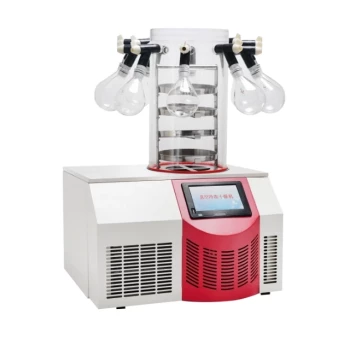
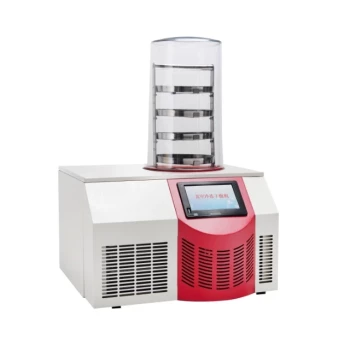
Benchtop Laboratory Freeze Dryer for Lab Use

Benchtop Laboratory Freeze Dryer for Lab Use

Premium benchtop laboratory freeze dryer for lyophilization, preserving samples with ≤ -60°C cooling. Ideal for pharmaceuticals & research.

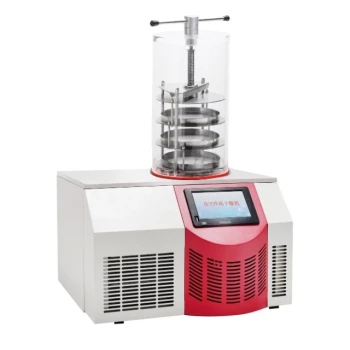
High Performance Laboratory Freeze Dryer for Research and Development

High Performance Laboratory Freeze Dryer for Research and Development

Advanced laboratory freeze dryer for lyophilization, preserving sensitive samples with precision. Ideal for biopharmaceuticals, research & food industries.

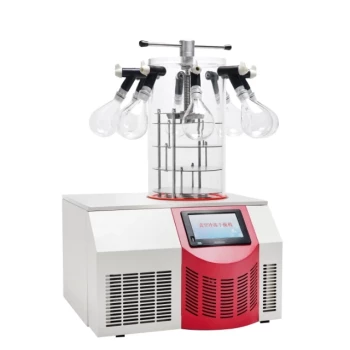
Benchtop Laboratory Vacuum Freeze Dryer

Benchtop Laboratory Vacuum Freeze Dryer

Benchtop laboratory freeze dryer for efficient lyophilization of biological, pharmaceutical, and food samples. Features intuitive touchscreen, high-performance refrigeration, and durable design. Preserve sample integrity—consult now!

Portable Digital Display Automatic Laboratory Sterilizer Lab Autoclave for Sterilization Pressure

Portable Digital Display Automatic Laboratory Sterilizer Lab Autoclave for Sterilization Pressure

Portable autoclave sterilization pressure is a device that uses pressure saturated steam to quickly and effectively sterilize items.

Portable High Pressure Laboratory Autoclave Steam Sterilizer for Lab Use

Portable High Pressure Laboratory Autoclave Steam Sterilizer for Lab Use

Portable autoclave sterilization pressure is a device that uses pressure saturated steam to quickly and effectively sterilize items.

Laboratory Sterilizer Lab Autoclave Vertical Pressure Steam Sterilizer for Liquid Crystal Display Automatic Type

Laboratory Sterilizer Lab Autoclave Vertical Pressure Steam Sterilizer for Liquid Crystal Display Automatic Type

Liquid crystal display automatic vertical sterilizer is a safe, reliable and automatic control sterilization equipment, which is composed of heating system, microcomputer control system and overheating and overvoltage protection system.

Laboratory Sterilizer Lab Autoclave Pulse Vacuum Lifting Sterilizer

Laboratory Sterilizer Lab Autoclave Pulse Vacuum Lifting Sterilizer

The pulse vacuum lifting sterilizer is a state-of-the-art equipment for efficient and precise sterilization. It uses pulsating vacuum technology, customizable cycles, and a user-friendly design for easy operation and safety.

Laboratory Horizontal Autoclave Steam Sterilizer Lab Microcomputer Sterilizer

Laboratory Horizontal Autoclave Steam Sterilizer Lab Microcomputer Sterilizer

The horizontal autoclave steam sterilizer adopts the method of gravity displacement to remove the cold air in the inner chamber, so that the content of steam cold air in the inner chamber is less, and the sterilization is more reliable.

Laboratory High Pressure Steam Sterilizer Vertical Autoclave for Lab Department

Laboratory High Pressure Steam Sterilizer Vertical Autoclave for Lab Department

Vertical pressure steam sterilizer is a kind of sterilization equipment with automatic control, which is composed of heating system, microcomputer control system and overheating and overpressure protection system.

Desktop Fast Laboratory Autoclave Sterilizer 20L 24L for Lab Use

Desktop Fast Laboratory Autoclave Sterilizer 20L 24L for Lab Use

The desktop fast steam sterilizer is a compact and reliable device used for rapid sterilization of medical, pharmaceutical, and research items.

VHP Sterilization Equipment Hydrogen Peroxide H2O2 Space Sterilizer

VHP Sterilization Equipment Hydrogen Peroxide H2O2 Space Sterilizer

A hydrogen peroxide space sterilizer is a device that uses vaporized hydrogen peroxide to decontaminate enclosed spaces. It kills microorganisms by damaging their cellular components and genetic material.

Lab Sterile Slapping Type Homogenizer for Tissue Mashing and Dispersing

Lab Sterile Slapping Type Homogenizer for Tissue Mashing and Dispersing

The slapping sterile homogenizer can effectively separate the particles contained in and on the surface of solid samples, ensuring that the mixed samples in the sterile bag are fully representative.

Low-Temperature Water-Cooled Touchscreen Vibratory Ultrafine Pulverizer

Low-Temperature Water-Cooled Touchscreen Vibratory Ultrafine Pulverizer

Low-temperature water-cooled vibratory pulverizer for ultrafine grinding. Preserves material integrity. Ideal for labs and production. Learn more.

Automatic Lab Cold Isostatic Press CIP Machine Cold Isostatic Pressing

Automatic Lab Cold Isostatic Press CIP Machine Cold Isostatic Pressing

Efficiently prepare samples with our Automatic Lab Cold Isostatic Press. Widely used in material research, pharmacy, and electronic industries. Provides greater flexibility and control compared to electric CIPs.

High Shear Homogenizer for Pharmaceutical and Cosmetic Applications

High Shear Homogenizer for Pharmaceutical and Cosmetic Applications

Enhance lab efficiency with our high-speed Laboratory Emulsifier Homogenizer for precise, stable sample processing. Ideal for pharmaceuticals & cosmetics.

lab cryogenic grinding use liquid-nitrogen for pulverizing plastic raw materials and heat sensitive materials

lab cryogenic grinding use liquid-nitrogen for pulverizing plastic raw materials and heat sensitive materials

Discover the KT-CG01 Liquid Nitrogen Cryogenic Pulverizer, Ideal for Plastic and Heat-Sensitive Material Pulverization, Preserving Material Integrity and Delivering Ultra-Fine Results.

Rubber Vulcanizer Vulcanizing Machine Plate Vulcanizing Press for Lab

Rubber Vulcanizer Vulcanizing Machine Plate Vulcanizing Press for Lab

The Plate vulcanizing press is a kind of equipment used in the production of rubber products, mainly used for the vulcanization of rubber products. Vulcanization is a key step in rubber processing.

Custom PTFE Teflon Parts Manufacturer Laboratory High Temperature Mixing Paddle Mixer

Custom PTFE Teflon Parts Manufacturer Laboratory High Temperature Mixing Paddle Mixer

The PTFE mixing paddle mixer is a versatile and robust tool designed for laboratory use, particularly in environments requiring high resistance to chemicals and extreme temperatures. Crafted from high-quality PTFE, this mixer boasts several key features that enhance its functionality and durability.

Manual Lab Heat Press

Manual Lab Heat Press

Manual hydraulic presses are mainly used in laboratories for various applications such as forging, molding, stamping, riveting and other operations. It allows the creation of complex shapes while saving material.

XRF & KBR steel ring lab Powder Pellet Pressing Mold for FTIR

XRF & KBR steel ring lab Powder Pellet Pressing Mold for FTIR

Produce perfect XRF samples with our steel ring lab powder pellet pressing mold. Fast tableting speed and customizable sizes for accurate molding every time.


Leave Your Message