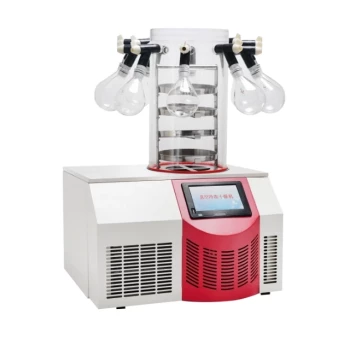
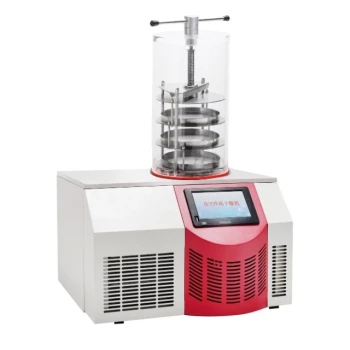
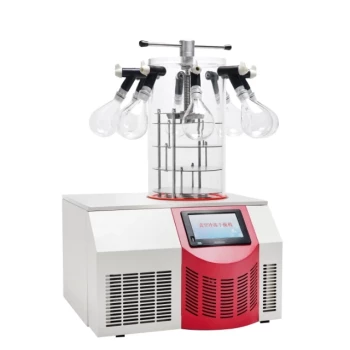
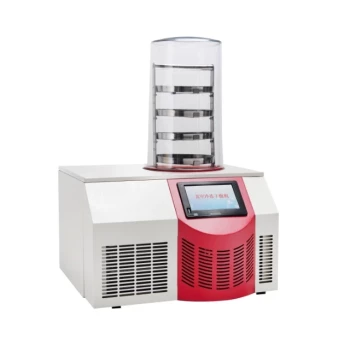
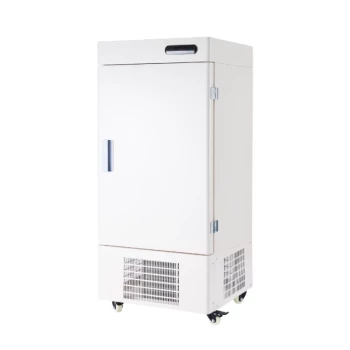
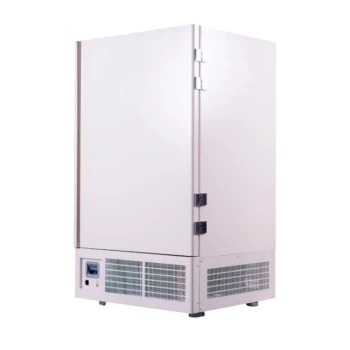
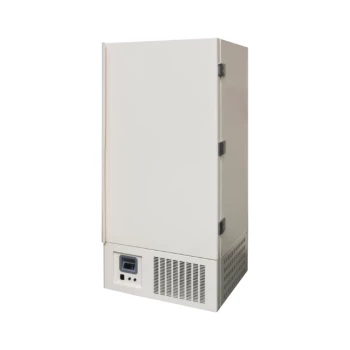
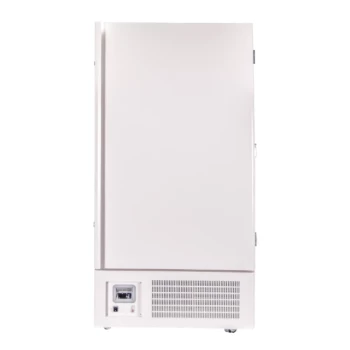
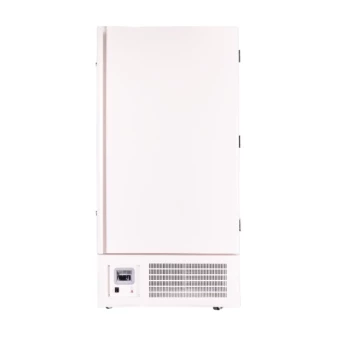
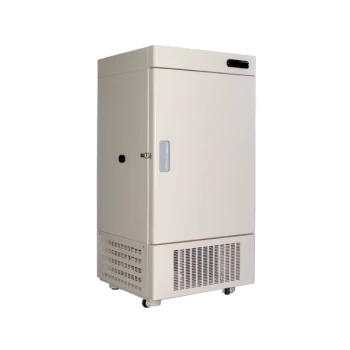
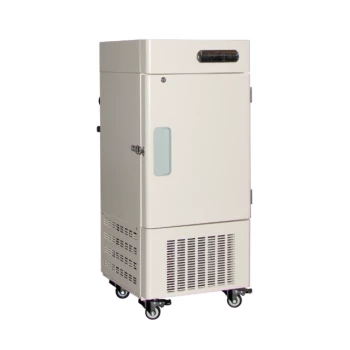
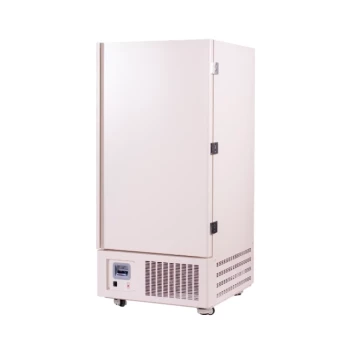
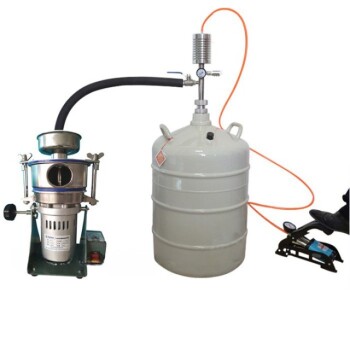
A laboratory freeze-drying system is the definitive tool for converting wet fermentation biomass into a analyzeable powder without compromising its chemical reality. By utilizing sublimation under high vacuum and extremely low temperatures, this process removes moisture while bypassing the liquid phase entirely, ensuring the sample remains chemically identical to its living state.
The Core Value Standard thermal drying methods cook your sample, fundamentally altering its composition before you can even begin analysis. Freeze-drying preserves the chemical integrity of the biomass, specifically preventing the degradation of sensitive lipids, ensuring your data reflects the actual fermentation results rather than the drying process.
The Mechanics of Preservation
Understanding Sublimation
The freeze-drying process relies on sublimation, a physical phase change where water moves directly from a solid (ice) to a gas (vapor).
By applying a deep vacuum and ultra-low temperatures, the system forces the ice within the biomass to vaporize without ever becoming liquid water.
Avoiding Thermal Damage
Conventional drying methods use heat to evaporate water, which introduces thermal energy that can break chemical bonds.
Freeze-drying eliminates this thermal stress. This ensures that the biomass is converted to a dry powder without the structural collapse or chemical changes associated with heat.
Protecting Chemical Integrity
Preserving Intracellular Lipids
For accurate characterization of fermentation biomass, the stability of intracellular lipids is paramount.
These compounds are often the primary target of analysis. Freeze-drying locks these lipids in place, preventing them from breaking down or reacting with other components during the drying phase.
Preventing Fatty Acid Oxidation
Fatty acids are notoriously heat-sensitive and prone to oxidation when exposed to air and high temperatures.
Thermal drying accelerates this oxidation, leading to skewed data and inaccurate characterization. Freeze-drying occurs in a vacuum, removing both the heat and the oxygen that threaten fatty acid stability.
Structural Stability and Storage
Maintaining Microorganism Structure
Beyond chemical composition, researchers often need to preserve the physical structure of the microorganisms.
Freeze-drying is unique in its ability to maintain cellular architecture. This allows for precise microscopic analysis or even reconstitution of the sample by adding water or solvents later.
Long-term Sample Viability
Biological samples are highly prone to natural degradation over time if moisture is present.
By effectively removing water, freeze-drying pauses biological activity. This makes it the ideal method for creating stable, long-term archives of lab samples, a practice standard across research institutes.
Understanding the Trade-offs
Processing Speed vs. Data Quality
Freeze-drying is a time-intensive process compared to rapid thermal drying.
It requires significant cycle times to sublimate all moisture. However, this time investment is the necessary cost for obtaining data that is chemically accurate.
Equipment Complexity
Unlike simple drying ovens, freeze-drying systems require maintenance of vacuum pumps and cold traps.
This adds a layer of operational complexity. You must ensure the vacuum integrity is perfect to achieve the sublimation point required for delicate biological products.
Making the Right Choice for Your Goal
To ensure your characterization data is reliable, align your drying method with your specific analytical targets.
- If your primary focus is Lipid and Fatty Acid Analysis: You must use freeze-drying to prevent oxidation and thermal degradation of these sensitive compounds.
- If your primary focus is Future Reconstitution: Freeze-drying is required to preserve the structural integrity of the microorganisms so they can be revived or dissolved later.
- If your primary focus is Long-Term Bio-banking: Freeze-drying provides the stability needed to store samples indefinitely without biological decay.
True characterization requires a sample that mirrors the living organism; freeze-drying is the only method that delivers this level of fidelity.
Summary Table:
| Feature | Freeze-Drying (Lyophilization) | Conventional Thermal Drying |
|---|---|---|
| Mechanism | Sublimation (Solid to Gas) | Evaporation (Liquid to Gas) |
| Temperature | Ultra-low temperatures | High heat levels |
| Chemical Integrity | Preserves sensitive lipids & fatty acids | Causes thermal degradation & oxidation |
| Structural Impact | Maintains cellular architecture | Causes structural collapse/shrinkage |
| Best Use Case | Precise characterization & bio-banking | Basic moisture removal where quality is secondary |
Elevate Your Research with KINTEK’s Precision Solutions
Don't compromise your fermentation data with inferior drying methods. KINTEK specializes in advanced laboratory equipment designed to protect the chemical reality of your samples. From high-performance freeze dryers and cold traps to our comprehensive range of high-temperature furnaces, hydraulic presses, and specialized reactors, we provide the tools necessary for rigorous material characterization.
Why choose KINTEK?
- Preservation Experts: Our cooling solutions ensure the stability of heat-sensitive lipids and microorganisms.
- Comprehensive Portfolio: Whether you need homogenizers, centrifuges, or essential ceramics, we are your single-source lab partner.
- Tailored for Scientists: We understand the needs of battery research, dental labs, and advanced chemical engineering.
Ensure your analysis reflects the truth of your biomass. Contact KINTEK today to find the perfect freeze-drying system for your laboratory!
References
- Afonso Fontes, Teresa Lopes da Silva. Monitoring Yeast Cultures Grown on Corn Stover Hydrolysate for Lipid Production. DOI: 10.3390/pr12030558
This article is also based on technical information from Kintek Solution Knowledge Base .
Related Products
- High Performance Laboratory Freeze Dryer
- High Performance Laboratory Freeze Dryer for Research and Development
- Benchtop Laboratory Freeze Dryer for Lab Use
- Benchtop Laboratory Vacuum Freeze Dryer
- 158L Precision Vertical Ultra Low Freezer for Laboratory Applications
People Also Ask
- What role does a laboratory freeze dryer play in the synthesis of graphene-based electrocatalysts? Preserve 3D Structures
- What are the technical advantages of using a laboratory freeze dryer for porous carbon precursors? Preserve 3D Networks
- What types of liquid samples can be processed using a laboratory freeze dryer? Preserve Your Sensitive Materials
- How do laboratory freeze dryers support scientific research? Preserve Sample Integrity for Reproducible Results
- Why is a laboratory freeze dryer preferred over traditional heating? Preserve Biochar Structure & Maximize Porosity