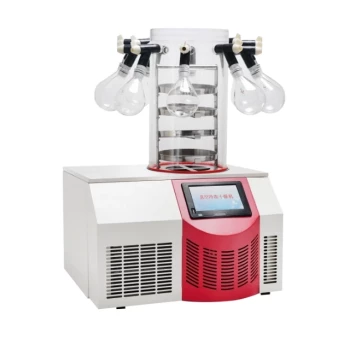
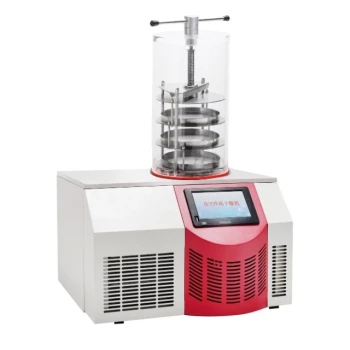
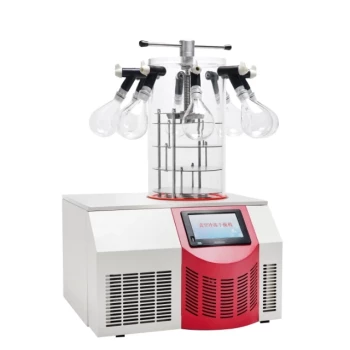
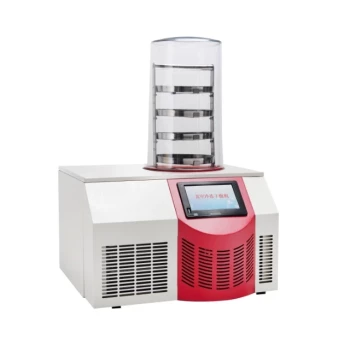
The use of a freeze dryer (lyophilizer) is a critical stabilization step designed to remove moisture from biological reactor sludge under vacuum and low-temperature conditions. This process effectively arrests biological activity, preventing the DNA degradation that typically occurs at room temperature and ensuring the sample retains the exact microbial profile present at the moment of collection.
Core Takeaway Biological sludge is a rapidly changing ecosystem; without immediate stabilization, the genomic data will degrade. Lyophilization preserves the sample's integrity, which is the absolute prerequisite for high-accuracy 16S rRNA gene sequencing and microbial community analysis.
The Science of Sample Stabilization
Removing Moisture via Sublimation
A freeze dryer removes water from the sludge sample without passing it through a liquid phase.
By lowering the temperature and applying a vacuum, frozen water sublimates directly from a solid to a gas. This leaves behind a dry, stable structure without the damage often caused by heat evaporation.
Arresting Biological Activity
Sludge is biologically active, meaning bacteria within the sample will continue to metabolize and interact after collection.
Lyophilization stops these biological processes immediately. This "locks" the microbial community in time, ensuring that the population you analyze is the same one that was in the reactor.
Protecting Genomic Integrity
Preventing DNA Degradation
The primary adversary in metagenomics is the degradation of genetic material.
As noted in standard protocols, processing samples at room temperature exposes DNA to enzymatic breakdown. Freeze drying mitigates this risk entirely by creating an environment where degradative enzymes cannot function.
Enhancing 16S rRNA Sequencing Accuracy
For metagenomic analysis, specifically 16S rRNA gene sequencing, the quality of the input data dictates the quality of the result.
By maximizing the preservation of microbial genomic information, freeze drying ensures that the sequencing output accurately reflects microbial community dynamics. It reduces the "noise" introduced by sample decay.
Understanding the Trade-offs
Process Time vs. Data Quality
While essential for accuracy, lyophilization is a time-intensive process compared to other drying methods.
It can become a bottleneck in workflows requiring rapid turnover. However, skipping this step often results in unusable data due to genomic degradation.
Equipment Requirements
This method requires specialized equipment (the lyophilizer) capable of maintaining precise vacuum and temperature levels.
Operators must ensure the equipment is functioning correctly; incomplete drying can leave residual moisture, allowing degradation to slowly continue during storage.
Making the Right Choice for Your Goal
To ensure your metagenomic analysis yields valid results, consider the following based on your specific objectives:
- If your primary focus is High-Accuracy Community Analysis: You must prioritize freeze drying to prevent DNA degradation and ensure the fidelity of 16S rRNA sequencing.
- If your primary focus is Long-Term Sample Storage: You should use lyophilization to completely remove moisture, allowing the samples to be stored safely without refrigeration concerns.
High-quality data begins with a high-quality sample; stabilization is not just a step, it is the foundation of accurate metagenomics.
Summary Table:
| Feature | Benefit for Metagenomic Analysis |
|---|---|
| Sublimation | Removes moisture without heat, preventing thermal damage to DNA. |
| Biological Arrest | Stops microbial metabolism to "lock" the community profile in time. |
| DNA Preservation | Prevents enzymatic breakdown for high-quality sequencing data. |
| Sample Stability | Enables long-term storage and easier handling of reactor sludge. |
Elevate Your Metagenomic Research with KINTEK's Precision Equipment
Accurate microbial community analysis depends on perfect sample preservation. KINTEK provides high-performance freeze dryers (lyophilizers), ULT freezers, and cold traps specifically designed to arrest biological activity and protect delicate genomic material from degradation. Whether you are analyzing reactor sludge or complex biological samples, our precision equipment ensures your 16S rRNA sequencing results are reliable and reproducible.
Contact our lab specialists today to find the perfect stabilization solution for your workflow!
References
- Aracely Zambrano-Romero, Valeria Ochoa‐Herrera. Dynamics of Microbial Communities during the Removal of Copper and Zinc in a Sulfate-Reducing Bioreactor with a Limestone Pre-Column System. DOI: 10.3390/ijerph19031484
This article is also based on technical information from Kintek Solution Knowledge Base .
Related Products
- High Performance Laboratory Freeze Dryer
- High Performance Laboratory Freeze Dryer for Research and Development
- Benchtop Laboratory Freeze Dryer for Lab Use
- Benchtop Laboratory Vacuum Freeze Dryer
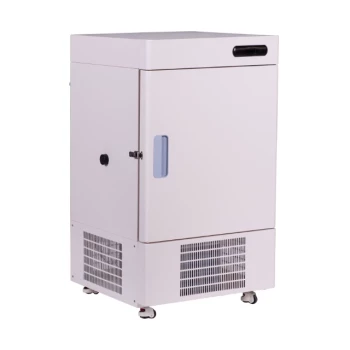
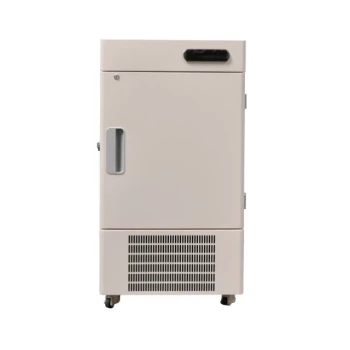
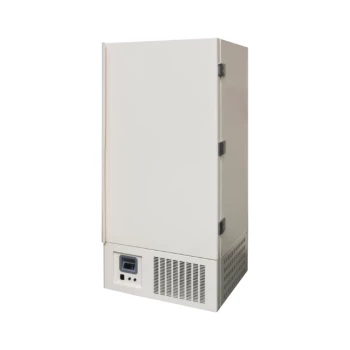
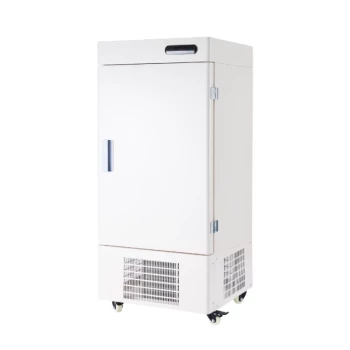
- 108L Vertical Ultra Low Temperature ULT Freezer
People Also Ask
- What role does a laboratory freeze dryer play in the synthesis of graphene-based electrocatalysts? Preserve 3D Structures
- What are the technical advantages of using a laboratory freeze dryer for porous carbon precursors? Preserve 3D Networks
- What types of liquid samples can be processed using a laboratory freeze dryer? Preserve Your Sensitive Materials
- How do laboratory freeze dryers support scientific research? Preserve Sample Integrity for Reproducible Results
- Why is a laboratory freeze dryer preferred over traditional heating? Preserve Biochar Structure & Maximize Porosity