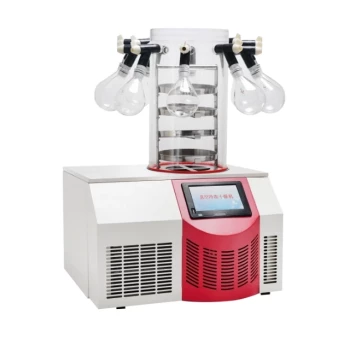
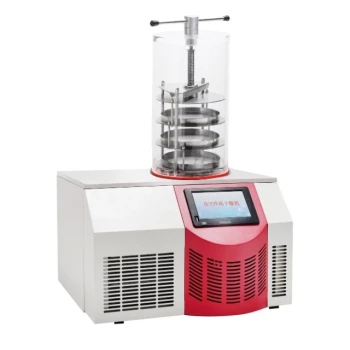
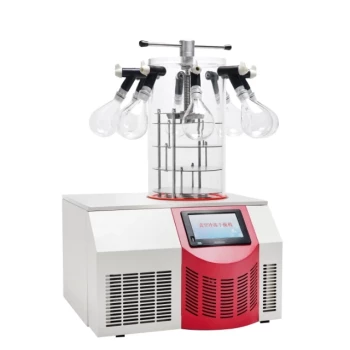
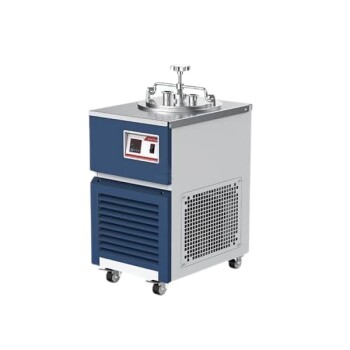
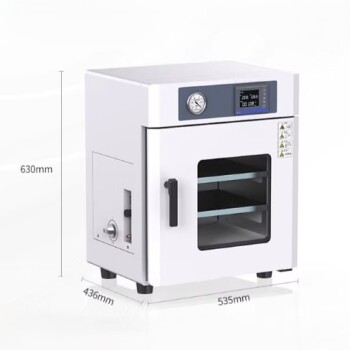
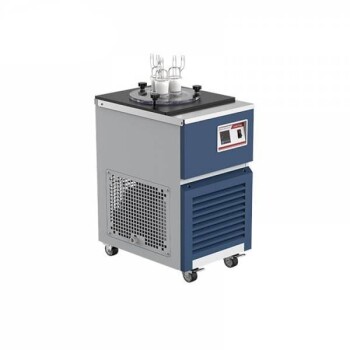
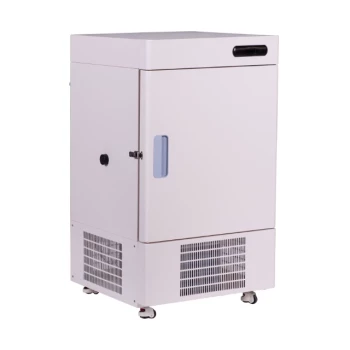
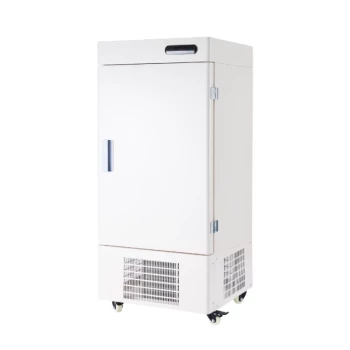
The laboratory vacuum freeze dryer is indispensable for converting plant extracts into solid powder because it utilizes sublimation to remove moisture in a controlled, low-temperature vacuum environment. Unlike conventional drying methods, this process stabilizes the extract without subjecting it to the destructive effects of heat or oxygen.
Core Takeaway By bypassing the liquid phase during drying, freeze drying preserves the chemical integrity of heat-sensitive compounds like phenolics and flavonoids. It ensures the final powder retains the biological potency, porous structure, and solubility of the original plant material.
The Mechanism Behind Preservation
Utilizing Sublimation
The core advantage of this equipment is its ability to remove moisture through sublimation. In this process, frozen water within the extract transitions directly from a solid state to gas, bypassing the liquid phase entirely.
The Role of the Vacuum Environment
To achieve sublimation, the dryer creates a vacuum environment. This lowers the pressure surrounding the extract, allowing ice to vaporize at very low temperatures, which is critical for maintaining the stability of the plant material.
Protecting Heat-Sensitive Bioactive Components
Preventing Thermal Degradation
Many bioactive components in plant extracts, such as phenolics, flavonoids, and terpenoids, are highly sensitive to heat. Traditional high-temperature drying methods often cause these compounds to break down, significantly reducing the efficacy of the final product.
Halting Oxidation
The vacuum environment significantly reduces the presence of oxygen during the drying process. This prevents oxidation, a chemical reaction that can degrade the extract and diminish its therapeutic properties.
Maintaining Antibacterial Potency
By avoiding both thermal degradation and oxidation, the freeze dryer ensures the antibacterial potency of the extracts remains intact. The resulting powder delivers a biological activity level comparable to the fresh plant material.
Ensuring Physical Quality and Solubility
Preventing Agglomeration
Drying extracts in a liquid phase often leads to agglomeration, where surface tension causes particles to clump together and restack. Freeze drying mitigates this issue by removing solvents while the structure is frozen and rigid.
Preserving Surface Structure
This technique maximizes the preservation of the powder's porous structure and specific surface area. A porous structure is essential for ensuring the powder remains highly reactive and easily soluble for subsequent applications.
Common Pitfalls to Avoid
The Risk of Alternative Methods
It is a common mistake to assume that standard oven drying or air drying is a sufficient substitute for stable extracts. These methods introduce heat and oxygen, which invariably alter the chemical profile of the plant material.
Understanding Process Sensitivity
While freeze drying is superior for quality, it relies on maintaining a consistent vacuum and low temperature. Any breach in the vacuum seal or fluctuation in temperature can interrupt sublimation, leading to partial melting and structural collapse of the powder.
Making the Right Choice for Your Goal
To determine if a laboratory vacuum freeze dryer is the right tool for your specific application, consider your primary objectives:
- If your primary focus is Bioactivity: You must use freeze drying to protect heat-sensitive compounds like flavonoids and maintain antibacterial potency.
- If your primary focus is Physical Structure: This method is required to prevent particle agglomeration and ensure a high specific surface area for better solubility.
Selecting the right drying method is not just about removing water; it is about locking in the chemical and physical potential of your plant extract.
Summary Table:
| Feature | Freeze Drying (Sublimation) | Traditional Heat Drying |
|---|---|---|
| Temperature | Ultra-low temperatures | High heat levels |
| Bioactive Retention | High (phenolics, flavonoids preserved) | Low (thermal degradation) |
| Physical Form | Porous, non-clumping powder | Agglomerated, dense particles |
| Solubility | Excellent (high surface area) | Poor (collapsed structure) |
| Oxidation Risk | Negligible (vacuum environment) | High (oxygen exposure) |
Elevate Your Extract Quality with KINTEK Precision
Don't compromise the potency of your plant-based research. KINTEK specializes in advanced laboratory solutions, including high-performance freeze dryers, ULT freezers, and cold traps designed to preserve the delicate chemical integrity of your samples. Whether you are scaling up botanical research or refining pharmaceutical powders, our comprehensive range of equipment—from homogenizers and crushing systems to vacuum furnaces and rotary evaporators—ensures your lab achieves repeatable, high-quality results.
Ready to lock in the biological potential of your extracts? Contact our experts at KINTEK today to find the perfect drying solution for your specific application.
References
- Arantzazu Santamaria‐Echart, Arantxa Eceiza. Development of waterborne polyurethane-ureas added with plant extracts: Study of different incorporation routes and their influence on particle size, thermal, mechanical and antibacterial properties. DOI: 10.1016/j.porgcoat.2018.01.006
This article is also based on technical information from Kintek Solution Knowledge Base .
Related Products
- Benchtop Laboratory Vacuum Freeze Dryer
- High Performance Laboratory Freeze Dryer
- High Performance Laboratory Freeze Dryer for Research and Development
- Benchtop Laboratory Freeze Dryer for Lab Use
- Vacuum Cold Mounting Machine for Sample Preparation
People Also Ask
- What are the technical advantages of using a laboratory freeze dryer for porous carbon precursors? Preserve 3D Networks
- How do laboratory freeze dryers support scientific research? Preserve Sample Integrity for Reproducible Results
- Why is a laboratory freeze dryer preferred over traditional heating? Preserve Biochar Structure & Maximize Porosity
- What types of liquid samples can be processed using a laboratory freeze dryer? Preserve Your Sensitive Materials
- What role do laboratory freeze dryers play in the food industry? Unlock Superior Food Preservation