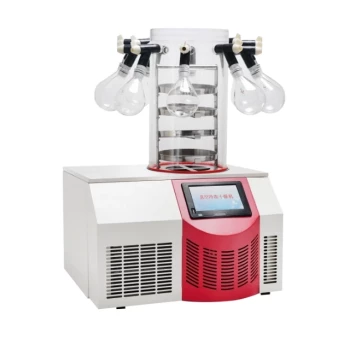
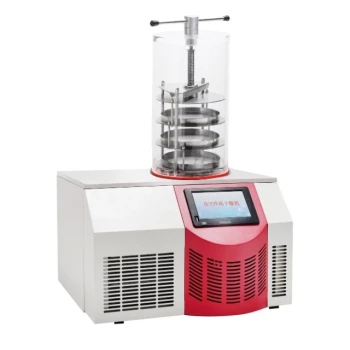
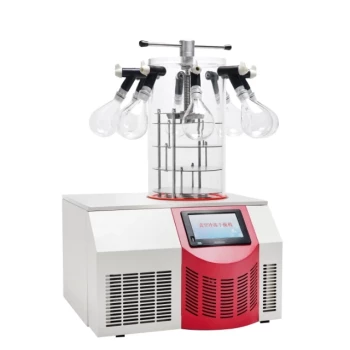
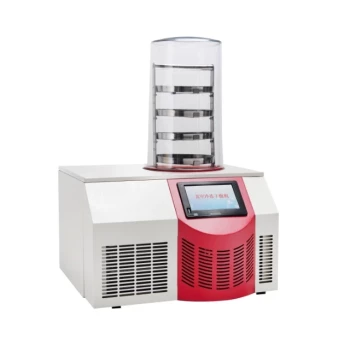
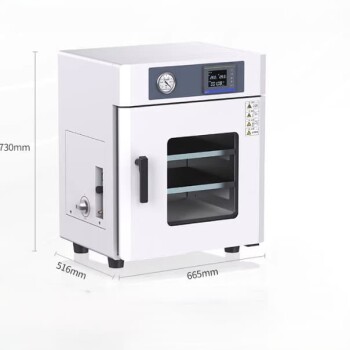
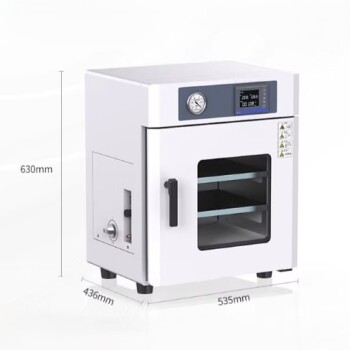
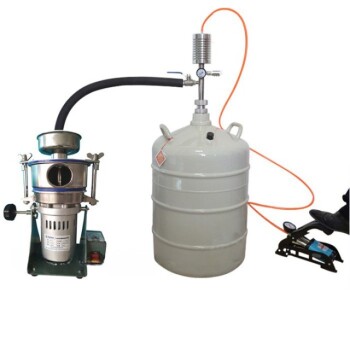
The superior precision of a laboratory freeze dryer makes it the standard choice for preparing microalgae samples, primarily because it removes moisture through sublimation rather than heat evaporation. Unlike conventional ovens that expose samples to high temperatures, freeze dryers maintain a low-temperature environment. This approach protects the sample's physical structure and prevents the chemical breakdown of vital components, ensuring the material remains true to its original state.
By avoiding the thermal stress associated with oven drying, freeze drying prevents the degradation of carbohydrates and the denaturation of proteins. This ensures that subsequent scientific evaluations reveal the accurate composition of the microalgae, rather than artifacts created by the drying process.
Preserving Biochemical Integrity
Avoiding Thermal Degradation
The most critical advantage of a freeze dryer is its ability to bypass high temperatures. Conventional ovens rely on heat to evaporate water, which acts as a destructive force on sensitive biological materials.
Protecting Carbohydrates
Microalgae are often analyzed for their sugar content. The high heat of an oven can cause carbohydrate degradation, altering the chemical profile of the sugars before analysis even begins. Freeze drying eliminates this risk, preserving the exact carbohydrate composition found in the living cell.
Preventing Protein Denaturation
Proteins are highly susceptible to structural changes when exposed to heat. Oven drying frequently leads to protein denaturation, where the protein loses its functional shape. A freeze dryer maintains the sample's biological fidelity, ensuring protein evaluation remains scientifically valid.
Maintaining Structural Fidelity
The Principle of Sublimation
Freeze dryers operate on the principle of sublimation, where ice converts directly into vapor without passing through a liquid phase. This gentle removal of water maximizes the preservation of the original physical structures of the microalgae cells.
Ensuring Analytical Accuracy
For compositional analysis, the physical and chemical state of the sample must mirror the original organism as closely as possible. Because freeze drying retains the sample's original structure and chemistry, it ensures the accuracy and scientific validity of the final data.
Understanding the Risks of Conventional Methods
The Cost of Heat
While conventional ovens are common laboratory tools, their use in microalgae preparation introduces significant variables. The introduction of thermal energy does not just remove water; it actively catalyzes chemical reactions that change the sample.
Compromised Data Quality
Using an oven risks generating data that reflects the degraded sample rather than the original microalgae. If the goal is precise component evaluation, the convenience of an oven is outweighed by the loss of analytical reliability.
Making the Right Choice for Your Goal
To ensure your compositional analysis yields publication-grade data, align your preparation method with your specific analytical targets.
- If your primary focus is Sugar Analysis: Use a freeze dryer to prevent carbohydrate degradation, ensuring the sugar profiles obtained are chemically accurate.
- If your primary focus is Protein Evaluation: Rely on freeze drying to avoid denaturation, preserving the native state of the proteins for valid assessment.
Choosing the correct drying method is not a matter of convenience; it is the fundamental step in securing the integrity of your research data.
Summary Table:
| Feature | Laboratory Freeze Dryer | Conventional Oven |
|---|---|---|
| Mechanism | Sublimation (Ice to Vapor) | Heat Evaporation (Liquid to Vapor) |
| Temperature | Low (Cryogenic/Sub-zero) | High (Thermal Stress) |
| Carbohydrate State | Preserved (No degradation) | Often Chemically Altered |
| Protein Structure | Intact (Native state) | Denatured (Lost functional shape) |
| Sample Integrity | High Structural Fidelity | Compromised Accuracy |
Elevate Your Analytical Precision with KINTEK
Don't let thermal degradation compromise your research. KINTEK provides high-performance cooling solutions, including advanced freeze dryers, ULT freezers, and cold traps, designed to preserve the biochemical integrity of sensitive microalgae and biological samples.
Whether you are conducting protein evaluation or sugar analysis, our laboratory equipment ensures your data remains accurate and publication-grade. Beyond cooling, KINTEK offers a full suite of laboratory tools, from high-temperature furnaces and reactors to PTFE consumables and hydraulic presses, supporting every stage of your scientific workflow.
Ready to secure the integrity of your research data? Contact KINTEK today for a customized solution!
References
- Jinzhi Yang, Ming Yang. Glucose Conversion for Biobutanol Production from Fresh Chlorella sorokiniana via Direct Enzymatic Hydrolysis. DOI: 10.3390/fermentation9030284
This article is also based on technical information from Kintek Solution Knowledge Base .
Related Products
- High Performance Laboratory Freeze Dryer
- High Performance Laboratory Freeze Dryer for Research and Development
- Benchtop Laboratory Freeze Dryer for Lab Use
- Benchtop Laboratory Vacuum Freeze Dryer
- 808L Precision Laboratory Vertical Ultra Low Temperature Freezer
People Also Ask
- What role does a laboratory freeze dryer play in the synthesis of graphene-based electrocatalysts? Preserve 3D Structures
- What are the technical advantages of using a laboratory freeze dryer for porous carbon precursors? Preserve 3D Networks
- What types of liquid samples can be processed using a laboratory freeze dryer? Preserve Your Sensitive Materials
- How do laboratory freeze dryers support scientific research? Preserve Sample Integrity for Reproducible Results
- Why is a laboratory freeze dryer preferred over traditional heating? Preserve Biochar Structure & Maximize Porosity