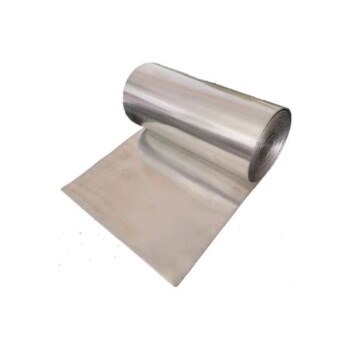
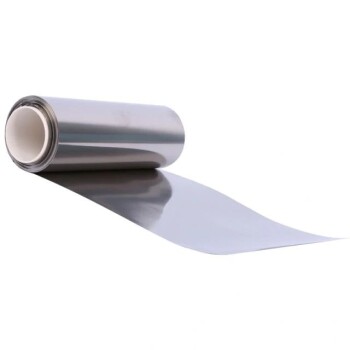
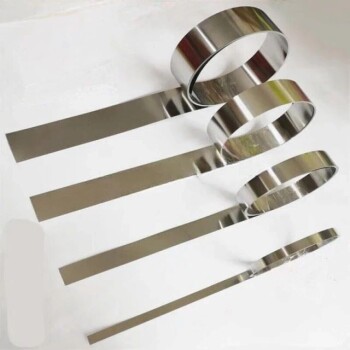
High-purity copper foil is the industry standard for silicon-based anodes because it combines exceptional electrical conductivity with a unique catalytic ability to lower synthesis temperatures. Specifically, it acts as a reaction substrate that reduces the energy required for silane condensation from 500°C to 300°C, facilitating a more efficient and dense deposition of silicon nanoparticles.
Core Takeaway: High-purity copper foil serves a dual purpose as both a highly stable current collector and a critical catalyst that lowers production energy costs while maximizing the loading density of silicon on the anode.
Superior Electrical and Chemical Stability
High Conductivity for Efficient Charge Transport
Copper is utilized primarily for its excellent electrical conductivity, which ensures minimal resistive losses during battery cycling. This property is vital for silicon-based anodes, which often face challenges with internal resistance and volume expansion during lithiation.
Electrochemical Stability in Battery Environments
High-purity copper provides the necessary electrochemical stability to withstand the harsh environment inside a lithium-ion cell. It does not react with the electrolyte or lithium ions at the operating voltages of the anode, ensuring a long cycle life for the battery.
The Catalytic Role in Silicon Synthesis
Lowering the Thermal Activation Barrier
Beyond its role as a conductor, copper foil acts as a catalyst in vapor-phase condensation processes. It significantly lowers the reaction temperature required for silane generation and its subsequent condensation into silicon nanoparticles.
Significant Energy Reduction
In traditional setups, these reactions typically require temperatures of 500°C. By using copper as a reaction substrate, this threshold is reduced to approximately 300°C, directly translating to lower energy consumption and reduced manufacturing costs.
Enhancing Loading and Material Performance
Increasing Silicon Loading Density
The catalytic interaction between the copper substrate and the precursors allows for a more controlled deposition process. This results in a significantly higher loading density of silicon nanoparticles onto the graphite surface, which is essential for achieving high energy density.
Improved Interface Quality
Because the copper foil facilitates the reaction at a lower temperature, it helps maintain the structural integrity of the surrounding materials. This creates a more robust reaction substrate that supports the uniform growth of silicon without damaging the underlying current collector.
Understanding the Trade-offs
Cost and Material Purity
The primary trade-off involves the high cost of high-purity copper. Achieving the specific catalytic benefits mentioned requires a level of purity that is more expensive to produce than standard industrial copper foils.
Sensitivity to Processing Conditions
While copper lowers the reaction temperature, the process remains sensitive to contaminants and oxidation. Any surface impurities on the copper foil can inhibit its catalytic efficiency, potentially leading to non-uniform silicon deposition or reduced adhesion.
How to Apply This to Your Project
Maximizing Efficiency in Anode Production
To successfully integrate high-purity copper foil into your silicon-anode manufacturing process, consider your primary performance goals.
- If your primary focus is reducing operational costs: Leverage the catalytic properties of copper to run your CVD or condensation reactors at 300°C to minimize energy overhead.
- If your primary focus is maximizing energy density: Focus on the copper-facilitated deposition to ensure the highest possible loading of silicon nanoparticles on the graphite host.
- If your primary focus is long-term cycle life: Ensure the copper foil used is of the highest purity to prevent parasitic reactions and maintain electrochemical stability over hundreds of cycles.
High-purity copper foil is not merely a passive component; it is a critical process enabler that defines the efficiency and capacity of modern silicon-based energy storage.
Summary Table:
| Feature | Function in Silicon Anode Preparation | Impact on Performance |
|---|---|---|
| High Conductivity | Efficient charge transport | Minimal resistive losses during cycling |
| Catalytic Ability | Lowers silane condensation temp (500°C to 300°C) | Reduces energy consumption & production costs |
| Chemical Stability | Resists electrolyte & lithium reaction | Ensures long-term electrochemical cycle life |
| Substrate Quality | Facilitates dense silicon deposition | Maximizes energy density & loading capacity |
Elevate Your Battery Research with KINTEK
Precise material synthesis requires the right environment. Whether you are optimizing silicon-based anodes or developing next-generation energy storage, KINTEK provides the advanced laboratory equipment you need to succeed.
From high-performance CVD, PECVD, and vacuum furnaces for silane condensation to specialized battery research tools, hydraulic presses, and high-purity consumables like PTFE and ceramics, we empower researchers to achieve superior loading density and electrochemical stability.
Ready to reduce your energy overhead and maximize anode performance?
Contact KINTEK Today for Expert Solutions
References
- Rohan Patil, Guiomar Hernández. A Scalable Furnace Technique to Grow Silicon Nanoparticles for High-Performance Li-Ion Battery Anodes. DOI: 10.1149/ma2023-022425mtgabs
This article is also based on technical information from Kintek Solution Knowledge Base .
Related Products
- High Purity Gold Platinum Copper Iron Metal Sheets
- High Purity Zinc Foil for Battery Lab Applications
- High-Purity Titanium Foil and Sheet for Industrial Applications
- Copper Foam
- Copper Nickel Foam Metal Sheet
People Also Ask
- What general precaution should be taken regarding the electrolyte? Ensure Your Gold & Platinum Electrodes Stay Inert
- What are the guidelines for using gold or platinum sheets during an experiment? Ensure Precise and Reliable Results
- What is the purity of the gold and platinum sheets used for experiments? Ensuring 99.99% Purity for Reliable Results
- What substances should be avoided to prevent damage to gold or platinum sheets? Protect Your Precious Metals
- What are the main maintenance and care instructions for gold and platinum sheets? Ensure Longevity and Pristine Performance