Grinding epoxy resin (EP) to 200 mesh is a critical preparation step designed to maximize heat transfer efficiency and ensure kinetic accuracy. By reducing the particle size to approximately 74 microns, you significantly increase the specific surface area available for thermal degradation. This ensures that the material behaves as a uniform medium rather than a collection of bulk solids with internal temperature gradients.
Achieving a 200-mesh consistency eliminates internal thermal resistance and localized pyrolysis inconsistencies. This precision is essential for generating representative product distributions and valid kinetic data during isothermal heating.
The Role of Specific Surface Area in Reaction Activity
Maximizing Surface Exposure
Finer particles expose a significantly higher number of molecular chains to the heat source simultaneously. This increased specific surface area drives higher reaction activity across the entire sample, rather than limiting the reaction to the outer shell of a large particle.
Eliminating Material Agglomerates
The use of mechanical milling or ball mills breaks down large clusters and internal voids within the epoxy or thermoplastic. This ensures that heat does not encounter physical barriers, allowing for a more predictable and controlled decomposition process.
Improving Dispersion for Co-Pyrolysis
When mixing epoxy with other additives or binders, a 200-mesh size ensures uniform dispersion. This high level of refinement improves contact efficiency between different components, enabling more thorough chemical interactions.
Achieving Thermal Uniformity and Kinetic Integrity
Reducing Internal Thermal Resistance
Large particles often suffer from high internal thermal resistance, where the core remains cool while the surface begins to char. Reducing the sample to 200 mesh minimizes the distance heat must travel, allowing for near-instantaneous heat penetration.
Preventing Incomplete Localized Pyrolysis
Uneven heating causes different sections of a sample to undergo phase transitions at different times. Fine grinding ensures the entire sample reaches the target temperature simultaneously, preventing the "skewed" results caused by incomplete or localized reactions.
Securing Accurate Kinetic Data
In isothermal pyrolysis, researchers assume the reaction occurs at a constant, uniform temperature. Grinding to 200 mesh validates this assumption, which is necessary to calculate reliable activation energy and rate constants.
Understanding the Trade-offs and Pitfalls
Potential for Thermal Degradation
The mechanical energy from intense milling can generate significant friction heat. If the milling process is not controlled, it may cause premature thermal degradation or alter the chemical structure of the epoxy resin before the experiment even begins.
Issues with Hygroscopicity
Increasing the surface area makes the powder much more sensitive to environmental moisture. Materials ground to 200 mesh must be stored in desiccators to prevent moisture absorption, which can introduce errors in thermal analysis data.
Sample Contamination
Prolonged grinding in ball mills can introduce trace contaminants from the grinding media (such as steel or ceramic particles). While often negligible, these impurities can act as unintended catalysts during the pyrolysis process.
How to Apply This to Your Project
Selecting the right preparation method depends on the specific goals of your thermal analysis.
- If your primary focus is Kinetic Modeling: Use a 200-mesh sieve to guarantee that thermal lag does not invalidate your rate constant calculations.
- If your primary focus is Product Yield Analysis: Ensure fine grinding to obtain a representative distribution of gases, oils, and char that reflects the material's true chemical potential.
- If your primary focus is Composite Synthesis: Prioritize the elimination of agglomerates to ensure the final composite has a consistent morphology and a compact structure.
Precision in sample preparation is the foundation of reliable thermal analysis and successful material transformation.
Summary Table:
| Factor | Impact on Pyrolysis | Benefit of 200 Mesh (74μm) |
|---|---|---|
| Surface Area | Controls reaction activity | Maximizes molecular chain exposure |
| Thermal Resistance | Causes internal temp gradients | Enables near-instant heat penetration |
| Kinetic Data | Skews activation energy | Ensures valid, uniform isothermal data |
| Uniformity | Leads to localized reactions | Eliminates agglomerates and voids |
Optimize Your Sample Preparation with KINTEK
Precision in pyrolysis begins with superior material preparation. KINTEK specializes in high-performance crushing and milling systems and sieving equipment designed to help you achieve the exact 200-mesh consistency required for accurate kinetic modeling.
Beyond sample prep, our comprehensive portfolio includes:
- High-Temperature Furnaces: Muffle, tube, and vacuum systems for precise thermal degradation.
- Material Processing: Hydraulic presses, high-pressure reactors, and advanced ceramics.
- Lab Essentials: Cooling solutions, homogenizers, and high-purity consumables like PTFE and crucibles.
Don't let internal thermal resistance compromise your research results. Contact KINTEK today to discover how our laboratory equipment can enhance your heat transfer efficiency and ensure the integrity of your material transformation projects!
References
- Lichao Ge, Chang Xu. Study on Isothermal Pyrolysis and Product Characteristics of Basic Components of Waste Wind Turbine Blades. DOI: 10.2139/ssrn.4341317
This article is also based on technical information from Kintek Solution Knowledge Base .
Related Products
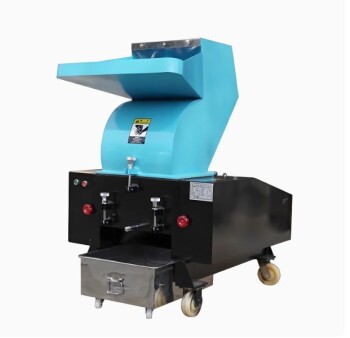
- Powerful Plastic Crusher Machine
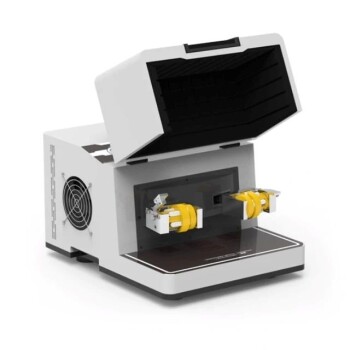
- Laboratory Micro Tissue Grinding Mill Grinder
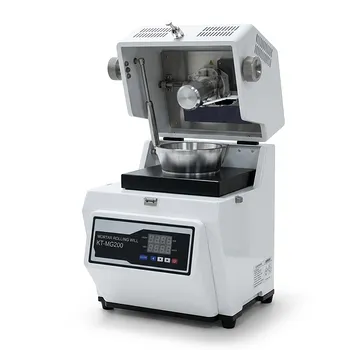
- Laboratory Grinding Mill Mortar Grinder for Sample Preparation
- Laboratory Hybrid Tissue Grinding Mill
People Also Ask
- What is the primary purpose of using an industrial-grade grinder for flax straw? Optimize Biomass Pretreatment Now
- What is the primary function of a crushing system? Optimize Rice Husk Fractionation with Precise Size Reduction
- What is the primary function of industrial crushers in battery dismantling? Optimize Your Recovery Feedstock
- What are the contaminants in plastic pyrolysis oil? Manage Impurities for Commercial Success
- Why is it necessary to use an ultrasonic cell disruptor before yeast flow cytometry? Ensure Data Accuracy