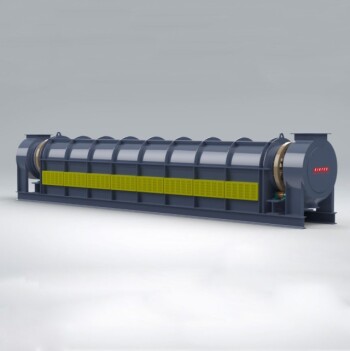
The primary function of industrial crushers in the mechanical dismantling of spent ternary batteries is to apply high-speed impact and shearing forces to physically deconstruct the unit. This process reduces the battery components into powders of varying particle sizes, serving as the essential preparatory step for material recovery.
Industrial crushing acts as the foundational gateway for large-scale recycling, converting complex battery structures into a workable feedstock that allows for the automated separation of valuable cathode materials.
The Mechanics of Material Liberation
Utilizing Impact and Shearing Forces
Industrial crushers do not simply squeeze or compress the batteries; they employ dynamic mechanical energy. The core mechanism involves high-speed impact and shearing forces designed to shatter the battery's structural integrity.
creating Essential Feedstock
The immediate output of this violent mechanical process is a mixture of powders. By breaking the battery down into these fundamental particles, the crusher effectively "liberates" the materials from their assembled form.
Enabling Downstream Separation
Prerequisite for Physical Sieving
The efficiency of the entire recycling line depends on this initial crushing phase. The text identifies this physical transformation as a strict prerequisite for physical sieving equipment. Without reducing the battery to powder, separating the cathode materials from other components is mechanically impossible.
Foundation for Automation
Beyond simple material breakdown, crushers enable scalability. This mechanical dismantling serves as the foundation for automated, large-scale battery recycling operations, moving the process away from manual disassembly toward industrial throughput.
Understanding the Operational Trade-offs
Managing Particle Size Variation
While crushing is essential, the process produces powders of varying particle sizes. This variation is a critical factor; the downstream sieving equipment must be capable of handling the specific distribution of sizes produced by the crusher.
Dependence on Physical Transformation
The success of the recycling process is heavily front-loaded on the crusher's performance. If the impact and shearing forces do not achieve the necessary physical transformation, the subsequent automated separation stages will likely fail to recover materials efficiently.
Making the Right Choice for Your Process
To optimize your mechanical dismantling line, consider the downstream requirements of your facility.
- If your primary focus is Material Purity: Ensure your crushing parameters yield a particle size distribution that aligns perfectly with your physical sieving specifications.
- If your primary focus is High-Volume Throughput: Prioritize crushers that can maintain consistent impact and shearing forces to support large-scale, automated operations.
The effectiveness of your battery recycling operation is directly proportional to the quality of this initial mechanical breakdown.
Summary Table:
| Feature | Description |
|---|---|
| Core Mechanism | High-speed impact and shearing forces to shatter structural integrity |
| Primary Output | Heterogeneous powders of varying particle sizes (liberated material) |
| Key Role | Prerequisite for physical sieving and automated downstream separation |
| Scale Capability | Enables industrial-scale throughput over manual disassembly |
Maximize Your Material Recovery Efficiency with KINTEK
The success of your battery recycling line begins with the quality of the initial mechanical breakdown. At KINTEK, we specialize in the high-performance laboratory and industrial equipment necessary for advanced material processing.
Our comprehensive range of crushing and milling systems, sieving equipment, and hydraulic presses is engineered to provide the precise particle size distribution required for the efficient recovery of valuable cathode materials. Whether you are scaling up for high-volume throughput or focusing on material purity, our technical experts are ready to help you optimize your dismantling process.
Contact KINTEK today to discuss your recycling solutions!
References
- Weihao Liu, Zhe Chen. Recovery process of waste ternary battery cathode material. DOI: 10.1051/e3sconf/202339401004
This article is also based on technical information from Kintek Solution Knowledge Base .
Related Products
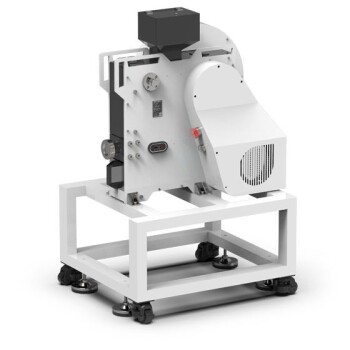
- Laboratory Jaw Crusher
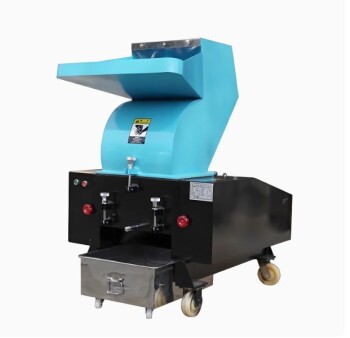
- Powerful Plastic Crusher Machine
- Electric button battery sealing machine
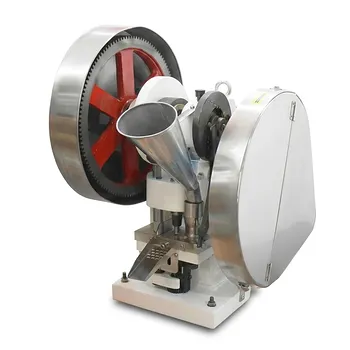
- Single Punch Electric Tablet Press Machine TDP Tablet Punching Machine
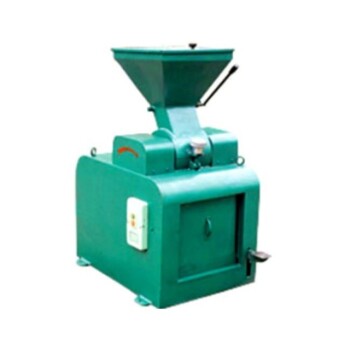
- Laboratory Sealed Hammer Crusher for Efficient Sample Preparation
People Also Ask
- What role do laboratory crushers and standard sieves play in Datura stramonium pretreatment? Optimize Your HTL Yield
- What is a laboratory crusher? The First Step to Accurate Sample Analysis
- What is the primary function of a laboratory crusher? Optimize Biomass & Coal Co-Gasification Efficiency
- What is a jaw crusher for labs? The Essential First Step for Accurate Sample Analysis
- How does a jaw crusher contribute to the primary processing of slate waste? Optimize Your Size Reduction Workflow