
Milling Equipment
Laboratory Planetary Ball Mill Rotating Ball Milling Machine
Item Number : KT-P400E
Price varies based on specs and customizations
- Materials input size
- < 2 mm
- Materials output size
- 0.1-20 um
- Processing volume
- < 400 ml
- Grinding jar speed
- 0-900 r/min
- Planetary disc speed
- 10 r/min
- Number of grinding jar
- 4 pcs

Shipping:
Contact us to get shipping details Enjoy On-time Dispatch Guarantee.
Why Choose Us
Easy ordering process, quality products, and dedicated support for your business success.
Introduction
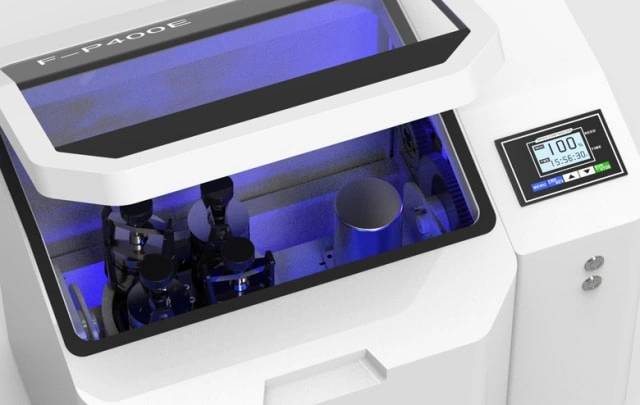
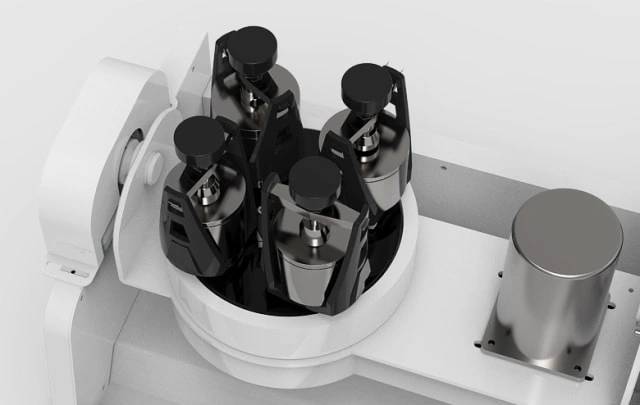
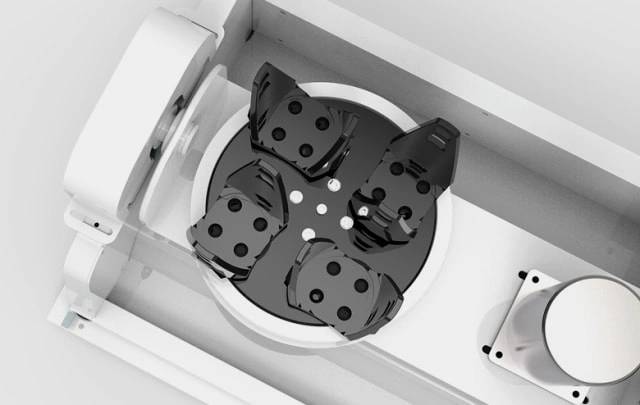
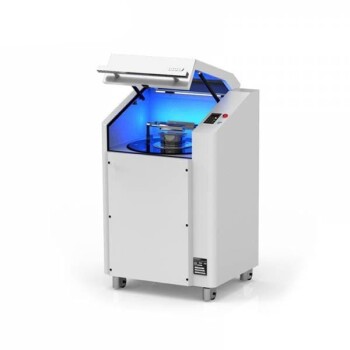
KT-P400E is one desktop multi-directional planetary ball mill. The movement of the planetary disc in the 360° position of the X and Y space is a unique feature of this product, which makes it have more excellent grinding and mixing capabilities. In terms of processing results, use safety, comfort, and convenience, it will bring users a unique experience.
Applications
Planetary ball mills are versatile tools that are widely used in various scientific and industrial research fields for the synthesis and processing of materials at the micro and nano scale. These mills are particularly favored for their ability to produce ultrafine and nano-sized powders, which are crucial for the development of advanced materials and products. The high-energy ball milling process employed by these machines allows for the mechanical alloying and size reduction of a wide range of materials, making them indispensable in routine laboratory work.
- Material Science: Planetary ball mills are extensively used in material science for the synthesis of nanomaterials, including metal oxides, ceramics, and composites. They are ideal for mechanical alloying processes, which involve the formation of alloys through repeated cold welding, fracturing, and re-welding of powder particles.
- Pharmaceuticals: In the pharmaceutical industry, these mills are employed for the micronization of drug particles, which enhances the bioavailability and dissolution rates of drugs. The ability to achieve colloid particle sizes is particularly important for the formulation of drug delivery systems.
- Chemical Synthesis: They are used in the chemical industry for the preparation of catalysts and the synthesis of complex organic compounds. The high-speed milling capabilities of planetary ball mills enable the rapid and efficient mixing of reactants, leading to the formation of desired chemical products.
- Mineral Processing: In the field of mineralogy and geology, planetary ball mills are utilized for the grinding and pulverization of rocks and minerals to facilitate their analysis and characterization. This is crucial for the study of mineral composition and the extraction of valuable minerals.
- Environmental Science: These mills are also applicable in environmental science for the preparation of soil and sediment samples for various analytical techniques. The fine grinding of these samples is essential for the accurate determination of their chemical and physical properties.
- Nanotechnology: Planetary ball mills play a significant role in the field of nanotechnology by facilitating the production of nano powders. These powders are essential for the development of nanostructured materials with unique properties, which are used in a variety of applications, including electronics and energy storage.
Features
The Rotating Planetary Ball Mill is a high-performance milling solution designed for routine laboratory work, offering a range of features that benefit the customer by enabling the production of ultrafine and nano-sized materials. This equipment is engineered to withstand constant vibration and provide versatility in handling various sample types, making it ideal for mechanical alloying and other demanding applications.
- High-Speed Milling Capability: The mill's unique design allows for the rotation of the bowl and turn disc in opposite directions, creating synchronized centrifugal forces. This results in impact energy up to 40 times higher than gravitational acceleration, facilitating high-speed milling and the production of uniform fine powder in approximately 100 to 150 hours.
- Production of Nano Powders: With the ability to produce nano powders ranging from 2 to 20 nm in size, the mill is a valuable tool for research and development in nanotechnology. The size of the nano powder can be controlled by adjusting the speed of the rotation of the balls.
- Robust and Safe Design: Engineered for stability and vibration-free operation, the mill is equipped with outstanding safety features, ensuring it can be left unattended for long periods and used with potentially dangerous solvents.
- Versatile and Easy to Use: The planetary ball mill is an inexpensive and straightforward process that produces crystal defects, adding to its versatility in material synthesis. It is compatible with a large range of accessories, making it adaptable to various laboratory needs.
- Enhanced Grinding Energy: The rapid acceleration of grinding balls through centrifugal and Coriolis forces significantly increases grinding energy, allowing for the production of smaller particle sizes compared to other types of ball mills. This results in powerful impact and frictional forces between the balls and sample material, enhancing the grinding action for colloidal grinding.
Detail & Parts
Advantages
The Rotating Planetary Ball Mill stands out as a high-performance all-rounder in routine laboratory work, offering numerous advantages that make it a preferred choice for material synthesis and grinding. Here are some of the key benefits:
- High-Energy Milling: The planetary ball mill utilizes a unique mechanism where the rotation directions of the bowl and turn disc are opposite, creating synchronized centrifugal forces. This setup results in impact energies up to 40 times higher than gravitational acceleration, facilitating high-speed milling and efficient material grinding.
- Ultrafine and Nano-Sized Materials: With its powerful milling action, the planetary ball mill is capable of producing nano powders of 2 to 20 nm in size. This capability is crucial for the development of innovative products requiring ultrafine particles.
- Versatile and Safe: Designed to withstand constant vibration and long grinding times, these mills are engineered for durability and safety. They are equipped with robust safety features, making them suitable for unattended operation with potentially hazardous solvents.
- Crystal Defects Creation: The mechanical energy of ball milling can induce crystal defects in the materials, which can be beneficial for certain applications requiring specific material properties.
- Inexpensive and Easy Process: Compared to other milling techniques, planetary ball milling is relatively simple and cost-effective, making it accessible for various laboratory settings.
- Increased Grinding Energy: The rapid acceleration of grinding balls through both centrifugal and Coriolis forces in planetary ball mills significantly enhances the grinding energy, allowing for the production of even smaller particle sizes compared to traditional ball mills.
- Colloidal Grinding: The mill's design and operation are particularly effective for colloidal grinding, ensuring that particles are reduced to the desired colloidal sizes over extended grinding periods.
These advantages highlight the planetary ball mill's effectiveness and versatility in material synthesis and grinding, making it an indispensable tool in modern laboratories for a wide range of applications.
Functions
- Continuous and intermittent operation
- Emergency stop
- Timing
- Power failure memory
- Overload and dangerous operation protection
Technical specifications

| Grinding principle | Impact & friction force |
| Suitable materials | Small and medium-low hardness; brittle; dry or wet |
| Materials input size | < 2 mm |
| Materials output size | 0.1-20 um |
| Processing volume | < 400 ml |
| Grinding jar speed | 0-900 r/min |
| Planetary disc speed | 10 r/min |
| Grinding jar material | Tungsten carbide; Ceramic; Agate; Stainless steel; Harden steel; Nylon, etc. |
| Number of grinding jar | 4 pcs |
| Grinding jar volume | 100 ml |
| Grinding ball material | Tungsten carbide; Zirconia; Alumina; Agate; Stainless steel, etc. |
| Motor power | 370W |
| Net weight | 66 kg |
| Dimensions | L720 * W500 * H500 mm |
| Protection level | IP65 |
| Quality standards | CE |
Warnings
Operator safety is the top important issue! Please operate the equipment with cautions. Working with inflammable& explosive or toxic gases is very dangerous, operators must take all necessary precautions before starting the equipment. Working with positive pressure inside the reactors or chambers is dangerous, operator must fellow the safety procedures strictly. Extra caution must also be taken when operating with air-reactive materials, especially under vacuum. A leak can draw air into the apparatus and cause a violent reaction to occur.
Designed for You
KinTek provide deep custom made service and equipment to worldwide customers, our specialized teamwork and rich experienced engineers are capable to undertake the custom tailoring hardware and software equipment requirements, and help our customer to build up the exclusive and personalized equipment and solution!
Would you please drop your ideas to us, our engineers are ready for you now!
Trusted by Industry Leaders
FAQ
What Is A Planetary Ball Mill?
What Are The Main Applications Of Planetary Ball Mills?
What Are The Key Features Of Planetary Ball Mills?
What Are The Advantages Of Using A Planetary Ball Mill?
What Types Of Planetary Ball Mills Are Available?
How Does The Automatic Reversal Mechanism In Planetary Ball Mills Work?
What Makes Planetary Ball Mills Suitable For Small Particle Samples?
REQUEST A QUOTE
Our professional team will reply to you within one business day. Please feel free to contact us!
Related Products

High Energy Planetary Ball Mill for Laboratory Horizontal Tank Type Milling Machine
KT-P4000H uses the unique Y-axis planetary motion trajectory, and utilizes the collision, friction and gravity between the sample and the grinding ball to have a certain anti-sinking ability, which can obtain better grinding or mixing effects and further improve the sample output.

High-Energy Omnidirectional Planetary Ball Mill Milling Machine for Laboratory
The KT-P4000E is a new product derived from the vertical high-energy planetary ball mill with a 360° swivel function. Experience faster, uniform, and smaller sample output results with 4 ≤1000ml ball mill jars.

High Energy Planetary Ball Mill Milling Machine for Laboratory
The biggest feature is that the high energy planetary ball mill can not only perform fast and effective grinding, but also has good crushing ability

Laboratory Horizontal Planetary Ball Mill Milling Machine
Improve sample uniformity with our Horizontal Planetary Ball Mills. KT-P400H reduces sample deposition and KT-P400E has multi-directional capabilities. Safe, convenient and efficient with overload protection.

High Energy Planetary Ball Mill Machine for Laboratory Horizontal Tank Type
The KT-P2000H uses a unique Y-axis planetary trajectory, and utilizes the collision, friction and gravity between the sample and the grinding ball.

High Energy Planetary Ball Mill Milling Machine for Laboratory
Experience fast and effective sample processing with the F-P2000 high-energy planetary ball mill. This versatile equipment offers precise control and excellent grinding capabilities. Perfect for laboratories, it features multiple grinding bowls for simultaneous testing and high output. Achieve optimal results with its ergonomic design, compact structure, and advanced features. Ideal for a wide range of materials, it ensures consistent particle size reduction and low maintenance.

Laboratory Planetary Ball Mill Cabinet Planetary Ball Milling Machine
The vertical cabinet structure combined with ergonomic design enables users to obtain the best comfortable experience in standing operation. The maximum processing capacity is 2000ml, and the speed is 1200 revolutions per minute.

High-Energy Omnidirectional Planetary Ball Mill Machine for Laboratory
The KT-P2000E is a new product derived from the vertical high-energy planetary ball mill with a 360°rotation function. The product not only has the characteristics of the vertical high-energy ball mill, but also has a unique 360°rotation function for the planetary body.

Mini Planetary Ball Mill Machine for Laboratory Milling
Discover the KT-P400 desktop planetary ball mill, ideal for grinding and mixing small samples in the lab. Enjoy stable performance, long service life, and practicality. Functions include timing and overload protection.

Laboratory Jar Ball Mill with Alumina Zirconia Grinding Jar and Balls
Grind to perfection with alumina/zirconia grinding jars and balls. Available in volume sizes from 50ml to 2500ml, compatible with various mills.

Laboratory Jar Mill with Agate Grinding Jar and Balls
Grind your materials with ease using Agate Grinding Jars with Balls. Sizes from 50ml to 3000ml, perfect for planetary and vibration mills.

Stainless Steel Laboratory Ball Mill for Dry Powder and Liquid with Ceramic Polyurethane Lining
Discover the versatile stainless steel dry powder/liquid horizontal ball mill with ceramic/polyurethane lining. Ideal for ceramic, chemical, metallurgical, and building materials industries. High grinding efficiency and uniform particle size.

Laboratory Ball Mill Jar Mill with Metal Alloy Grinding Jar and Balls
Grind and mill with ease using metal alloy grinding jars with balls. Choose from 304/316L stainless steel or tungsten carbide and optional liner materials. Compatible with various mills and features optional functions.

High Energy Vibratory Ball Mill for Lab Use
The high-energy vibrating ball mill is a high-energy oscillating and impacting multifunctional laboratory ball mill. The table-top type is easy to operate, small in size, comfortable and safe.

High Energy Vibratory Laboratory Ball Mill Grinding Mill Single Tank Type
High-energy vibration ball mill is a small desktop laboratory grinding instrument.It can be ball-milled or mixed with different particle sizes and materials by dry and wet methods.

Hybrid High Energy Vibratory Ball Mill for Lab Use
KT-BM400 is used for rapid grinding or mixing of dry, wet and frozen small amount of samples in the laboratory. It can be configured with two 50ml ball mill jars

High Energy Vibratory Laboratory Ball Mill Double Tank Type
High-energy vibration ball mill is a small desktop laboratory grinding instrument. It uses 1700r/min high-frequency three-dimensional vibration to make the sample achieve the result of grinding or mixing.

Laboratory Four-Body Horizontal Jar Mill
The four-body horizontal tank mill ball mill can be used with four horizontal ball mill tanks with a volume of 3000ml. It is mostly used for mixing and grinding laboratory samples.
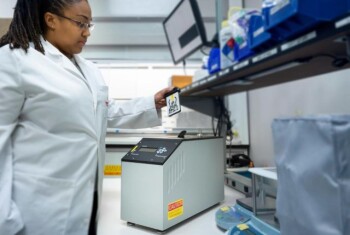
Lab Vibration Mill
Vibration Mill for Efficient Sample Preparation, Suitable for Crushing and Grinding a Variety of Materials with Analytical Precision. Supports Dry / Wet / Cryogenic Grinding and Vacuum/Inert Gas Protection.

Laboratory Single Horizontal Jar Mill
KT-JM3000 is a mixing and grinding instrument for placing a ball milling tank with a volume of 3000ml or less. It adopts frequency conversion control to realize timing, constant speed, direction change, overload protection and other functions.
Related Articles
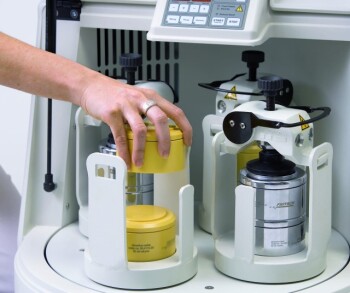
Maximizing Grinding Efficiency: The Power of Planetary Ball Mills
Discover why planetary ball mills offer higher grinding efficiency than ordinary ball mills. Learn about the technology behind their high-performance all-round capabilities. Find out the key factors influencing the productivity and specific energy consumption of ball mills.
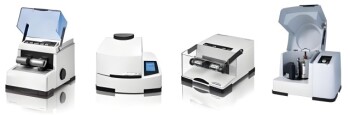
Advantages of Planetary Ball Mill in Laboratory Applications
Discover the advantages of using planetary ball mills in laboratory settings. Learn about its ability to produce fine powder, suitability for toxic materials, wide range of applications, continuous operation, and usage for milling abrasive materials. Explore how planetary ball mills differ from traditional milling machines and their function in creating ultrafine and nano-sized materials.

Planetary Ball Mills: Research Tools for Efficient Mixing and Nanoscale Grinding
Planetary ball mills are indispensable tools in modern laboratories, serving a crucial role in the mixing, fine grinding, and preparation of small samples. These mills are particularly adept at dispersing nanomaterials and facilitating the development and small-scale production of high-tech materials.
The Advantages of Ball Milling in Laboratory Applications: high capacity and reliability
Discover the numerous advantages of ball milling in laboratory applications. Explore the working principles, applications, and advantages of ball mills, along with the impact of ball mill speed on size reduction. Learn how ball milling compares to traditional milling machines.
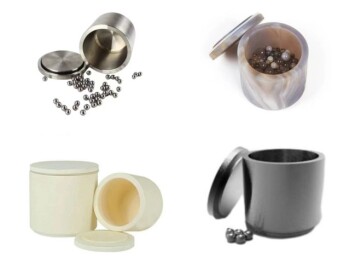
Choosing the Best Material for Ball Mill: Essential Factors and Recommendations
Discover the best material for ball mill applications and grinding success. Learn about the features and benefits of stainless steel, ceramic, agate, and tungsten carbide media. Find out how to ensure grinding success and the ideal grinding jars and media for planetary ball milling. Explore the applications of ball mills and the advantages of high-energy ball mills for ultra-fine particles.

Understanding the Advantages and Disadvantages of Ball Mills in Laboratory and Industrial Applications
Discover the pros and cons of using ball mills for grinding materials. Explore the potential applications of ball mills for various industries.

Features of Different Laboratory Mills: An Overview
Laboratory mills are specialized machines used to reduce non-homogenous batch samples into smaller, representative samples that are more uniform in composition.
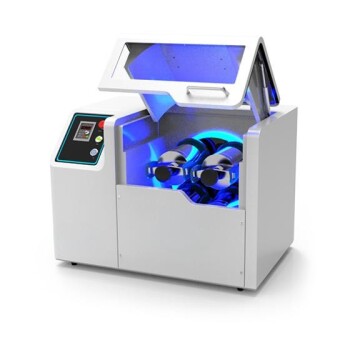
Working Principle of Vertical Ball Mill : Impact, Attrition, and Size Reduction
Discover the working principle of vertical ball mills through impact and attrition mechanisms. Learn how materials like iron ore and ceramics are ground to a fine medium. Explore the construction, operations, advantages of vertical mills in this detailed guide.
Why Your Lab Rotary Kiln Delivers Inconsistent Results—And How to Fix It for Good
Struggling with unreliable results from your lab rotary kiln? Discover the hidden systemic reason your fixes fail and how an integrated system ensures stable, repeatable results.

The Three Stages of Lab Crushing: A Comprehensive Guide
Learn about the three stages of crushing: primary, secondary, and tertiary, and how they are used in sample preparation for scientific analysis. Discover the different types of crushers and their applications in reducing bulky materials into smaller particles.
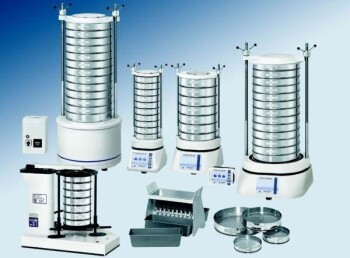
Revolutionizing Lab Efficiency: The Ultimate Guide to Laboratory Sieving Machines
Discover the common sieving methods used in laboratory analysis. Learn about single sieve and sieve set sieving, dry and wet sieving, and other techniques for effective particle separation. Find out how sieving has evolved over time and its importance in quality assurance.
What is a Laboratory Crusher Used For?
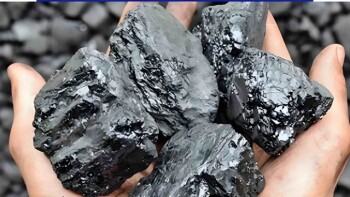
Discover the uses and working mechanism of laboratory crushers. Explore various types of crushing equipment and their applications. Learn how laboratory crushers play a crucial role in scientific analysis and environmental studies.