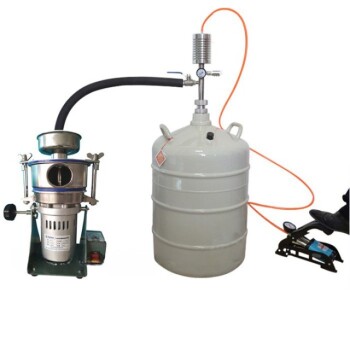
The primary purpose of using an industrial-grade grinder is to mechanically reduce raw flax straw into fine particles through high-force shearing and impact. This physical transformation significantly increases the specific surface area of the material, which is the foundational step required to optimize subsequent thermal conversion processes.
Core Takeaway Grinding is not merely about size reduction; it is about maximizing surface exposure to minimize heat and mass transfer resistance. This ensures uniform thermal decomposition, resulting in higher reaction efficiency and the generation of accurate experimental kinetic parameters.
The Mechanics of Pretreatment
Mechanical Shearing and Impact
An industrial-grade grinder utilizes mechanical shearing and impact forces to break down the rigid structure of lignocellulosic biomass.
This process converts irregular, fibrous flax straw into a consistent, fine particulate matter.
Increasing Specific Surface Area
The most critical outcome of this mechanical process is the massive increase in specific surface area.
By breaking the material down, you expose significantly more of the biomass volume to the surrounding environment, which is crucial for the chemical reactions that follow.
Optimizing Thermal Conversion
Reducing Transfer Resistance
In thermal processes like pyrolysis and combustion, heat must penetrate the particle, and volatiles must escape it.
Fine grinding reduces the distance heat and mass must travel, significantly lowering the transfer resistance that typically slows down reactions in coarser materials.
Ensuring Uniform Decomposition
When particles are large or irregular, the outer surface may react while the core remains unaffected.
Grinding ensures uniformity, allowing the entire sample to undergo thermal decomposition simultaneously. This homogeneity prevents uneven heating that can skew process results.
Accuracy of Kinetic Parameters
For research and process modeling, consistency is paramount.
The uniformity achieved through grinding ensures that the data collected regarding reaction speeds and mechanisms (kinetic parameters) reflects the chemical properties of the biomass, rather than physical inconsistencies in particle size.
Understanding the Trade-offs
Operational Energy Costs
While grinding improves downstream efficiency, it introduces an upfront energy cost.
The mechanical energy required to pulverize flax straw—a fibrous and tough material—is significant. You must weigh this consumption against the efficiency gains in the reactor.
Diminishing Returns
There is a limit to how fine the material needs to be.
Extremely fine grinding requires exponential energy increases. At a certain point, the marginal gain in heat transfer efficiency no longer justifies the additional mechanical energy input.
Making the Right Choice for Your Goal
To determine the optimal grinding strategy for your biomass project, consider your end-use requirements:
- If your primary focus is experimental data accuracy: Prioritize a finer grind to minimize heat gradients and ensure the precise calculation of kinetic parameters.
- If your primary focus is industrial efficiency: Balance the particle size reduction to a point where heat transfer is efficient (e.g., below 3mm) without incurring excessive mechanical energy costs.
The effectiveness of your thermal conversion process is directly dictated by the quality of your mechanical pretreatment.
Summary Table:
| Pretreatment Factor | Impact on Flax Straw Biomass | Benefit to Process |
|---|---|---|
| Mechanical Force | Shearing and impact breakdown | Converts fibrous stalks into fine particles |
| Surface Area | Massive increase in specific area | Maximizes exposure for chemical/thermal reactions |
| Transfer Resistance | Significant reduction | Faster heat penetration and volatile escape |
| Decomposition | High uniformity | Prevents uneven heating and skews in kinetic data |
| Data Quality | Enhanced consistency | Accurate modeling of reaction speeds and mechanisms |
Maximize Your Biomass Research Efficiency with KINTEK
Precise pretreatment is the foundation of reliable thermal conversion and kinetic modeling. At KINTEK, we specialize in providing high-performance crushing and milling systems and sieving equipment designed to handle tough, fibrous materials like flax straw with ease.
Whether you are aiming for experimental precision or industrial-scale optimization, our laboratory equipment—including high-temperature furnaces, hydraulic presses, and advanced cooling solutions—ensures your materials are processed to the highest standards.
Ready to elevate your material processing? Contact our experts today to discover how KINTEK’s comprehensive range of laboratory consumables and equipment can streamline your workflow and deliver superior results.
References
- Bahareh Vafakish, Bishnu Acharya. Pyrolysis and Combustion Behavior of Flax Straw as Biomass: Evaluation of Kinetic, Thermodynamic Parameters, and Qualitative Analysis of Degradation Products. DOI: 10.3390/en16196932
This article is also based on technical information from Kintek Solution Knowledge Base .
Related Products
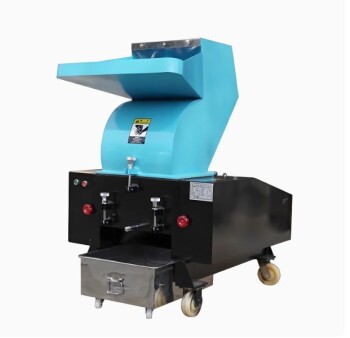
- Powerful Plastic Crusher Machine
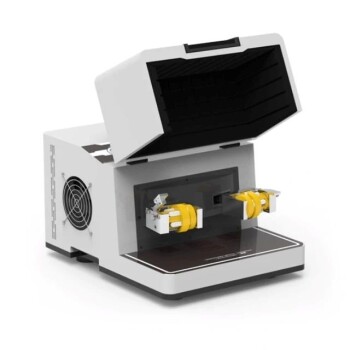
- Laboratory High Throughput Tissue Grinding Mill Grinder
- High Energy Planetary Ball Mill Milling Machine for Laboratory
- Laboratory Hybrid Tissue Grinding Mill
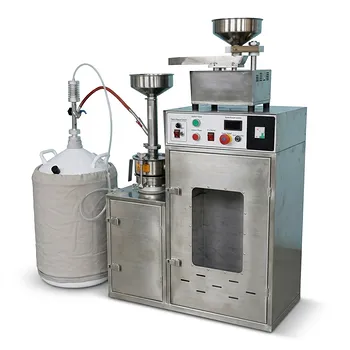
- Liquid Nitrogen Cryogenic Grinder Mill Cryomill with Screw Feeder
People Also Ask
- What is the primary function of a crushing system? Optimize Rice Husk Fractionation with Precise Size Reduction
- What is the primary function of industrial crushers in battery dismantling? Optimize Your Recovery Feedstock
- What are the contaminants in plastic pyrolysis oil? Manage Impurities for Commercial Success
- Why is it necessary to use an ultrasonic cell disruptor before yeast flow cytometry? Ensure Data Accuracy
- How do ultrasonic cell disruptors or dispersion equipment function during ZIF-8 synthesis? Master Acoustic Cavitation