Knowledge What is the primary function of a crushing system? Optimize Rice Husk Fractionation with Precise Size Reduction
Author avatar

Tech Team · Kintek Solution

Updated 14 hours ago

What is the primary function of a crushing system? Optimize Rice Husk Fractionation with Precise Size Reduction


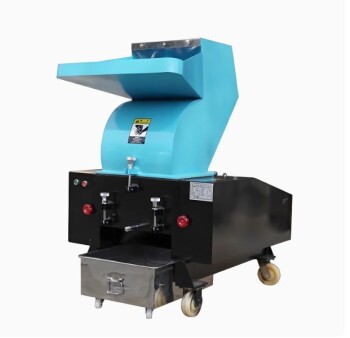
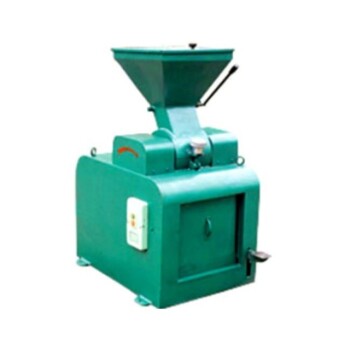
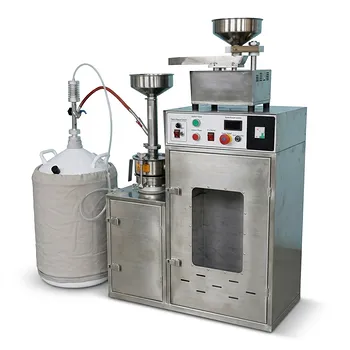
The primary function of a crushing system in rice husk fractionation is to mechanically reduce raw rice husk into a specific particle size of less than 3 mm. This physical pretreatment is essential for breaking down the rigid structure of the biomass before chemical processing begins. By achieving this target size, the system prepares the material for the demanding conditions of subsequent fractionation stages.

Crushing is not merely about size reduction; it is a surface area multiplier that ensures reactants can deeply penetrate the biomass. This step is the prerequisite for efficient component removal during hydrothermal treatment and solvent extraction.

The Mechanics of Physical Pretreatment

Achieving Specific Particle Metrics

The crushing system serves a precise dimensional goal: processing raw husk to a size strictly less than 3 mm.

This specific threshold is not arbitrary. It represents the tipping point where the biomass becomes sufficiently workable for chemical processing equipment.

Maximizing Surface Area

The most critical outcome of crushing is the exponential increase in specific surface area.

By breaking a single husk into smaller fragments, the system exposes significantly more of the material's internal structure. This exposure is necessary to overcome the natural recalcitrance of the rice husk.

Impact on Downstream Processing

Enhancing Reactant Contact

Chemical fractionation relies on contact between liquid reactants and solid biomass.

The crushing system enhances the contact efficiency between these two phases. A larger exposed surface area allows chemical agents to interact with the material immediately and thoroughly.

Facilitating Hydrothermal Treatment

Following crushing, the rice husk typically undergoes hydrothermal treatment.

The reduced particle size ensures that heat and pressure can penetrate the biomass uniformly. This prevents "cold spots" inside the material that would occur with larger, uncrushed husks.

Optimizing Solvent Extraction

Efficient fractionation often involves the use of solvents to strip away specific chemical components.

Smaller particles allow solvents to access the internal matrix of the husk more easily. This ensures the efficient removal of chemical components, resulting in higher yields and less waste.

Critical Considerations and Constraints

The Risk of Inconsistent Sizing

While the goal is < 3 mm, consistency is as important as the upper limit.

If the crushing system produces a wide distribution of particle sizes, reactions will be uneven. Larger particles may not react fully, while extremely fine dust could clog filtration systems or degrade too quickly.

Mechanical vs. Chemical Trade-offs

Crushing is a mechanical energy input used to lower the chemical energy required later.

However, mechanical crushing cannot replace chemical treatment entirely. It acts only as an enabler, meaning a failure here cannot be corrected by simply adding more solvent or heat in later steps.

Optimizing Your Preparation Strategy

To ensure your fractionation process is effective, consider the following based on your operational goals:

  • If your primary focus is reaction speed: Ensure your crushing system is calibrated to consistently produce particles well below the 3 mm limit to maximize immediate reactant contact.
  • If your primary focus is maximal extraction yield: View the crushing step as the critical control point that dictates the thoroughness of subsequent solvent penetration.

Properly sized particles are the difference between processing raw waste and utilizing a highly reactive feedstock.

Summary Table:

Feature Requirement/Goal Impact on Fractionation
Target Particle Size < 3 mm Ensures mechanical workability and uniform processing
Surface Area Exponential Increase Multiplies contact points for chemical reactants
Heat Transfer Uniform Penetration Eliminates "cold spots" during hydrothermal treatment
Extraction Efficiency High Matrix Accessibility Maximizes removal of chemical components and yield
Consistency Low Size Distribution Prevents uneven reactions and filtration clogging

Maximize Your Material Yield with KINTEK Precision Systems

High-efficiency fractionation starts with perfect raw material preparation. KINTEK specializes in advanced crushing and milling systems and sieving equipment designed to deliver the exact particle metrics required for biomass processing.

Whether you are performing hydrothermal treatment in our high-temperature high-pressure reactors or conducting solvent extraction, our equipment ensures your feedstock is optimized for maximum reactant penetration. From muffle furnaces for ash analysis to laboratory hydraulic presses, KINTEK provides the comprehensive tools needed for cutting-edge material research.

Ready to enhance your lab's processing efficiency? Contact KINTEK today for expert guidance and tailored solutions!

References

  1. Sakurako Ishida, Jun‐ichiro Hayashi. Multi-step pre-treatment of rice husk for fractionation of components including silica. DOI: 10.3389/fchem.2025.1538797

This article is also based on technical information from Kintek Solution Knowledge Base .

Related Products

People Also Ask

Related Products

Laboratory Single Horizontal Jar Mill

Laboratory Single Horizontal Jar Mill

KT-JM3000 is a mixing and grinding instrument for placing a ball milling tank with a volume of 3000ml or less. It adopts frequency conversion control to realize timing, constant speed, direction change, overload protection and other functions.

Laboratory Ten-Body Horizontal Jar Mill for Lab Use

Laboratory Ten-Body Horizontal Jar Mill for Lab Use

The Ten-body horizontal jar mill is for 10 ball mill pots (3000ml or less). It has frequency conversion control, rubber roller movement, and PE protective cover.

High Energy Planetary Ball Mill for Laboratory Horizontal Tank Type Milling Machine

High Energy Planetary Ball Mill for Laboratory Horizontal Tank Type Milling Machine

KT-P4000H uses the unique Y-axis planetary motion trajectory, and utilizes the collision, friction and gravity between the sample and the grinding ball to have a certain anti-sinking ability, which can obtain better grinding or mixing effects and further improve the sample output.

High-Energy Omnidirectional Planetary Ball Mill Machine for Laboratory

High-Energy Omnidirectional Planetary Ball Mill Machine for Laboratory

The KT-P2000E is a new product derived from the vertical high-energy planetary ball mill with a 360°rotation function. The product not only has the characteristics of the vertical high-energy ball mill, but also has a unique 360°rotation function for the planetary body.

High Energy Planetary Ball Mill Milling Machine for Laboratory

High Energy Planetary Ball Mill Milling Machine for Laboratory

The biggest feature is that the high energy planetary ball mill can not only perform fast and effective grinding, but also has good crushing ability

High Energy Planetary Ball Mill Milling Machine for Laboratory

High Energy Planetary Ball Mill Milling Machine for Laboratory

Experience fast and effective sample processing with the F-P2000 high-energy planetary ball mill. This versatile equipment offers precise control and excellent grinding capabilities. Perfect for laboratories, it features multiple grinding bowls for simultaneous testing and high output. Achieve optimal results with its ergonomic design, compact structure, and advanced features. Ideal for a wide range of materials, it ensures consistent particle size reduction and low maintenance.

Laboratory Test Sieves and Vibratory Sieve Shaker Machine

Laboratory Test Sieves and Vibratory Sieve Shaker Machine

Efficiently process powders, granules, and small blocks with a high-frequency vibration sieve. Control vibration frequency, screen continuously or intermittently, and achieve accurate particle size determination, separation, and classification.

Electric Split Lab Cold Isostatic Press CIP Machine for Cold Isostatic Pressing

Electric Split Lab Cold Isostatic Press CIP Machine for Cold Isostatic Pressing

Split cold isostatic presses are capable of providing higher pressures, making them suitable for testing applications that require high pressure levels.

Lab Blown Film Extrusion Three Layer Co-Extrusion Film Blowing Machine

Lab Blown Film Extrusion Three Layer Co-Extrusion Film Blowing Machine

Lab blown film extrusion is mainly used to detect the feasibility of film blowing of polymer materials and the colloid condition in the materials, as well as the dispersion of colored dispersions, controlled mixtures, and extrudates;

Small Injection Molding Machine for Lab Use

Small Injection Molding Machine for Lab Use

The small injection molding machinehas fast and stable movements; good controllability and repeatability, super energy saving; the product can be automatically dropped and formed; the machine body is low, convenient for feeding, easy to maintain, and no height restrictions on the installation site.

Automatic Heated Hydraulic Press Machine with Heated Plates for Laboratory Hot Press 25T 30T 50T

Automatic Heated Hydraulic Press Machine with Heated Plates for Laboratory Hot Press 25T 30T 50T

Efficiently prepare your samples with our Automatic Heated Lab Press. With a pressure range up to 50T and precise control, it's perfect for various industries.

Benchtop Laboratory Freeze Dryer for Lab Use

Benchtop Laboratory Freeze Dryer for Lab Use

Premium benchtop laboratory freeze dryer for lyophilization, preserving samples with ≤ -60°C cooling. Ideal for pharmaceuticals & research.

Laboratory Vibratory Sieve Shaker Machine for Dry and Wet Three-Dimensional Sieving

Laboratory Vibratory Sieve Shaker Machine for Dry and Wet Three-Dimensional Sieving

KT-VD200 can be used for sieving tasks of dry and wet samples in the laboratory. The screening quality is 20g-3kg. The product is designed with a unique mechanical structure and an electromagnetic vibrating body with a vibration frequency of 3000 times per minute.

Single Punch Electric Tablet Press Machine TDP Tablet Punching Machine

Single Punch Electric Tablet Press Machine TDP Tablet Punching Machine

The electric tablet punching machine is a laboratory equipment designed for pressing various granular and powdery raw materials into discs and other geometric shapes. It is commonly used in pharmaceutical, healthcare products, food, and other industries for small batch production and processing. The machine is compact, lightweight, and easy to operate, making it suitable for use in clinics, schools, laboratories, and research units.

Custom PTFE Teflon Parts Manufacturer Corrosion Resistant Cleaning Rack Flower Basket

Custom PTFE Teflon Parts Manufacturer Corrosion Resistant Cleaning Rack Flower Basket

The PTFE cleaning rack, also known as the PTFE flower basket cleaning flower basket, is a specialized laboratory tool designed for the efficient cleaning of PTFE materials. This cleaning rack ensures thorough and safe cleaning of PTFE items, maintaining their integrity and performance in laboratory settings.

Precision Machined Zirconia Ceramic Ball for Engineering Advanced Fine Ceramics

Precision Machined Zirconia Ceramic Ball for Engineering Advanced Fine Ceramics

zirconia ceramic ball have the characteristics of high strength, high hardness, PPM wear level, high fracture toughness, good wear resistance, and high specific gravity.

Custom PTFE Teflon Parts Manufacturer for Conductive Glass Substrate Cleaning Rack

Custom PTFE Teflon Parts Manufacturer for Conductive Glass Substrate Cleaning Rack

The PTFE conductive glass substrate cleaning rack is used as the carrier of the square solar cell silicon wafer to ensure efficient and pollution-free handling during the cleaning process.

Electric Rotary Kiln Continuous Working Small Rotary Furnace Heating Pyrolysis Plant

Electric Rotary Kiln Continuous Working Small Rotary Furnace Heating Pyrolysis Plant

Efficiently calcine and dry bulk powder and lump fluid materials with an electric heating rotary furnace. Ideal for processing lithium ion battery materials and more.

Vacuum Hot Press Furnace Machine for Lamination and Heating

Vacuum Hot Press Furnace Machine for Lamination and Heating

Experience clean and precise lamination with Vacuum Lamination Press. Perfect for wafer bonding, thin-film transformations, and LCP lamination. Order now!

Electric button battery sealing machine

Electric button battery sealing machine

The electric button battery sealing machine is a high-performance packaging equipment designed for mass production of button batteries (such as CR series, LR series, SR series, etc.), suitable for electronic manufacturing, new energy research and development, and industrial automation production lines.


Leave Your Message