Filtering bio-oil with a 0.25 µm PTFE syringe filter is a non-negotiable step in sample preparation to prevent catastrophic instrument failure and ensure data accuracy. This process removes fine soot and unreacted solid impurities that would otherwise clog the delicate capillary chromatography column or decompose in the high-temperature inlet, leading to false signals and system downtime.
Core Takeaway: Pre-filtration with a PTFE membrane acts as a critical safeguard for GC-MS systems, protecting expensive hardware from physical blockages and ensuring that the resulting mass spectra represent the liquid bio-oil rather than decomposing solid contaminants.
Protecting the Analytical Hardware
Preventing Capillary Column Clogging
The inner diameter of a GC-MS capillary column is extremely narrow, often measuring only 0.25 mm or less. Bio-oil contains fine soot and solid residuals that can easily lodge within these micro-channels, causing immediate pressure spikes and permanent damage to the column.
Extending Instrument Operational Life
By removing micro-particulate impurities before they enter the system, you significantly reduce the frequency of column "trimming" and replacement. This proactive maintenance ensures longer operational uptime and maintains the structural integrity of the stationary phase within the column.
Safeguarding the Injection Port
The GC inlet operates at high temperatures to vaporize the sample. If solids enter this zone, they accumulate on the liner, leading to active sites that can degrade subsequent samples before they even reach the column.
Ensuring Data Integrity and Precision
Eliminating Ghost Peaks and Interference
Solid impurities trapped in the heated inlet do not simply sit idle; they often undergo thermal decomposition. This generates interference signals and "ghost peaks" that overlap with the bio-oil components, making both qualitative identification and quantitative measurement unreliable.
Leveraging PTFE Chemical Inertness
Bio-oil is a chemically aggressive mixture containing various organic acids and phenols. PTFE (polytetrafluoroethylene) is used because it is chemically inert and will not leach contaminants into the sample or adsorb target analytes, preserving the original chemical profile.
Maximizing Sample Clarity
Even after centrifugation, bio-oil may retain sub-micron particles or fragments. Using a 0.25 µm pore size ensures that even the smallest residual fragments are removed, providing the high level of clarity required for sensitive mass spectrometry detectors.
Understanding the Trade-offs
Potential for Analyte Loss
While PTFE is inert, the process of filtration itself can result in the loss of a very small volume of the sample (hold-up volume). In ultra-trace analysis, this must be accounted for to ensure the final concentration remains accurate.
Filter Saturation and Backpressure
Bio-oil is notoriously viscous and high in particulate matter, which can lead to rapid filter clogging during the preparation step. Attempting to force the sample through a saturated filter can rupture the membrane, allowing contaminants to bypass the safeguard entirely.
Cost vs. Risk
Syringe filters represent a recurring consumable cost. However, the cost of a single filter is negligible compared to the thousands of dollars required to replace a contaminated capillary column or the professional labor needed to decontaminate a mass spectrometer ion source.
How to Apply This to Your Project
Making the Right Choice for Your Goal
To achieve the best results when analyzing complex bio-oils, consider your primary analytical objective:
- If your primary focus is instrument longevity: Always use a 0.25 µm filter as the final step, even if the sample appears clear to the naked eye after centrifugation.
- If your primary focus is quantitative accuracy: Pre-wet the filter with a small amount of solvent or the sample itself to account for potential hold-up volume or minor adsorption.
- If your primary focus is high-throughput analysis: Use a two-stage filtration approach—starting with a 0.45 µm filter followed by the 0.25 µm PTFE filter—to prevent frequent clogging and save time.
Implementing rigorous filtration protocols is the most effective way to transform a raw, complex bio-oil into a viable sample for high-precision chemical analysis.
Summary Table:
| Feature | Function in Bio-oil Analysis | Impact on GC-MS Performance |
|---|---|---|
| 0.25 µm Pore Size | Removes sub-micron soot and solid residuals | Prevents capillary column clogging and pressure spikes |
| PTFE Membrane | Provides chemical inertness and acid resistance | Ensures no leaching or analyte adsorption occurs |
| Particle Removal | Eliminates non-volatile contaminants | Reduces "ghost peaks" and protects the injection port liner |
| Sample Clarity | Delivers a clean, homogenous liquid phase | Extends detector life and improves quantitative accuracy |
Elevate Your Lab's Analytical Precision with KINTEK
Don't let sample impurities compromise your research. At KINTEK, we understand that high-precision analysis begins with superior sample preparation. Whether you are producing bio-oil in our advanced high-temperature furnaces (CVD, vacuum, or rotary) or refining samples using our crushing, milling, and sieving systems, we provide the high-quality consumables you need to succeed.
From PTFE filters and ceramic crucibles to high-pressure reactors and hydraulic presses, KINTEK specializes in laboratory equipment designed for durability and accuracy. Ensure your GC-MS hardware remains protected and your data stays reliable.
Ready to optimize your workflow?
Contact our specialists today to find the perfect laboratory solutions for your project!
References
- Yingmei Zhai, Yiming Zhu. Co-Pyrolysis Characteristics of Raw/Torrefied Corn Stalk and Oil Shale. DOI: 10.2139/ssrn.4329819
This article is also based on technical information from Kintek Solution Knowledge Base .
Related Products
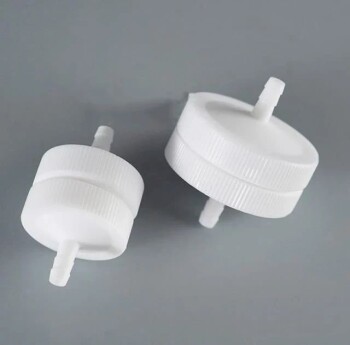
- Custom PTFE Teflon Parts Manufacturer for Sampling Filters
- Custom PTFE Teflon Parts Manufacturer for PTFE Buchner Funnel and Triangular Funnel
- Custom PTFE Teflon Parts Manufacturer for PTFE Measuring Cylinder 10/50/100ml
- Custom PTFE Teflon Parts Manufacturer for Sampling Solution Sample and Dry Powder Spoons
- Custom PTFE Teflon Parts Manufacturer for F4 PTFE Volumetric Bottle
People Also Ask
- What are the advantages of using PTFE filters for ionic component analysis? Ensure Accurate Sample Quantification
- Why are PTFE membrane filters selected for rice husk fractionation? Ensuring Purity in Harsh Separation Stages
- Is PTFE corrosion resistant? Discover the Ultimate Chemical Resistance for Your Lab
- What are the specific applications of PTFE in micro-batch slug flow systems? Enhance Your Microfluidic Reaction Purity
- How is PTFE utilized for insulation in Alloy 22 corrosion setups? Ensure Signal Purity & Accuracy