PTFE serves as a critical dielectric barrier effectively isolating the Alloy 22 specimen from the titanium alloy fastening hardware. By completely separating the titanium bolts and nuts from the specimen, Polytetrafluoroethylene (PTFE) utilizes its high electrical resistance to break the physical circuit that would otherwise exist between the sample and the rig.
In electrochemical experiments, data purity is paramount. PTFE insulation eliminates galvanic coupling and stray currents, ensuring that all measured potential and current signals originate exclusively from the controlled reactions of the Alloy 22 working electrode.
The Mechanics of Signal Integrity
Eliminating Galvanic Coupling
When two dissimilar metals—such as Alloy 22 and titanium alloy—come into direct contact in an electrolyte, they form a galvanic couple. This interaction drives an unintended electrical current that accelerates corrosion on the anode.
PTFE acts as a total physical block to this process. By interposing this insulator between the fastener and the specimen, the galvanic circuit is broken, preventing artificial corrosion acceleration driven by the hardware itself.
Blocking Stray Current Paths
In a precise crevice corrosion setup, the current must flow through specific, controlled paths to be measured accurately. Without insulation, current could "leak" through the bolts.
PTFE seals off these conductive avenues. This forces the current to interact only with the Alloy 22 working electrode, ensuring the electrochemical workstation records the behavior of the specimen, not the rig.
Ensuring Measurement Accuracy
Isolating the Working Electrode
The primary goal of the experiment is to analyze the Alloy 22. If the fastening system is electrically connected, the titanium hardware effectively becomes part of the electrode.
Using PTFE ensures the titanium bolts remain electrically neutral relative to the measurement. The workstation sees only the surface area of the Alloy 22, preventing skewed data regarding current density or corrosion potential.
Focusing on Controlled Reactions
The validity of the experiment relies on knowing exactly where the reactions are occurring. Any reaction happening on the titanium hardware would be noise in the data.
PTFE ensures that the signals captured are the result of controlled reactions on the specific alloy being tested. This allows researchers to attribute all observed electrochemical activity directly to the crevice corrosion resistance of Alloy 22.
Understanding the Trade-offs
Mechanical Stability vs. Electrical Isolation
While PTFE is an excellent insulator, it is mechanically softer than the metals it separates. In a fastening system under torque, PTFE is susceptible to cold flow or creep.
This deformation can potentially relax the tension in the bolts over time. While the electrical isolation remains intact, the mechanical pressure defining the crevice gap could shift, introducing a new variable to the experiment.
Making the Right Choice for Your Goal
To ensure your Alloy 22 experiments yield valid data, consider your specific priorities:
- If your primary focus is Signal Purity: Ensure the PTFE layer is continuous and undamaged before assembly to guarantee zero electrical continuity between the titanium and the specimen.
- If your primary focus is Long-term Monitoring: Periodically verify that the PTFE has not deformed under load, which could alter the crevice geometry despite maintaining electrical isolation.
By rigorously applying PTFE insulation, you transform the fastening system from an experimental variable into a silent, neutral component of your setup.
Summary Table:
| Feature | Role of PTFE in Corrosion Setups | Impact on Experimental Data |
|---|---|---|
| Electrical Isolation | Acts as a dielectric barrier between Alloy 22 and Titanium fasteners. | Eliminates galvanic coupling and noise. |
| Signal Integrity | Forces current flow exclusively through the working electrode. | Ensures accurate current density measurements. |
| Chemical Resistance | Remains inert in harsh electrochemical environments. | Prevents contamination of the electrolyte. |
| Mechanical Property | Susceptible to cold flow/creep under high torque. | Requires monitoring to maintain crevice geometry. |
Elevate Your Electrochemical Research with KINTEK Precision
Precise data starts with superior insulation and reliable laboratory hardware. KINTEK specializes in high-performance laboratory equipment and consumables designed for the most demanding research environments. Whether you are conducting Alloy 22 crevice corrosion studies or advanced battery research, our comprehensive portfolio—including specialized PTFE products, high-temperature furnaces, and electrochemical cells—ensures your experiments remain uncontaminated and your data remains pure.
Our Value to You:
- Comprehensive Range: From high-pressure reactors and autoclaves to essential ceramic and PTFE consumables.
- Technical Excellence: Equipment engineered to eliminate variables like galvanic coupling and stray currents.
- Expert Support: We help you select the right materials to balance mechanical stability with electrical isolation.
Don't let hardware interference compromise your results. Contact KINTEK today to optimize your lab setup!
References
- Mauricio Rincón Ortíz, Raúl B. Rebak. Oxyanions as inhibitors of chloride-induced crevice corrosion of Alloy 22. DOI: 10.1016/j.corsci.2012.10.037
This article is also based on technical information from Kintek Solution Knowledge Base .
Related Products
- PTFE Electrolytic Cell Electrochemical Cell Corrosion-Resistant Sealed and Non-Sealed
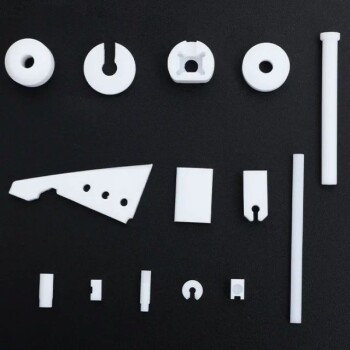
- Custom PTFE Teflon Parts Manufacturer for Non-Standard Insulator Customization
- Custom PTFE Teflon Parts Manufacturer for Hydrothermal Synthesis Reactor Polytetrafluoroethylene Carbon Paper and Carbon Cloth Nano-growth
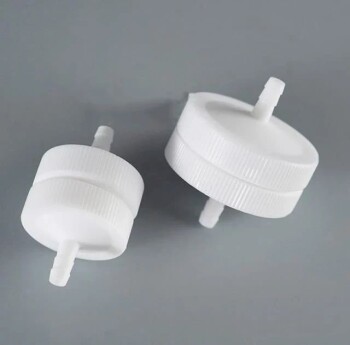
- Custom PTFE Teflon Parts Manufacturer for Sampling Filters
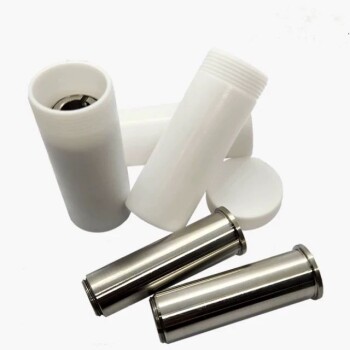
- Custom PTFE Teflon Parts Manufacturer for Centrifuge Tubes
People Also Ask
- What is the necessity of selecting a PTFE electrolytic cell? Ensure Precise Graphene Corrosion Testing Accuracy
- What is the proper method for cleaning the surface of an all-PTFE electrolytic cell? Ensure Accurate Results with a Pristine Surface
- How should an all-PTFE electrolytic cell be stored after use? Expert Maintenance Tips for Long-Lasting Performance
- What is the proper cleaning method for an all-PTFE electrolytic cell? Essential Tips for Surface Integrity
- What are the standard opening specifications for all-PTFE electrolytic cells? A Guide to Sealed vs. Non-Sealed Ports