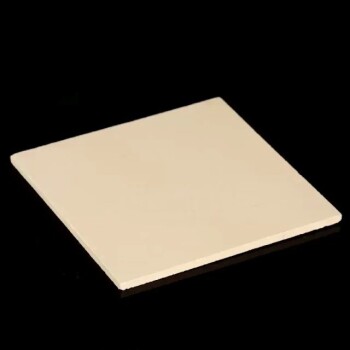
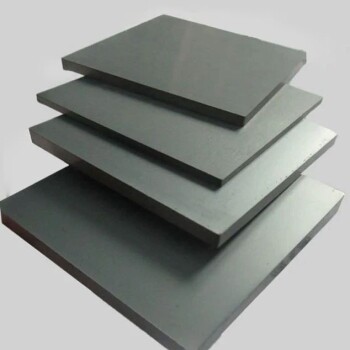
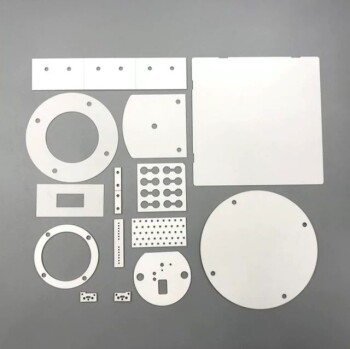
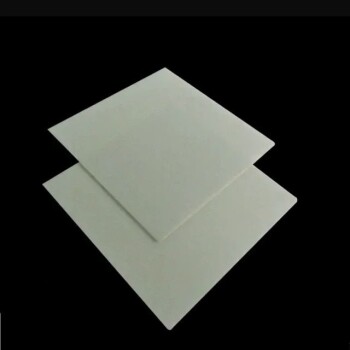
Mullite (Al2O3-SiO2) is the standard material chosen for pusher plates that require resistance to both chemical attack and thermal shock. This man-made alumino-silicate is specifically selected because it balances structural stability with the ability to resist degradation in highly reducing hydrogen atmospheres.
Mullite is distinct because of its strong ceramic bond, which shields its silica content from rapid chemical attack. It offers a necessary compromise: high thermal-shock resistance paired with a specific chemical inertness that delays hydrogen degradation significantly longer than standard ceramics.
The Engineering Behind Mullite
The Balance of Properties
Pusher plates operate in aggressive environments that would destroy lesser materials.
The primary engineering challenge is balancing chemical inertness with thermal-shock resistance. Mullite achieves this balance through its unique alumino-silicate structure.
Resisting Chemical Attack
In many industrial applications, pusher plates are exposed to a highly reducing hydrogen atmosphere.
Hydrogen is aggressive toward silica, a common component in ceramics. Mullite addresses this by locking the silica behind a strong ceramic bond.
This bond acts as a shield. It prevents the hydrogen from easily accessing and reacting with the silica, thereby maintaining the plate's structural integrity.
Withstanding Thermal Shock
Beyond chemical resistance, pusher plates undergo significant temperature fluctuations.
Mullite is structurally stable. This stability allows it to endure the physical stresses caused by rapid heating and cooling cycles without fracturing.
Understanding the Limitations
Degradation is Delayed, Not Eliminated
While Mullite is highly effective, it is not impervious to damage indefinitely.
The primary reference notes that the strong ceramic bond means it "takes time" for the hydrogen to degrade the material.
This implies that degradation is inevitable over a long enough timeline. Mullite buys significant operational time, but it should still be viewed as a component with a finite lifespan in hydrogen-rich environments.
Evaluating Mullite for Your Application
To ensure Mullite is the correct choice for your specific operational goals, consider the following parameters:
- If your primary focus is Chemical Resistance: Mullite is the ideal choice for hydrogen atmospheres, as its bonding structure specifically slows silica reduction.
- If your primary focus is Thermal Longevity: Mullite is recommended for processes involving rapid temperature cycling due to its high thermal-shock resistance.
Mullite remains the definitive solution for extending the service life of pusher plates in reducing atmospheres.
Summary Table:
| Feature | Mullite (Al2O3-SiO2) Performance |
|---|---|
| Primary Material | Alumino-silicate (Man-made) |
| Chemical Resistance | High resistance to reducing hydrogen atmospheres |
| Thermal Properties | Exceptional thermal-shock resistance for rapid cycles |
| Key Benefit | Strong ceramic bond delays silica degradation |
| Structural Stability | High stability under mechanical and thermal stress |
Optimize Your Thermal Processing with KINTEK
Don’t let material degradation halt your production. KINTEK provides high-performance laboratory equipment and specialized consumables, including durable ceramics and crucibles designed to withstand the harshest environments. Whether you are operating muffle, tube, or vacuum furnaces, our Mullite solutions ensure your pusher plates and furnace components endure extreme chemical and thermal stress.
Enhance your lab's efficiency and equipment longevity—contact KINTEK today for expert advice and custom material solutions!
Related Products
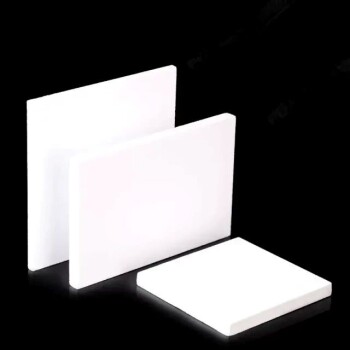
- High Temperature Wear-Resistant Alumina Al2O3 Plate for Engineering Advanced Fine Ceramics
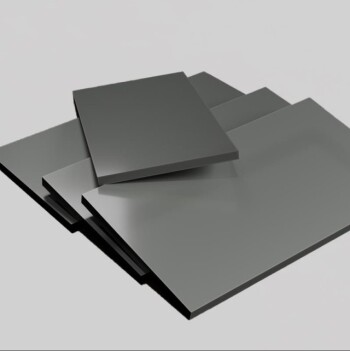
- Carbon Graphite Plate Manufactured by Isostatic Pressing Method
- Boron Nitride (BN) Ceramic Plate
- Optical Window Glass Substrate Wafer Quartz Plate JGS1 JGS2 JGS3
- Precision Machined Yttria Stabilized Zirconia Ceramic Plate for Engineering Advanced Fine Ceramics
People Also Ask
- What are the process advantages of selecting an alumina plate for CuO nanofilm synthesis? Achieve Superior Purity
- What function do alumina ceramic plates serve as supports in the preparation of molecular sieve membranes?
- How is alumina ceramic made? A Guide to Manufacturing Methods and Material Properties
- Why use high-purity alumina plates for sintering porous stainless steel? Ensure Purity & Precision
- What is the function of alumina setter plates for LATP? Protect Material Purity & Prevent Adhesion