Knowledge Are there any chemical substances that an all-PTFE electrolytic cell should not be exposed to? Know the Critical Limits
Author avatar

Tech Team · Kintek Solution

Updated 1 day ago

Are there any chemical substances that an all-PTFE electrolytic cell should not be exposed to? Know the Critical Limits


Yes, there are specific chemical limitations. While PTFE (Polytetrafluoroethylene) is renowned for its exceptional chemical inertness, it is not universally impervious. An all-PTFE electrolytic cell should not be exposed to molten alkali metals for extended periods, as this can lead to material degradation and erosion.

The almost universal chemical resistance of PTFE has a critical exception: elemental alkali metals in a molten state. While safe for most aggressive acids and bases, long-term exposure to these specific high-reactivity metals will erode the cell structure.

The Limits of Chemical Resistance

The Primary Threat

For the vast majority of electrochemical applications, PTFE is the gold standard for containment. However, the material is vulnerable to molten alkali metals.

Substances in this category, such as molten sodium or lithium, possess high enough reactivity to break the strong carbon-fluorine bonds that give PTFE its stability.

The Consequence of Exposure

The primary reference indicates that the result of this incompatibility is erosion.

Over long periods, the smooth, non-stick surface of the electrolytic cell will degrade. This erosion can compromise the precise dimensions of the cell or introduce contaminants into your electrolyte.

Understanding the "Special Conditions"

State and Temperature Matter

The risk is specifically tied to the physical state of the chemical.

The reference notes that this erosion occurs under "special conditions," primarily when these metals are in a molten (liquid) state. Solid alkali metals at room temperature generally do not present the same immediate threat to the structural integrity of the cell.

Duration of Contact

Time is a critical factor in this degradation process.

While incidental contact might not result in immediate catastrophic failure, long-term exposure allows the erosion process to significantly impact the cell's lifespan.

Operational Trade-offs

Universal vs. Specialized Use

The trade-off with PTFE is that while it covers 99% of use cases, it fails in specific high-energy environments.

If your work involves standard aqueous solutions, organic solvents, or even harsh acids like aqua regia, PTFE is superior. However, it is not suitable for experiments involving liquid metal batteries or molten salt electrolysis where free alkali metals are present.

Inspection and Maintenance

If there is any risk that your electrolytic process generates free alkali metals (even as a transient byproduct), you must inspect the cell frequently.

Check for surface pitting or a loss of the characteristic "waxy" finish of the PTFE, which are early signs of chemical erosion.

Making the Right Choice for Your Goal

Before selecting an all-PTFE cell, review your chemical inventory and reaction products.

  • If your primary focus is Standard Electrochemistry: You can rely on PTFE for long-term durability against virtually all acids, bases, and solvents.
  • If your primary focus is Molten Alkali Systems: You must avoid PTFE and select specialized ceramics or resistant metal alloys to prevent containment failure.

Understanding these rare but critical exceptions ensures your experimental setup remains safe and accurate over the long term.

Summary Table:

Chemical Category Compatibility Long-term Effects on PTFE
Aqueous Acids & Bases Excellent No degradation; high stability
Organic Solvents Excellent Resistant to swelling and erosion
Molten Alkali Metals Avoid Severe erosion; breaks Carbon-Fluorine bonds
Aqua Regia Excellent Inert even under aggressive conditions
Solid Alkali Metals Good Low reactivity at room temperature

Secure Your Electrochemical Integrity with KINTEK

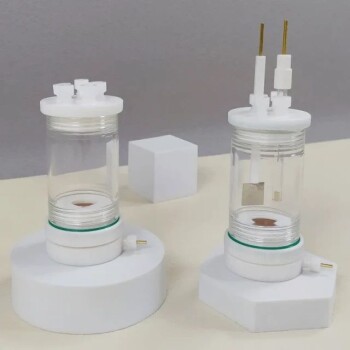
Don't let material degradation compromise your research. KINTEK specializes in high-performance laboratory solutions, providing premium all-PTFE electrolytic cells and electrodes engineered for maximum chemical resistance.

Whether you are conducting standard electrochemistry or require advanced high-temperature high-pressure reactors, battery research tools, or custom ceramics, our experts are here to help you select the right materials for your specific chemical environment.

Ready to upgrade your lab's durability? Contact KINTEK today to find the perfect equipment for your most demanding applications.

Related Products

People Also Ask

Related Products

Custom PTFE Teflon Parts Manufacturer for PTFE Ball Valve Seat

Custom PTFE Teflon Parts Manufacturer for PTFE Ball Valve Seat

Seats and inserts are vital components in the valve industry. As a key component, polytetrafluoroethylene is usually selected as the raw material.

Custom PTFE Teflon Parts Manufacturer for Non-Standard Insulator Customization

Custom PTFE Teflon Parts Manufacturer for Non-Standard Insulator Customization

PTFE insulator PTFE has excellent electrical insulation properties in a wide temperature and frequency range.

Custom PTFE Teflon Parts Manufacturer for Acid and Alkali Resistant Chemical Powder Material Scoops

Custom PTFE Teflon Parts Manufacturer for Acid and Alkali Resistant Chemical Powder Material Scoops

Known for its excellent thermal stability, chemical resistance and electrical insulating properties, PTFE is a versatile thermoplastic material.

Custom PTFE Teflon Parts Manufacturer for Hollow Etching Flower Basket ITO FTO Developing Glue Removal

Custom PTFE Teflon Parts Manufacturer for Hollow Etching Flower Basket ITO FTO Developing Glue Removal

PTFE adjustable height flower basket (Teflon flower baskets) are made of high-purity experimental grade PTFE, with excellent chemical stability, corrosion resistance, sealing and high and low temperature resistance.

Custom PTFE Teflon Parts Manufacturer for Culture Dish and Evaporation Dish

Custom PTFE Teflon Parts Manufacturer for Culture Dish and Evaporation Dish

The PTFE culture dish evaporating dish is a versatile laboratory tool known for its chemical resistance and high-temperature stability. PTFE, a fluoropolymer, offers exceptional non-stick properties and durability, making it ideal for various applications in research and industry, including filtration, pyrolysis, and membrane technology.

Conductive Carbon Cloth Carbon Paper Carbon Felt for Electrodes and Batteries

Conductive Carbon Cloth Carbon Paper Carbon Felt for Electrodes and Batteries

Conductive carbon cloth, paper, and felt for electrochemical experiments. High-quality materials for reliable and accurate results. Order now for customization options.

Electrode Polishing Material for Electrochemical Experiments

Electrode Polishing Material for Electrochemical Experiments

Looking for a way to polish your electrodes for electrochemical experiments? Our polishing materials are here to help! Follow our easy instructions for best results.

Copper Foam

Copper Foam

Copper foam has good thermal conductivity and can be widely used for heat conduction and heat dissipation of motors/electrical appliances and electronic components.

Button Battery Storage Box for Battery Lab

Button Battery Storage Box for Battery Lab

Button-type battery storage box, detachable, high-quality PP environmental protection material; suitable for small objects/chemicals, etc., thickened, compressive, durable, and available in a variety of styles.

Aluminum-Plastic Flexible Packaging Film for Lithium Battery Packaging

Aluminum-Plastic Flexible Packaging Film for Lithium Battery Packaging

Aluminum-plastic film has excellent electrolyte properties and is an important safe material for soft-pack lithium batteries. Unlike metal case batteries, pouch batteries wrapped in this film are safer.

Vacuum Sealed Continuous Working Rotary Tube Furnace Rotating Tube Furnace

Vacuum Sealed Continuous Working Rotary Tube Furnace Rotating Tube Furnace

Experience efficient material processing with our vacuum-sealed rotary tube furnace. Perfect for experiments or industrial production, equipped with optional features for controlled feeding and optimized results. Order now.

High Pressure Laboratory Vacuum Tube Furnace Quartz Tubular Furnace

High Pressure Laboratory Vacuum Tube Furnace Quartz Tubular Furnace

KT-PTF High Pressure Tube Furnace: Compact split tube furnace with strong positive pressure resistance. Working temp up to 1100°C and pressure up to 15Mpa. Also works under controller atmosphere or high vacuum.

Small Lab Rubber Calendering Machine

Small Lab Rubber Calendering Machine

Small lab rubber calendering machine is used for producing thin, continuous sheets of plastic or rubber materials. It is commonly employed in laboratories, small-scale production facilities, and prototyping environments to create films, coatings, and laminates with precise thickness and surface finish.

Precision Machined Zirconia Ceramic Ball for Engineering Advanced Fine Ceramics

Precision Machined Zirconia Ceramic Ball for Engineering Advanced Fine Ceramics

zirconia ceramic ball have the characteristics of high strength, high hardness, PPM wear level, high fracture toughness, good wear resistance, and high specific gravity.

Lab Plastic PVC Calender Stretch Film Casting Machine for Film Testing

Lab Plastic PVC Calender Stretch Film Casting Machine for Film Testing

The cast film machine is designed for the molding of polymer cast film products and has multiple processing functions such as casting, extrusion, stretching, and compounding.

Vacuum Hot Press Furnace Machine for Lamination and Heating

Vacuum Hot Press Furnace Machine for Lamination and Heating

Experience clean and precise lamination with Vacuum Lamination Press. Perfect for wafer bonding, thin-film transformations, and LCP lamination. Order now!

Graphite Vacuum Furnace Negative Material Graphitization Furnace

Graphite Vacuum Furnace Negative Material Graphitization Furnace

Graphitization furnace for battery production has uniform temperature and low energy consumption. Graphitization furnace for negative electrode materials: an efficient graphitization solution for battery production and advanced functions to enhance battery performance.

Glassy Carbon Sheet RVC for Electrochemical Experiments

Glassy Carbon Sheet RVC for Electrochemical Experiments

Discover our Glassy Carbon Sheet - RVC. Perfect for your experiments, this high-quality material will elevate your research to the next level.

Graphite Vacuum Furnace High Thermal Conductivity Film Graphitization Furnace

Graphite Vacuum Furnace High Thermal Conductivity Film Graphitization Furnace

The high thermal conductivity film graphitization furnace has uniform temperature, low energy consumption and can operate continuously.

Conductive Boron Nitride BN Ceramics Composite for Advanced Applications

Conductive Boron Nitride BN Ceramics Composite for Advanced Applications

Due to the characteristics of boron nitride itself, the dielectric constant and dielectric loss are very small, so it is an ideal electrical insulating material.


Leave Your Message