The primary reasons for selecting Polytetrafluoroethylene (PTFE), commonly known as F4, as a matrix for these composites are its exceptional chemical inertness, high-temperature resistance, and extremely low coefficient of friction. When used as a base for carbon nanotube reinforced composites, PTFE provides a chemically stable environment that, once reinforced, overcomes its native mechanical weaknesses to function in harsh industrial settings.
While pure PTFE offers superior environmental resistance and lubricity, it is mechanically soft and prone to wear. Carbon nanotubes are introduced to bridge this gap, transforming PTFE into a robust industrial material that combines high elasticity and corrosion resistance with extreme durability.
The Intrinsic Advantages of the PTFE Matrix
To understand the selection of this matrix, one must look at the unique properties PTFE contributes to the composite.
Exceptional Chemical Inertness
PTFE is virtually unaffected by chemical interactions.
This allows the composite material to operate in environments involving aggressive solvents, acids, or bases without degrading, making it ideal for corrosion-resistant applications.
Low Coefficient of Friction
One of the defining characteristics of PTFE is its natural lubricity.
It offers an extremely low coefficient of friction, which reduces energy loss and heat generation in moving parts. This serves as the foundation for the material's self-lubricating capabilities.
Thermal Stability
PTFE possesses excellent high-temperature resistance.
This ensures that the matrix maintains its structural integrity and performance properties even when subjected to the elevated temperatures often found in industrial processing and sealing applications.
Solving the "Pure PTFE" Problem
Despite its chemical benefits, pure PTFE cannot sustain high-performance loads on its own. The decision to reinforce it is driven by two specific inherent weaknesses.
Addressing Low Mechanical Strength
In its pure form, PTFE lacks the mechanical rigidity required for structural or high-load applications.
It acts as a soft material that can deform under stress. The matrix selection relies on the premise that this weakness will be offset by the reinforcing phase.
Correcting Poor Wear Resistance
Pure PTFE suffers from significant wear when subjected to friction.
Without reinforcement, components made solely of PTFE would degrade rapidly in dynamic applications, leading to frequent replacement and system failure.
The Impact of Carbon Nanotube Reinforcement
The selection of PTFE is validated by how well it pairs with carbon nanotubes to create a superior class of materials.
Creating Extreme Wear Resistance
By incorporating carbon nanotubes, the composite achieves a level of wear resistance that pure PTFE cannot approach.
This modification allows the material to withstand the physical demands of friction applications while retaining the matrix's low-friction properties.
Enhancing Elasticity
The reinforced composite exhibits high elasticity.
This property is crucial for sealing applications, where the material must conform to surfaces under pressure and recover its shape to maintain a tight seal.
Understanding the Trade-offs
When selecting materials, it is vital to recognize why the composite is necessary over the pure polymer.
The Limitation of Unreinforced Matrices
Relying on pure PTFE for dynamic applications is often a failure point.
While you gain maximum chemical purity, you sacrifice physical longevity. Pure PTFE is generally unsuitable for any application involving significant mechanical abrasion.
The Composite Synergy
The trade-off in this composite is strictly beneficial for structural applications.
You retain the corrosion resistance of the F4 matrix but gain the mechanical properties usually reserved for harder, less chemically resistant materials.
Making the Right Choice for Your Goal
This composite is engineered for specific, high-demand scenarios. Use the following guide to determine if this material aligns with your project requirements.
- If your primary focus is sealing in harsh environments: This material provides the necessary high elasticity to maintain a seal while resisting chemical attack.
- If your primary focus is dynamic friction components: The carbon nanotube reinforcement ensures the component will not wear down prematurely, even under continuous movement.
The combination of a PTFE matrix with carbon nanotubes represents the ideal synthesis of chemical immunity and mechanical durability.
Summary Table:
| Property of PTFE (F4) | Industrial Benefit | Impact of Carbon Nanotube Reinforcement |
|---|---|---|
| Chemical Inertness | Resistance to acids, bases, and solvents | Maintains stability in corrosive environments |
| Low Friction | Reduced energy loss and heat generation | Enables high-performance self-lubricating parts |
| Thermal Stability | Performance at high temperatures | Preserves integrity during industrial processing |
| Mechanical Softness | (Pure PTFE weakness) | Transformed into high-strength, rigid composite |
| Wear Resistance | (Pure PTFE weakness) | Dramatically increased for dynamic friction use |
Elevate Your Material Performance with KINTEK
Is your lab or production line struggling with material wear in harsh environments? KINTEK specializes in advanced laboratory equipment and high-performance consumables designed for the most demanding research and industrial applications.
Whether you are developing next-generation composites or require precision tools, we offer a comprehensive range of solutions including:
- High-Temperature Furnaces (Muffle, Vacuum, CVD/PECVD) for advanced material synthesis.
- Precision Crushing & Milling Systems and Hydraulic Presses for pellet and composite preparation.
- Specialized Consumables, including high-purity PTFE products, ceramics, and crucibles.
Contact KINTEK today to discover how our expertise in high-temperature, high-pressure, and chemical-resistant solutions can accelerate your project success. Let’s build more durable materials together!
References
- С. Л. Рево, S. Hamamda. Structure, tribotechnical, and thermophysical characteristics of the fluoroplastic carbonnanotubes material. DOI: 10.1186/1556-276x-9-213
This article is also based on technical information from Kintek Solution Knowledge Base .
Related Products
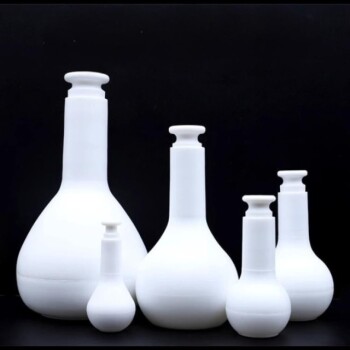
- Custom PTFE Teflon Parts Manufacturer F4 Conical Flask Triangular Flask 50 100 250ml
- Custom PTFE Teflon Parts Manufacturer for F4 PTFE Volumetric Bottle
- Custom PTFE Teflon Parts Manufacturer for PTFE Mesh F4 Sieve
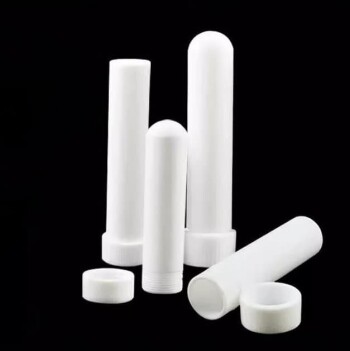
- Custom PTFE Teflon Parts Manufacturer for Centrifuge Tubes
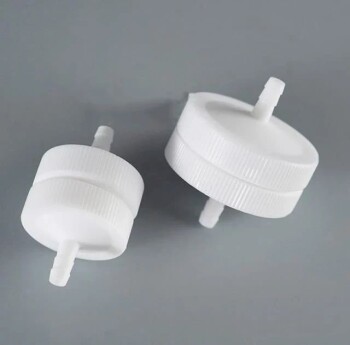
- Custom PTFE Teflon Parts Manufacturer for Sampling Filters
People Also Ask
- What makes PTFE bottles suitable for static leaching? Ensure Zero-Contamination for Glass Testing
- Why Use PTFE Sample Bottles for Coal Demineralization? Ensure Chemical Stability and Data Integrity
- Why are PTFE reactors preferred for silver phosphate glass testing? Ensure Purity and Kinetic Accuracy
- Why must a Polytetrafluoroethylene (PTFE) reactor be used for Ti3C2TX MXene etching? Ensure Safety and Purity
- Why is a PTFE reactor required for titanium-based nano-ceramic coating solutions? Ensure Chemical Inertness & Purity