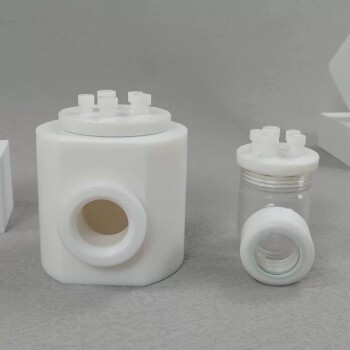
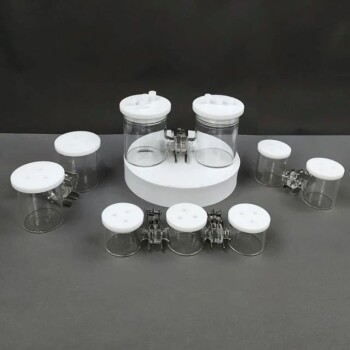
Preventing mechanical damage to an all-PTFE electrolytic cell relies largely on disciplined handling protocols during both active use and transportation. To maintain the integrity of the cell, you must ensure the body and lid never come into forceful contact with hard objects that could scratch surfaces or cause impact deformation.
Core Takeaway While PTFE is chemically resistant, it is softer than glass or metal and prone to surface marring. The primary strategy for preservation is strictly avoiding abrasive contact or impacts that could compromise the sealing surfaces of the cell body or lid.
Protocols for Safe Handling
Controlling the Physical Environment
The most common cause of damage is incidental contact with harder materials. You must ensure the immediate workspace is free of sharp tools, loose metal components, or abrasive surfaces. Even minor collisions with hard objects can gouge the relatively soft PTFE material.
Transportation Best Practices
Damage frequently occurs when moving the equipment between locations. Never transport the cell loose where it can slide or collide with other items. Isolate the cell body and lid, ensuring they are cushioned against impact during transit.
Understanding Material Vulnerabilities
The Risk of Surface Scratches
Unlike glass, which shatters, PTFE tends to absorb damage through deformation. Scratches are a critical failure mode for these cells. A deep scratch on the interior can trap contaminants, while external scratches can weaken the structural integrity.
Protecting the Lid and Sealing Surfaces
The lid is a precision component essential for maintaining the cell's environment. Hard impacts to the lid can warp threads or sealing faces. Once these surfaces are physically damaged by a hard object, the cell may no longer be able to maintain a gas-tight seal.
Common Pitfalls to Avoid
Misjudging Material Hardness
A common mistake is assuming that because PTFE is a "plastic," it is indestructible. In reality, it is a soft polymer. Treating it with the same roughness as a metal component will lead to rapid deterioration of the surface finish.
Neglecting Component Interactions
Mechanical damage often extends to the stand and mounting components. If the stand is handled roughly, it can transfer force to the cell body. Ensure the entire assembly is treated with care to prevent indirect stress on the PTFE components.
Ensuring Equipment Longevity
If your primary focus is Daily Operation:
- Establish a "soft-touch" rule where the cell is never placed directly on rough surfaces or near loose metal tools.
If your primary focus is Transportation:
- Wrap the cell body and lid individually to prevent them from impacting hard objects or each other inside the carrying container.
Treat your PTFE hardware with the same caution you would afford to fragile glass to ensure consistent experimental results.
Summary Table:
| Hazard Category | Potential Damage | Prevention Strategy |
|---|---|---|
| Physical Impact | Surface gouges & deformation | Implement a "soft-touch" rule; remove sharp tools from the workspace. |
| Transportation | Impact damage or sliding | Individually wrap cell body and lid; use cushioned containers. |
| Surface Contact | Compromised sealing surfaces | Avoid placing components directly on rough or abrasive surfaces. |
| Component Stress | Warped threads or lid failure | Treat the entire mounting assembly with care to avoid indirect stress. |
Maximize Your Lab’s Precision with KINTEK
Mechanical damage to your PTFE electrolytic cells can compromise critical research and lead to costly replacements. At KINTEK, we specialize in providing high-quality laboratory equipment and consumables designed for durability and performance. Whether you need specialized electrolytic cells and electrodes, high-temperature furnaces, or PTFE consumables, our team is dedicated to supporting your scientific excellence.
Ready to upgrade your laboratory setup with reliable, high-performance tools? Contact KINTEK today for expert guidance and solutions!
Related Products
- PTFE Electrolytic Cell Electrochemical Cell Corrosion-Resistant Sealed and Non-Sealed
- Double Layer Five-Port Water Bath Electrolytic Electrochemical Cell
- Electrolytic Electrochemical Cell with Five-Port
- Thin-Layer Spectral Electrolysis Electrochemical Cell
- Optical Water Bath Electrolytic Electrochemical Cell
People Also Ask
- What is the necessity of selecting a PTFE electrolytic cell? Ensure Precise Graphene Corrosion Testing Accuracy
- What is the proper method for cleaning the surface of an all-PTFE electrolytic cell? Ensure Accurate Results with a Pristine Surface
- How should an all-PTFE electrolytic cell be stored after use? Expert Maintenance Tips for Long-Lasting Performance
- What is the proper cleaning method for an all-PTFE electrolytic cell? Essential Tips for Surface Integrity
- What are the standard opening specifications for all-PTFE electrolytic cells? A Guide to Sealed vs. Non-Sealed Ports