Polytetrafluoroethylene (PTFE) functions as the critical substrate material in the construction of micro-batch slug flow systems, typically serving as the tubing or channel wall. Its primary application is to facilitate the generation of stable, uniform droplets by strictly controlling the interaction between the liquid phases and the reactor surface.
Core Takeaway PTFE is indispensable in microfluidics not merely as a container, but as an active surface modifier. Its natural hydrophobicity and chemical inertness drive the physics of slug formation, ensuring that reactants remain as distinct, self-contained "micro-batches" without adhering to channel walls or degrading over time.
The Role of Surface Properties in Slug Formation
Leveraging Hydrophobicity for Phase Control
The defining application of PTFE in these systems is to act as a hydrophobic boundary.
It ensures a sharp, decisive interface between the wetting phase (carrier fluids like toluene or perfluorohexane) and the non-wetting phase (the reaction liquid). This repulsion is what forces the reaction liquid to curl into discrete slugs rather than spreading as a film.
Stabilizing Droplet Uniformity
By maintaining consistent surface tension along the channel walls, PTFE stabilizes the production of droplets.
This results in "micro-batches" that are uniform in size and volume. Consistency here is vital for ensuring that every "slug" of reactant undergoes the exact same process conditions.
Enhancing Reaction Mechanics
Promoting Internal Mixing
The application of PTFE does more than just contain the fluid; it influences the internal dynamics of the droplet.
As the slug moves through the PTFE channel, the specific friction and surface interactions induce internal circulation within the droplet. This circulation rapidly mixes reagents inside the slug, significantly enhancing reaction rates compared to stagnant flow.
Preventing Wall Deposition
In many chemical syntheses, reactants tend to stick to reactor walls, leading to fouling or clogging.
PTFE is applied here specifically for its "non-stick" chemical stability. It prevents reactants from depositing on the micro-channel walls, ensuring long-term operational stability without blockages.
Eliminating Uncontrolled Side Reactions
Standard materials (like metals or certain polymers) can sometimes act as weak catalysts or react with aggressive chemicals.
PTFE is utilized for its extreme chemical inertness. It ensures that the reaction is confined strictly within the fluid slug, preventing uncontrolled reactions or contamination from the channel material itself.
Understanding the Operational Requirements
While PTFE is highly effective, its application relies heavily on the correct matching of fluid phases.
Phase Compatibility Dependence
PTFE is effective only when the carrier fluid wets the wall and the reaction fluid does not.
If you reverse the system (attempting to use a carrier fluid that does not wet PTFE), the slug flow regime will collapse. The application of PTFE therefore dictates the choice of solvents: it is ideal for aqueous or polar droplets carried in a non-polar, wetting organic or fluorous phase.
Making the Right Choice for Your Goal
When designing a micro-batch system, consider how PTFE aligns with your specific constraints:
- If your primary focus is Process Stability: Rely on PTFE to maintain consistent droplet geometry and prevent flow disruptions caused by wall wetting.
- If your primary focus is Reaction Purity: Utilize PTFE to eliminate the risk of wall-catalyzed side reactions or cross-contamination from deposited materials.
- If your primary focus is Mixing Efficiency: Leverage the PTFE surface interaction to drive the internal circulation necessary for rapid homogeneity within the droplet.
By selecting PTFE, you are effectively programming the physics of the reactor wall to enforce separation, cleanliness, and uniformity in your chemical process.
Summary Table:
| Application Category | Key Role of PTFE | Benefit to Micro-Batch Systems |
|---|---|---|
| Surface Control | Hydrophobic boundary | Drives discrete slug formation and prevents film spreading. |
| Flow Dynamics | Friction-induced circulation | Promotes rapid internal mixing for faster reaction rates. |
| Chemical Stability | Extreme inertness | Eliminates wall-catalyzed side reactions and contamination. |
| Operational Integrity | Non-stick surface | Prevents wall deposition, fouling, and channel blockages. |
| Process Uniformity | Consistent surface tension | Ensures uniform droplet volume for repeatable experimental results. |
Optimize Your Lab’s Precision with KINTEK
Ready to elevate your microfluidic and chemical synthesis projects? KINTEK specializes in high-performance laboratory equipment and essential consumables, including PTFE products, ceramics, and crucibles designed for the most demanding environments.
Whether you require specialized high-temperature reactors, precision hydraulic presses, or custom PTFE components for your slug flow systems, our comprehensive portfolio—from muffle furnaces to battery research tools—is engineered to provide the accuracy and durability your research deserves.
Unlock superior process stability today. Contact our specialists at KINTEK to discuss how our laboratory solutions can streamline your workflow and guarantee high-purity results.
References
- Julien Haber. Heat Management for Process Intensification of Fast Exothermic Reactions in Microstructured Reactors. DOI: 10.5075/epfl-thesis-5887
This article is also based on technical information from Kintek Solution Knowledge Base .
Related Products
- PTFE Electrolytic Cell Electrochemical Cell Corrosion-Resistant Sealed and Non-Sealed
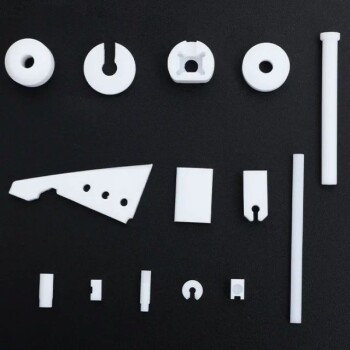
- Custom PTFE Teflon Parts Manufacturer for Non-Standard Insulator Customization
- Custom PTFE Teflon Parts Manufacturer for Hydrothermal Synthesis Reactor Polytetrafluoroethylene Carbon Paper and Carbon Cloth Nano-growth
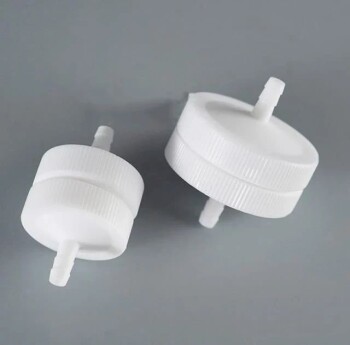
- Custom PTFE Teflon Parts Manufacturer for Sampling Filters
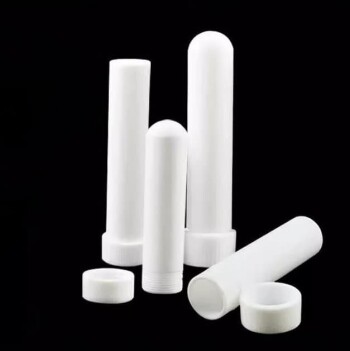
- Custom PTFE Teflon Parts Manufacturer for Centrifuge Tubes
People Also Ask
- What is the necessity of selecting a PTFE electrolytic cell? Ensure Precise Graphene Corrosion Testing Accuracy
- What is the proper method for cleaning the surface of an all-PTFE electrolytic cell? Ensure Accurate Results with a Pristine Surface
- How should an all-PTFE electrolytic cell be stored after use? Expert Maintenance Tips for Long-Lasting Performance
- What is the proper cleaning method for an all-PTFE electrolytic cell? Essential Tips for Surface Integrity
- What are the standard opening specifications for all-PTFE electrolytic cells? A Guide to Sealed vs. Non-Sealed Ports