PTFE membrane filters are selected for the slurry separation stage because of their exceptional chemical stability and resistance to aggressive solvents. In rice husk fractionation, the process requires separating solids from liquids that often contain high-temperature ethanol and strongly alkaline solutions; PTFE withstands these harsh conditions without degrading, ensuring the final product remains pure.
Core Insight: The selection of PTFE is not merely about filtration efficiency, but about chemical compatibility. Its inert nature prevents the filter media from breaking down under extreme pH and temperature conditions, securing the integrity of both the recovered cellulose and the filtrate.
The Chemical Demands of Fractionation
Rice husk fractionation is a chemically intensive process. To understand why PTFE is the definitive choice, one must look at the specific solvents and conditions the filter media must endure.
Withstanding High-Temperature Solvents
The fractionation process frequently utilizes ethanol solutions heated to high temperatures.
Most standard filter materials would swell, dissolve, or lose mechanical strength in this environment. PTFE remains chemically inert, maintaining its pore structure and filtration performance even when saturated with hot organic solvents.
Resisting Alkaline Erosion
In addition to ethanol, the slurry often contains strongly alkaline aqueous solutions.
High pH levels are notoriously damaging to many polymers and natural fibers. PTFE offers distinct solvent resistance against chemical erosion, preventing the caustic solution from eating away at the filter matrix during the separation process.
Ensuring Product Purity and Integrity
Beyond survival, the filter media plays a critical role in the quality of the end product.
Preventing Contamination
If a filter degrades, it introduces foreign particles—dissolved polymer or loose fibers—into the mixture.
Because PTFE resists degradation from both alkalis and organic solvents, it prevents the contamination of the filter cake. This is vital for ensuring the purity of the recovered cellulose residues.
Maintaining Structural Integrity
The filter must act as a reliable physical barrier throughout the process.
As noted in advanced applications like Supported Liquid Membranes (SILMs), the porous PTFE framework acts as a stable physical carrier. In slurry separation, this same structural integrity ensures the filter does not collapse or deform, which would otherwise compromise the separation efficiency.
Understanding the Stakes: Why Alternatives Fail
While PTFE is often a premium material, attempting to use lower-grade alternatives in this specific stage creates significant process risks.
The Risk of Chemical Attack
Standard polymers often lack the "exceptional chemical inertness" required for this application. Exposure to the specific combination of ionic liquids, ethanol, or alkalis found in rice husk processing can lead to rapid material failure.
Compromised Separation Interfaces
In more complex separation setups, the stability of the interface is paramount. PTFE is capable of using capillary forces to anchor liquids within its pores.
If a less stable material is used, it may lose its wetting properties or pore geometry when exposed to chemical attack. This leads to unstable separation, reducing the yield of target components like lignin or cellulose.
Making the Right Choice for Your Process
When designing or optimizing a rice husk fractionation line, the choice of filter media dictates the longevity of your equipment and the quality of your output.
- If your primary focus is Product Purity: Select PTFE to eliminate the risk of filter media degrading and contaminating your recovered cellulose residues.
- If your primary focus is Process Durability: Rely on PTFE to withstand the dual attack of high-temperature ethanol and strongly alkaline aqueous solutions without requiring frequent replacement.
Ultimatley, PTFE provides the necessary chemical shield that allows rigorous fractionation chemistries to function without compromising the physical hardware of the separation unit.
Summary Table:
| Feature | PTFE Membrane Performance | Benefit for Rice Husk Fractionation |
|---|---|---|
| Chemical Stability | Exceptional resistance to aggressive solvents | Withstands high-temperature ethanol without degradation |
| pH Resistance | Inert to strongly alkaline solutions | Prevents erosion and material failure in caustic conditions |
| Material Integrity | High structural stability | Maintains pore geometry for consistent separation efficiency |
| Purity Control | Non-shedding and degradation-resistant | Eliminates contamination of recovered cellulose residues |
| Temperature Tolerance | High thermal stability | Remains functional during high-temperature fractionation cycles |
Optimize Your Fractionation Process with KINTEK Precision
Ensure the highest purity and durability in your laboratory workflows with KINTEK’s premium selection of PTFE products and ceramics. Whether you are performing complex rice husk fractionation or high-pressure chemical synthesis, our specialized equipment—including high-temperature high-pressure reactors, autoclaves, and crushing systems—is designed to withstand the most demanding environments.
Why choose KINTEK? We provide target customers in battery research, material science, and chemical engineering with the robust consumables and advanced hardware needed to prevent contamination and ensure process integrity.
Contact KINTEK today to find the perfect filtration or high-temperature solution for your lab!
References
- Sakurako Ishida, Jun‐ichiro Hayashi. Multi-step pre-treatment of rice husk for fractionation of components including silica. DOI: 10.3389/fchem.2025.1538797
This article is also based on technical information from Kintek Solution Knowledge Base .
Related Products
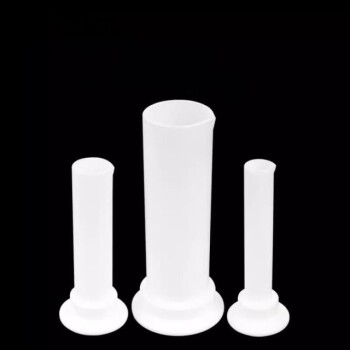
- Custom PTFE Teflon Parts Manufacturer for PTFE Measuring Cylinder 10/50/100ml
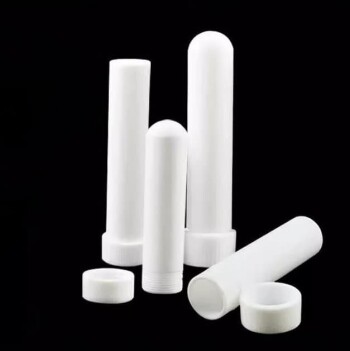
- Custom PTFE Teflon Parts Manufacturer for Centrifuge Tubes
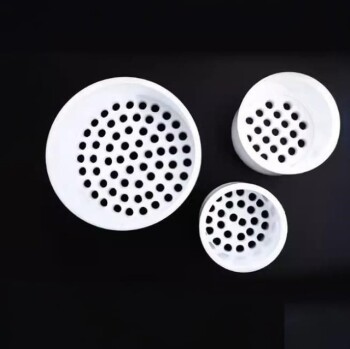
- Custom PTFE Teflon Parts Manufacturer for PTFE Mesh F4 Sieve
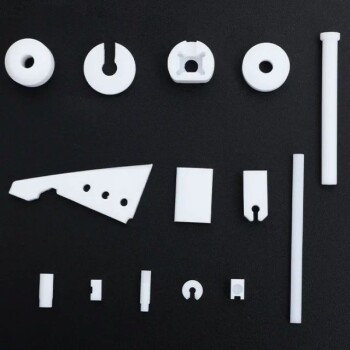
- Custom PTFE Teflon Parts Manufacturer for Non-Standard Insulator Customization
- Customizable PTFE Wafer Carriers for Semiconductor and Lab Applications
People Also Ask
- What are the specific applications of PTFE in micro-batch slug flow systems? Enhance Your Microfluidic Reaction Purity
- Why are PTFE beakers required for hafnium metal ICP-OES validation? Ensure Pure Sample Dissolution
- What role do PTFE containers play in trace metal detection? Ensure Analytical Precision in Photocatalysis Studies
- Why must a Polytetrafluoroethylene (PTFE) reactor be used for Ti3C2TX MXene etching? Ensure Safety and Purity
- What are the four main types of sensors? A Guide to Power Source and Signal Type