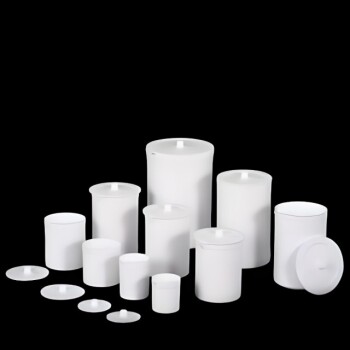
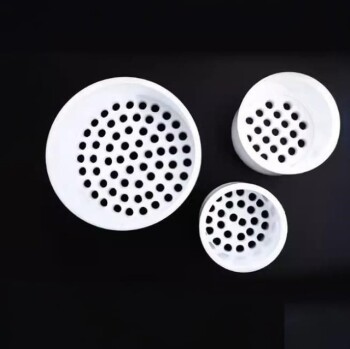
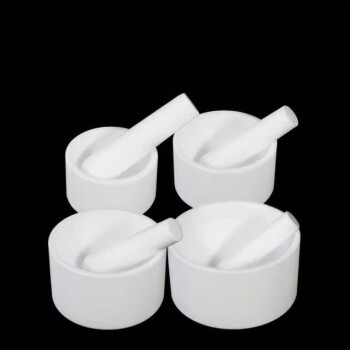
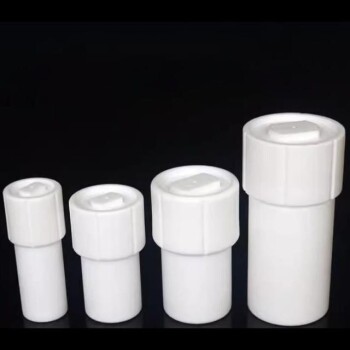
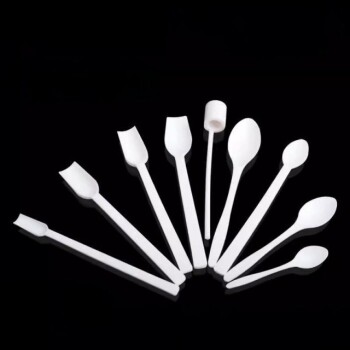
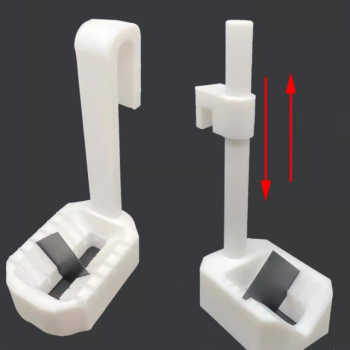
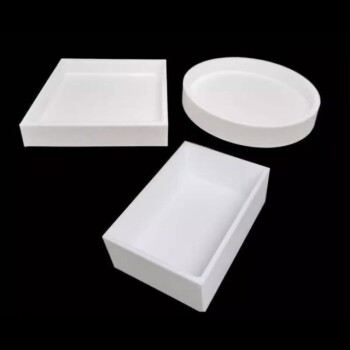
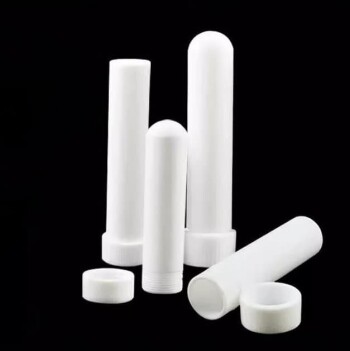
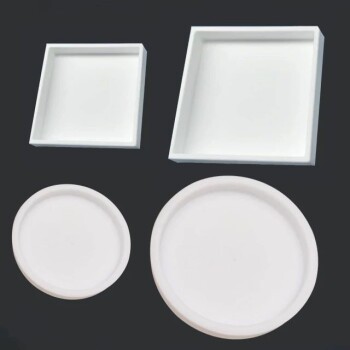
The requirement for Polytetrafluoroethylene (PTFE) beakers is dictated by the aggressive chemistry of the solvent, not the metal itself. Dissolving hafnium metal for ICP-OES validation necessitates the use of high-concentration hydrofluoric acid (HF). Standard laboratory glassware is strictly incompatible with this process because HF rapidly corrodes silica-based materials, compromising both the physical integrity of the vessel and the chemical purity of your sample.
Core Takeaway: Hafnium metal digestion requires hydrofluoric acid (HF), a solvent that actively dissolves glass. PTFE beakers are mandatory to prevent vessel failure and to eliminate the leaching of silicon, sodium, and boron, ensuring the analytical results reflect only the metal's impurities.
The Chemistry of Dissolution
The Role of Hydrofluoric Acid (HF)
Hafnium is a refractory metal that resists dissolution in standard mineral acids. To successfully bring hafnium into solution for ICP-OES analysis, high-concentration hydrofluoric acid is required. This potent solvent is the only effective agent for breaking down the metal matrix for validation.
Why Standard Glassware Fails
Standard laboratory beakers are primarily composed of silica (glass). Hydrofluoric acid has a unique and aggressive chemical affinity for silica. Consequently, exposing a glass beaker to the high-concentration HF needed for hafnium digestion results in immediate and rapid corrosion of the vessel walls.
Ensuring Analytical Integrity
Preventing Cross-Contamination
The primary goal of ICP-OES validation is to accurately detect impurities within the hafnium metal. Because glass contains various oxides, the corrosion process releases significant amounts of silicon, sodium, and boron into the solution. Using PTFE eliminates this source of contamination entirely.
Achieving Superior Chemical Resistance
PTFE provides excellent chemical resistance against corrosive agents like HF. Unlike glass, it remains inert during the digestion process. This ensures that the final solution remains pure and that the beaker itself does not degrade during the procedure.
Common Pitfalls to Avoid
The Trace Impurity Trap
A critical mistake in trace metal analysis is underestimating the leaching potential of the vessel. Even minor contact with glass can elevate background levels of silicon, sodium, and boron. This creates a "high background" trade-off that makes it impossible to distinguish between impurities in the hafnium and contamination from the beaker.
Integrity Risks
Beyond chemical contamination, using glass poses a physical safety risk. The structural damage caused by HF corrosion can lead to leaks or vessel failure during the digestion process. Relying on PTFE is the only way to ensure safe containment of the acid matrix.
Making the Right Choice for Your Validation
To ensure the accuracy of your ICP-OES results, strict adherence to material compatibility is required.
- If your primary focus is Trace Analysis: Use PTFE beakers to eliminate background noise from silicon, sodium, and boron, ensuring accurate impurity quantification.
- If your primary focus is Laboratory Safety: Use PTFE beakers to maintain total structural integrity when handling high-concentration hydrofluoric acid.
By standardizing on PTFE, you protect both the validity of your data and the safety of your laboratory environment.
Summary Table:
| Feature | Glass Beakers (Silica-based) | PTFE (Polytetrafluoroethylene) |
|---|---|---|
| HF Resistance | Rapidly corroded / Dissolved | Excellent chemical inertness |
| Contamination Risk | High (Silicon, Sodium, Boron) | Zero leaching of trace elements |
| Structural Integrity | High risk of failure with HF | Maintains safety and durability |
| Analysis Suitability | Unsuitable for trace analysis | Ideal for high-purity ICP-OES |
Secure Your Analytical Precision with KINTEK
Don't let vessel contamination compromise your hafnium validation results. At KINTEK, we specialize in high-performance laboratory consumables designed for the most demanding chemical environments. From our chemical-resistant PTFE products, ceramics, and crucibles to our advanced crushing and milling systems, we provide the tools you need for impeccable sample preparation.
Whether you are conducting trace metal analysis or managing large-scale industrial labs, KINTEK offers a comprehensive range of solutions including high-temperature furnaces, hydraulic presses, and specialized cooling systems.
Ready to upgrade your laboratory’s accuracy and safety? Contact our specialists today to find the perfect PTFE solutions and equipment for your research needs.
References
- R. Shekhar, Sanjiv Kumar. Characterization of Hafnium Metal for its Impurities by Glow Discharge Quadrupole Mass Spectrometry Using a Non-Matrix Matched Standard. DOI: 10.46770/as.2020.03.002
This article is also based on technical information from Kintek Solution Knowledge Base .
Related Products
- Custom PTFE Teflon Parts Manufacturer PTFE Beaker and Lids
- Custom PTFE Teflon Parts Manufacturer for PTFE Measuring Cylinder 10/50/100ml
- Custom PTFE Teflon Parts Manufacturer for Magnetic Stirring Bar
- Custom PTFE Teflon Parts Manufacturer for PTFE Mesh F4 Sieve
- Custom PTFE Teflon Parts Manufacturer Grinding Bowl
People Also Ask
- Why is a PTFE beaker preferred for fluorosilicone rubber and POSS-V mixtures? Ensure Purity and Precision
- Why are PTFE containers required for PCT leaching tests? Ensure Chemical Inertness and Analytical Precision
- What role do PTFE containers play in trace metal detection? Ensure Analytical Precision in Photocatalysis Studies
- Why is a PTFE container required for acid leaching of silicon nanosheets? Ensure High Purity and Safety
- Why is PTFE Mandatory for Hydrofluoric Acid (HF) Handling? Ensure Safety and Data Integrity in Corrosion Testing