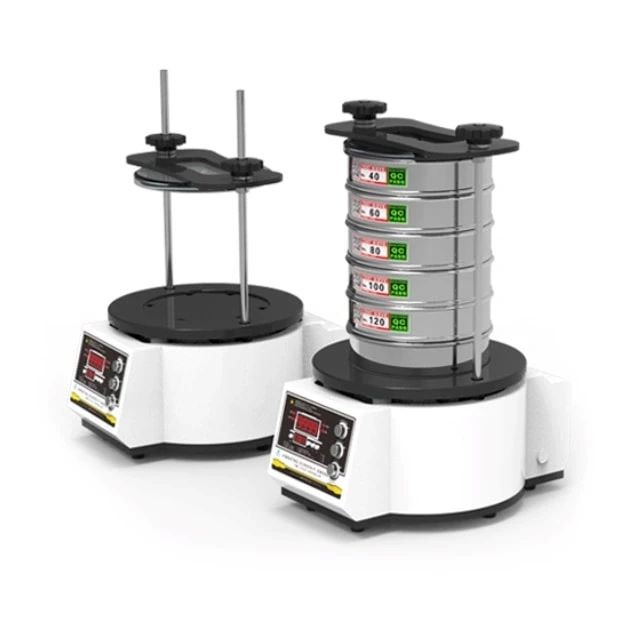
Sieving Machine
Vibratory Sieve Shaker Machine Dry Three-Dimensional Vibrating Sieve
Item Number : KT-V200
Price varies based on specs and customizations
- Screen layers
- 1-8 floors
- Maximum sieve mass
- 4kg
- Amplitude:
- 0.2-3 mm
- Vibration frequency
- 3000 times/min
- Screening particle size range
- 20um – 125mm

Shipping:
Contact us to get shipping details Enjoy On-time Dispatch Guarantee.
Why Choose Us
Easy ordering process, quality products, and dedicated support for your business success.
Introduction
The KT-V200 product focuses on solving common sieving tasks in the laboratory. It is suitable for sieving 20g-3kg dry samples. Screening and timing functions, including password lock screen protection and one-button reset, easy to use, simple to operate, quiet and comfortable, safe and reliable.
- Processing principle: high-frequency three-dimensional parabolic motion
- Application samples: Powder | granular | small block | loose | suspended solids, etc.
- Processing type: Particle size determination, separation, classification
- Main functions: Frequency conversion digital control | timing | vibration frequency adjustment | continuous screening | intermittent screening
Applications
The Dry Three-Dimensional Vibrating Sieve is a versatile and efficient screening equipment designed for precise particle size analysis and classification. Utilizing an electronically controlled electromagnet and a vibration transmission component, this sieve produces a three-dimensional throwing motion that ensures even distribution and rapid, accurate screening of samples. It is particularly effective in industries requiring detailed particle analysis and classification.
- Pharmaceuticals: For the precise grading and quality control of pharmaceutical powders and granules.
- Metallurgy: Used in the classification and analysis of metal powders and ore particles.
- Food Industry: Essential for grading and ensuring the quality of food ingredients like grains, spices, and powders.
- Cosmetics: Helps in the uniform distribution and sizing of cosmetic powders and pigments.
- Agriculture: Critical for soil analysis and grading of agricultural products like seeds and grains.
- Environmental Analysis: Useful in soil and sediment analysis for environmental studies.
- Chemical Industry: For the classification of chemical powders and granules.
- Geology: Assists in the analysis of geological samples for research and mining operations.
- Construction Materials: Used in the grading of raw materials like sand, gravel, and cement.
- Environmental Monitoring: Helps in the analysis of particulate matter in air and water samples.
- Resources and Mining: Essential for ore and mineral analysis in mining operations.
- Glass and Ceramics: Used in the grading of raw materials for manufacturing processes.
- Biology: Useful in the analysis of biological samples for research purposes.
Features
The Dry Three-Dimensional Vibrating Sieve is a sophisticated laboratory equipment designed to efficiently and accurately screen and separate solid particles. Its unique features not only enhance its functionality but also provide significant benefits to the users, making it an indispensable tool in various industries.
- Electromagnetically Controlled Vibration: The core of this sieve is an electronically controlled electromagnet that drives a vibration transmission component. This mechanism produces a three-dimensional throwing motion, ensuring that samples are evenly distributed across the entire screen surface. This feature facilitates layer-by-layer filtration and rapid sample classification, optimizing the screening process for various materials.
- Multi-Layer Screen Structure: Each layer of the sieve body features screens with different aperture sizes, enabling the classification and screening of materials with varying particle sizes. This multi-layer design enhances the precision and efficiency of the screening process, making it suitable for a wide range of applications.
- Adjustable Discharge Port and Automated Operations: The sieve allows for the adjustment of the discharge port direction, and it automatically discharges coarse and fine materials. This automation not only streamlines the screening process but also reduces manual intervention, thereby increasing efficiency and reducing the potential for human error.
- High Screening Precision and Efficiency: With its high-frequency, small-amplitude vibration mode, the Dry Three-Dimensional Vibrating Sieve ensures that granular materials pass through and separate quickly on the sieve body. This feature not only saves energy but also significantly improves the screening efficiency and processing capacity, making it ideal for particle size analysis, morphology analysis, and particle distribution analysis.
- Fully Sealed Structure and Automatic Screen Cleaning: The sieve is designed with a fully sealed structure to prevent dust from flying, ensuring a clean and safe working environment. Additionally, it features an automatic screen cleaning device, which keeps the mesh from getting clogged and maintains the integrity of the screening process.
- Compact and Portable Design: Despite its robust capabilities, the Dry Three-Dimensional Vibrating Sieve is compact and lightweight, making it easy to move and suitable for various settings, including laboratories and industrial environments.
Detail & Parts

Digital display of performance and time; Suitable for dry and wet screening; Excellent separation efficiency even with short sieving times; Efficient electromagnetic drive
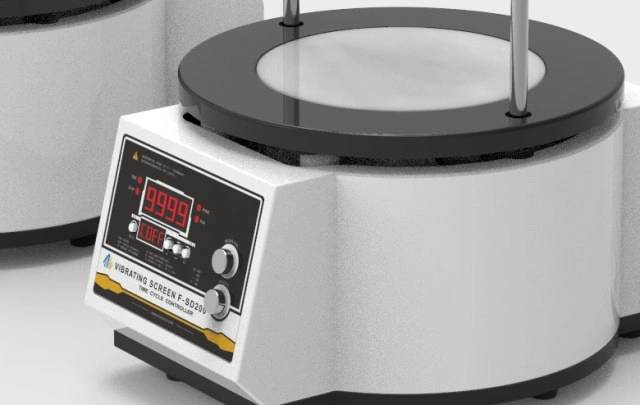
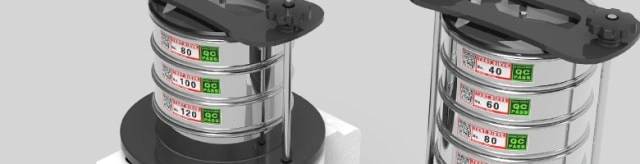
3D motion, which ensures optimal utilization of the open area of the sieve and allows the sample to move evenly across the entire sieve surface; Sieve stacks up to 510mm high; Free adjustment of all process parameters (time, productivity); Easy to operate, ergonomic design
Advantages
The Dry Three-Dimensional Vibrating Sieve offers a range of advantages that enhance the efficiency and effectiveness of the sintering process in metal 3D printing. Here are the key benefits:
- Superior Quality: The sieve ensures that the materials used in the sintering process are of the highest quality, leading to components that are bright and clean with fewer imperfections. This is crucial for achieving the requisite hardness, size, and density in the final product.
- Flexibility in Production: With the ability to handle a variety of materials including metals, ceramics, nanometer materials, non-crystalline material, composite materials, and functionally graded materials, the sieve provides versatility in production processes. This flexibility allows for the sintering of different shapes of products according to specific contracts.
- Easy Operation: The user-friendly design of the sieve, coupled with fully automatic control features, makes it easy to operate in a vacuum or protective gas environment. This includes automated processes for vacuum pumping, pressure increasing, and sintering, ensuring ease of use and minimal operator intervention.
- Advanced Safety Features: The sieve is equipped with interlocking functions and alarms for electricity shortage, water shortage, insufficient pressure, and over-temperature conditions. These safety measures protect both the equipment and the operators, ensuring a secure working environment.
- High Degree of Automation: The configuration of the vacuum system in the sieve has a high degree of automation, which minimizes human error and ensures consistent quality in the sintering process. The system also includes a perfect detection system that helps avoid adverse effects caused by human factors.
- Energy Efficiency and Environmental Friendliness: As vacuum sintering technology continues to evolve, the sieve is designed to be more environmentally friendly, efficient, and energy-saving. This aligns with the growing demand for sustainable manufacturing processes.
- Fast Pumping Speed: The sieve's large pumping capacity and fast pumping speed effectively handle the large outgassing of raw materials, ensuring a smooth and efficient sintering process.
In summary, the Dry Three-Dimensional Vibrating Sieve is a critical component in the vacuum sintering process, offering superior quality, flexibility, ease of operation, advanced safety features, high automation, and environmental benefits. These advantages make it an indispensable tool for achieving high-quality, high-performance materials and products in the field of metal 3D printing.
Technical specifications
| Maximum load | 3 kg |
| Screen layers | 1-8 floors |
| Maximum sieve tower mass | 4 kg |
| Amplitude | 0.2-3 mm |
| Vibration frequency | 3000 times/min |
| Screening particle size range | 20 um-125 mm |
| The largest available screen diameter | 200mm |
| Maximum sieve tower height | 510mm |
| Additional function | Comfortable visual screen press plate |
| Screening method | Dry |
| Electrical description | 100-120V/220-240VAC,50-60Hz,200W |
| Power port | National standard/European standard/American standard/British standard, etc. |
| Net weight | 35 kg |
| Dimensions (width, thickness and height) | 300*405*685mm |
| Protection level | IP65 |
| Standard | CE/ISO9001 |
Warnings
Operator safety is the top important issue! Please operate the equipment with cautions. Working with inflammable& explosive or toxic gases is very dangerous, operators must take all necessary precautions before starting the equipment. Working with positive pressure inside the reactors or chambers is dangerous, operator must fellow the safety procedures strictly. Extra caution must also be taken when operating with air-reactive materials, especially under vacuum. A leak can draw air into the apparatus and cause a violent reaction to occur.
Designed for You
KinTek provide deep custom made service and equipment to worldwide customers, our specialized teamwork and rich experienced engineers are capable to undertake the custom tailoring hardware and software equipment requirements, and help our customer to build up the exclusive and personalized equipment and solution!
Would you please drop your ideas to us, our engineers are ready for you now!
Trusted by Industry Leaders
FAQ
What Is A Test Sieve?
What Are The Main Applications Of Laboratory Sieve Shakers?
What Are The Main Applications Of Test Sieves?
What Are The Key Features Of Laboratory Sieve Shakers?
How Does A Test Sieve Work?
How Does A Laboratory Sieve Shaker Work?
What Are The Different Types Of Test Sieves?
What Are The Advantages Of Using A Laboratory Sieve Shaker?
What Are The Advantages Of Using A Test Sieve?
What Types Of Laboratory Sieve Shakers Are Available?
Can Test Sieves Be Used For Both Dry And Wet Samples?
What Is A PTFE Mesh Sieve, And Where Is It Used?
REQUEST A QUOTE
Our professional team will reply to you within one business day. Please feel free to contact us!
Related Products
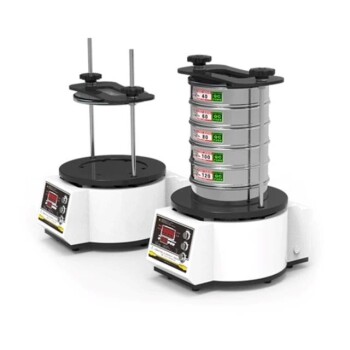
Laboratory Wet Three-Dimensional Vibratory Sieve Shaker Machine
The wet three-dimensional vibrating sieving instrument focuses on solving the sieving tasks of dry and wet samples in the laboratory. It is suitable for sieving 20g - 3kg dry, wet or liquid samples.
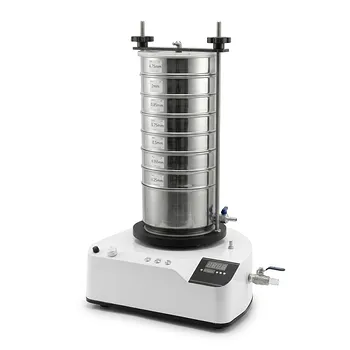
Laboratory Vibratory Sieve Shaker Machine for Dry and Wet Three-Dimensional Sieving
KT-VD200 can be used for sieving tasks of dry and wet samples in the laboratory. The screening quality is 20g-3kg. The product is designed with a unique mechanical structure and an electromagnetic vibrating body with a vibration frequency of 3000 times per minute.

Laboratory Test Sieves and Vibratory Sieve Shaker Machine
Efficiently process powders, granules, and small blocks with a high-frequency vibration sieve. Control vibration frequency, screen continuously or intermittently, and achieve accurate particle size determination, separation, and classification.

Laboratory Vibratory Sieve Shaker Machine Slap Vibrating Sieve
KT-T200TAP is a slapping and oscillating sieving instrument for laboratory desktop use, with 300 rpm horizontal circular motion and 300 vertical slapping motions to simulate manual sieving to help sample particles pass through better.
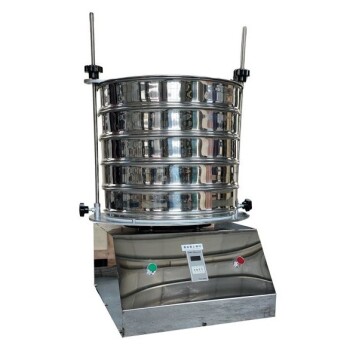
Laboratory Test Sieves and Sieving Machines
Precision lab test sieves & sieving machines for accurate particle analysis. Stainless steel, ISO-compliant, 20μm-125mm range. Request specs now!
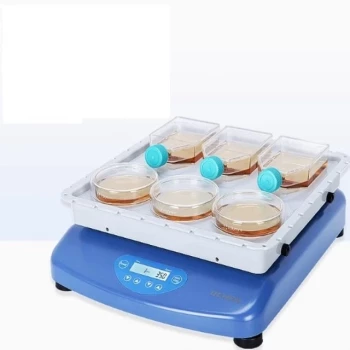
Laboratory Oscillating Orbital Shaker
Mixer-OT orbital shaker uses brushless motor, which can run for a long time. It is suitable for vibration tasks of culture dishes, flasks and beakers.
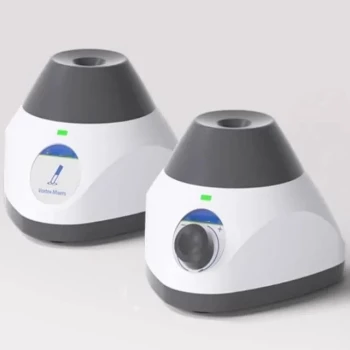
Laboratory Vortex Mixer Orbital Shaker Multifunctional Rotation Oscillation Mixer
The inching mixer is small in size, mixes quickly and thoroughly, and the liquid is in a vortex shape, which can mix all the test solutions attached to the tube wall.
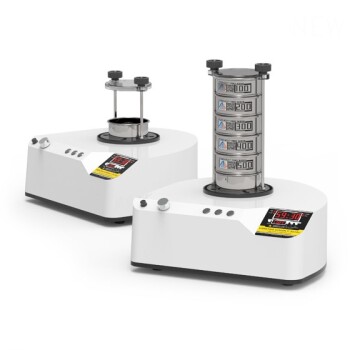
Three-dimensional electromagnetic sieving instrument
KT-VT150 is a desktop sample processing instrument for both sieving and grinding. Grinding and sieving can be used both dry and wet. The vibration amplitude is 5mm and the vibration frequency is 3000-3600 times/min.
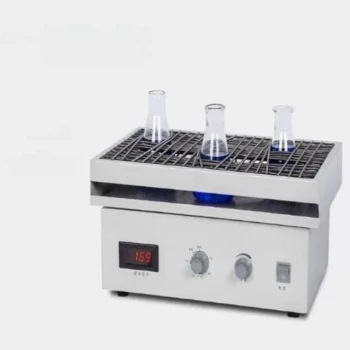
Laboratory Multifunctional Small Speed-Adjustable Horizontal Mechanical Shaker for Lab
The laboratory multifunctional speed-regulating oscillator is a constant-speed experimental equipment specially developed for modern bioengineering production units.

Vibrating Disc Mill Small Laboratory Grinding Machine
Discover the versatile Vibrating Disc Mill for efficient laboratory grinding. Ideal for geology, metallurgy, biology, and more. Explore now!
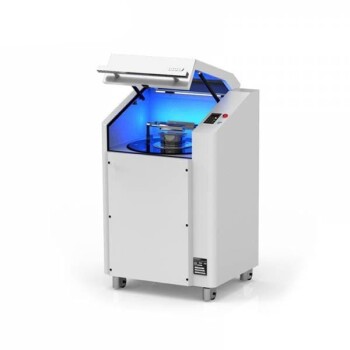
Lab Vibration Mill
Vibration Mill for Efficient Sample Preparation, Suitable for Crushing and Grinding a Variety of Materials with Analytical Precision. Supports Dry / Wet / Cryogenic Grinding and Vacuum/Inert Gas Protection.
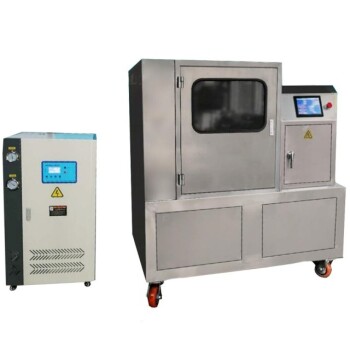
Low-Temperature Water-Cooled Touchscreen Vibratory Ultrafine Pulverizer
Low-temperature water-cooled vibratory pulverizer for ultrafine grinding. Preserves material integrity. Ideal for labs and production. Learn more.

Hybrid High Energy Vibratory Ball Mill for Lab Use
KT-BM400 is used for rapid grinding or mixing of dry, wet and frozen small amount of samples in the laboratory. It can be configured with two 50ml ball mill jars

High Energy Vibratory Ball Mill for Lab Use
The high-energy vibrating ball mill is a high-energy oscillating and impacting multifunctional laboratory ball mill. The table-top type is easy to operate, small in size, comfortable and safe.
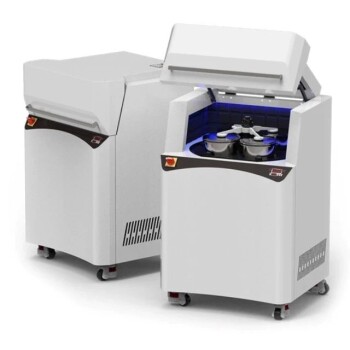
Disc Cup Vibrating Mill Multi-Platform for Lab
The multi-platform vibrating disc mill is suitable for non-destructive crushing and fine grinding of samples with large particle sizes. It is suitable for crushing and grinding applications of medium-hard, high-hard, brittle, fibrous, and elastic materials.

High Energy Vibratory Laboratory Ball Mill Double Tank Type
High-energy vibration ball mill is a small desktop laboratory grinding instrument. It uses 1700r/min high-frequency three-dimensional vibration to make the sample achieve the result of grinding or mixing.
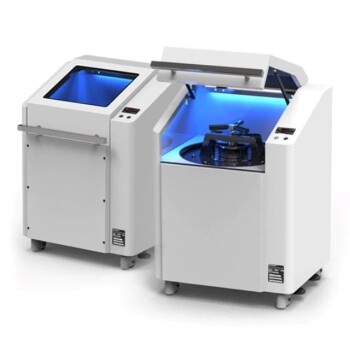
Laboratory Disc Cup Vibratory Mill for Sample Grinding
The vibrating disc mill is suitable for non-destructive crushing and fine grinding of samples with large particle sizes, and can quickly prepare samples with analytical fineness and purity.

High Energy Vibratory Laboratory Ball Mill Grinding Mill Single Tank Type
High-energy vibration ball mill is a small desktop laboratory grinding instrument.It can be ball-milled or mixed with different particle sizes and materials by dry and wet methods.
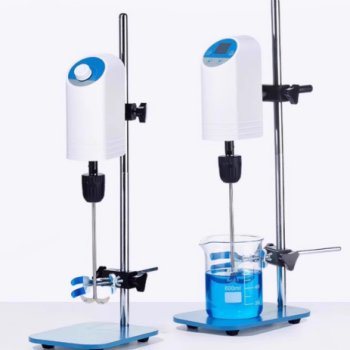
High Performance Laboratory Stirrers for Diverse Applications
Precise laboratory overhead stirrers for high-viscosity mixing. Durable, customizable, and ideal for research. Explore models now!
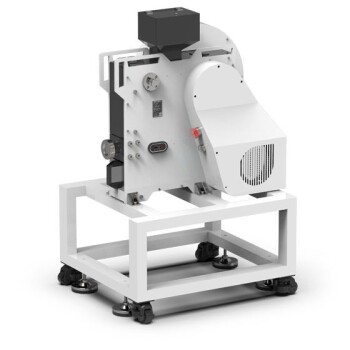
Laboratory Jaw Crusher
Discover the small jaw crusher for efficient, flexible, and affordable crushing in labs and small mines. Ideal for coal, ores, and rocks. Learn more now!
Related Articles

The Ultimate Guide to the Application and Benefits of Vibratory Sieve Shaker in Laboratory Testing
Discover the extensive application of vibratory sieve shaker in laboratory testing for industries such as food, medicine, chemical, and more. Learn about the benefits of using a sieve shaker.

Three-Dimensional Vibrating Sieve: Working Principle and Application Fields
Discover the working principle and application fields of the three-dimensional vibrating screener. Learn how this laboratory equipment uses vibration force to efficiently separate and analyze granular materials. Explore its uses in the pharmaceutical, chemical, and various other industries.
Innovative screening technology: Laboratory three-dimensional vibrating screen leads the new industry standard
Learn about the working principle of the dry three-dimensional vibrating screener and its applications. Understand the vibration force generation and three-dimensional throwing motion. Discover the adjustment function and intelligent control of the screener. Explore the features and benefits of using the dry three-dimensional vibrating screener in laboratory and industrial settings.
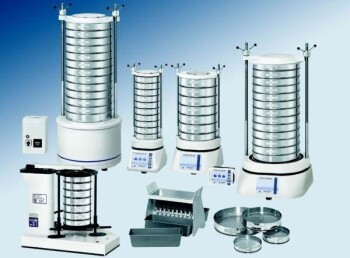
Revolutionizing Lab Efficiency: The Ultimate Guide to Laboratory Sieving Machines
Discover the common sieving methods used in laboratory analysis. Learn about single sieve and sieve set sieving, dry and wet sieving, and other techniques for effective particle separation. Find out how sieving has evolved over time and its importance in quality assurance.
The Scientific Principle of Sieving: Understanding Particle Size Distribution and Laboratory Test Sieves
Learn about the scientific principle of sieving, including the process of separating particles based on size, types of laboratory test sieves. Discover how sieving impacts various industries and the accuracy of particle sizing measurements.

Unlocking the Power of Sieving Machines: Functions, Applications and Maintenance
Discover the significance of sieving machines in various industries and the essential functions they serve. Learn about the the maintenance requirements for optimal performance. Explore the benefits of using sieve shakers for automating the particle separation process.

Sieving technology for particle size analysis and its applications
Introducing screening technology, explaining the working principle of vibrating screens and the advantages of using them for particle size analysis in screening technology. Learn about the types of vibrating screens and how to choose one.