Optimizing mechanochemical conversion relies heavily on manipulating the physical impact dynamics within the milling jar. You can directly control the reaction rate by adjusting the quantity of grinding balls to increase collision frequency and mixing uniformity, or by increasing the size of the balls to deliver higher kinetic energy impacts for hindered or difficult transformations.
The configuration of grinding media acts as the tuning knob for reaction energy; increasing the number of balls improves homogeneity and contact, while larger balls provide the necessary force to overcome high activation energy barriers.
Controlling Reaction Dynamics via Ball Quantity
Increasing Collision Frequency
The quantity of grinding balls within the jar dictates the collision frequency of the system.
By adding more balls, you statistically increase the number of impacts occurring per unit of time. This creates more opportunities for the reactants to interact at the molecular level.
Improving Mixing Uniformity
Beyond simple impacts, a higher quantity of balls significantly enhances the mixing uniformity of the mixture.
This ensures that reagents are distributed evenly throughout the jar, preventing "dead zones" where no reaction occurs. Consistent mixing is essential for maintaining a steady conversion rate throughout the entire batch.
Preventing Component Encapsulation
A critical advantage of increasing ball quantity is the prevention of encapsulation.
In systems with fewer impacts, key components—such as catalysts—can become trapped or coated by other materials, rendering them inactive. A higher number of balls ensures these components remain exposed and active, sustaining the reaction's progress.
The Role of Ball Size in Energy Delivery
Increasing Impact Energy
The size of the grinding ball correlates directly with the energy density delivered upon impact.
Larger diameter balls possess greater mass, resulting in significantly higher kinetic energy transfer when they collide with the reagents. This high-energy impact is distinct from the cumulative effect of many small impacts.
Overcoming Steric Hindrance
For reactions that are chemically difficult or involve highly hindered molecules, impact energy is the deciding factor.
Standard impacts may not provide enough energy to break stable bonds or force bulky molecules together. The primary reference notes that shifting from 1.0 cm to 1.5 cm balls can provide the necessary energy spike to enhance conversion efficiency in these stubborn systems.
Understanding the Trade-offs
Mixing vs. Force
There is a functional trade-off between the number of impacts (frequency) and the power of impacts (energy).
Prioritizing a high quantity of balls excels at homogenization and exposing catalysts, but it may lack the raw force required for tough chemical transformations. Conversely, using fewer, larger balls delivers high energy but may suffer from poorer mixing or lower collision frequency.
Selecting the Wrong Tool
Using large balls for a reaction that primarily requires intimate mixing is inefficient.
Similarly, relying on a high quantity of small balls for a high-barrier reaction will result in low conversion rates, as the impacts will simply bounce off without inducing the necessary chemical change.
Making the Right Choice for Your Goal
To maximize your conversion rate, you must align the grinding media with the specific chemical barrier of your reaction.
- If your primary focus is overcoming high barriers (hindered reactions): Prioritize ball size (e.g., 1.5 cm) to generate the high impact energy required to drive difficult transformations.
- If your primary focus is homogeneity and catalyst activity: Prioritize ball quantity to maximize collision frequency, ensuring uniform mixing and preventing the encapsulation of key components.
Success in mechanochemistry comes not just from milling harder, but from tuning the physical impacts to match the chemical needs of your reactants.
Summary Table:
| Factor Adjusted | Primary Impact | Best Used For... |
|---|---|---|
| Ball Quantity | Increase Collision Frequency | Improving homogeneity & preventing catalyst encapsulation |
| Ball Size | Higher Kinetic Energy Density | Overcoming steric hindrance & high activation energy barriers |
| Small Balls | Better Mixing Uniformity | Reactions requiring intimate reagent contact and steady progress |
| Large Balls | High Impact Power | Breaking stable bonds and driving chemically difficult transformations |
Elevate Your Mechanochemical Research with KINTEK
Precision in milling starts with the right equipment. KINTEK specializes in high-performance laboratory solutions, providing a comprehensive range of crushing and milling systems and high-durability consumables designed for complex mechanochemistry. Whether you are scaling up hindered transformations or optimizing catalyst activity, our expert-grade tools ensure consistent energy delivery and superior conversion rates.
Our value to your laboratory includes:
- Advanced Milling Systems: Precision-engineered for controlled impact dynamics.
- Quality Consumables: A wide selection of grinding media, ceramics, and crucibles.
- Specialized Lab Equipment: From high-temperature furnaces to hydraulic pellet presses and cooling solutions.
Ready to optimize your reaction efficiency? Contact KINTEK today to find the perfect milling configuration for your target applications.
References
- Ophélie Bento, Frédéric Lamaty. Sustainable Mechanosynthesis of Biologically Active Molecules. DOI: 10.1002/ejoc.202101516
This article is also based on technical information from Kintek Solution Knowledge Base .
Related Products
- High Energy Planetary Ball Mill Milling Machine for Laboratory
- Laboratory Ball Mill Jar Mill with Metal Alloy Grinding Jar and Balls
- Laboratory Jar Ball Mill with Alumina Zirconia Grinding Jar and Balls
- Laboratory Micro Tissue Grinding Mill Grinder
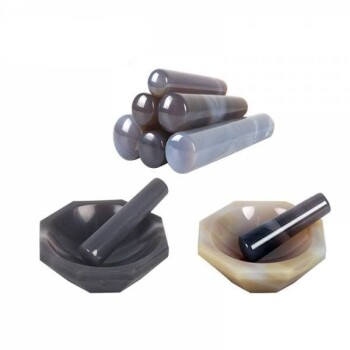
- Nature Agate Mortar and Pestle for Grinding and Mixing
People Also Ask
- What role do planetary ball mills and zirconia media play in LLZT preparation? Optimize Your Solid Electrolyte Research
- What is the primary function of a planetary ball mill? Mastering SiC/Al Composite Mixing for Homogeneity
- What is the primary purpose of using a planetary ball mill for LAGP? Achieve High-Purity Solid-State Electrolytes
- What role does a planetary ball mill play in the preparation of LGVO powders? Precision Refinement for Aerosol Deposition
- What is the function of a planetary ball mill in the preparation of high-entropy rare earth silicate multi-phase ceramics?