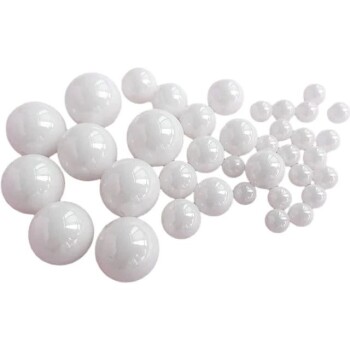
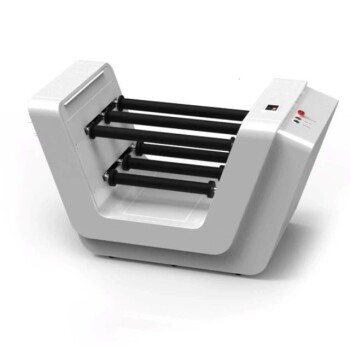
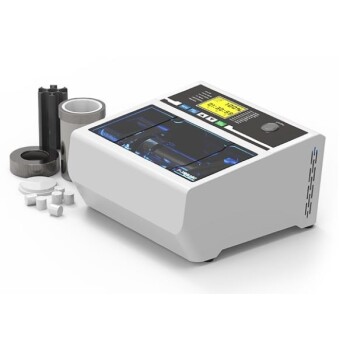
The necessity of using zirconia ball milling jars and grinding media stems from a dual requirement for chemical purity and high kinetic energy.
In the preparation of Silicon Carbide (SiC)/Zirconia Toughened Alumina (ZTA) composite powders, using zirconia media prevents foreign contamination caused by abrasive wear while providing the high-impact density needed to thoroughly mix and refine hard ceramic particles.
Core Takeaway The selection of zirconia media is strategic: it turns inevitable media wear into a benign addition rather than a contaminant, preserving the ZTA matrix purity. Simultaneously, its high density generates sufficient kinetic energy to refine SiC and Alumina components to the nanometer scale, ensuring a uniform microstructure during sintering.
Preserving Chemical Purity
Mitigating Contamination from Wear
Ball milling is an inherently abrasive process. Over time, the grinding media and jar linings will wear down, introducing debris into your powder mixture.
If you use media made of a different material (such as steel or tungsten carbide), this wear debris becomes a foreign impurity. These impurities can degrade the mechanical properties of the final ZTA composite.
Chemical Compatibility with ZTA
Because your target matrix is Zirconia Toughened Alumina (ZTA), it already contains zirconia. Therefore, any wear debris from zirconia grinding media is chemically compatible with your mixture.
Instead of acting as a defect-causing contaminant, the wear particles simply integrate into the existing zirconia phase of the matrix, maintaining high purity.
Achieving Homogeneity and Refinement
The Role of High Density
Achieving a uniform mixture of Silicon Carbide, Alumina, and Zirconia requires significant mechanical force. Zirconia media is characterized by high density, which translates into substantial impact kinetic energy during the milling process.
Lower-density media (like pure alumina balls) may lack the mass required to effectively break apart agglomerates or uniformly disperse the hard SiC particles within the matrix.
Microstructural Refinement
The high-energy impact provided by zirconia balls allows for the refinement of powders down to the micrometer or nanometer scale.
This level of refinement is non-negotiable for high-performance ceramics. It ensures a consistent distribution of SiC phases, which is critical for controlling the microstructure and achieving full densification during the subsequent sintering process.
Understanding the Trade-offs
Hardness vs. Purity
While Tungsten Carbide (WC) media is harder and denser than zirconia—potentially offering higher impact energy for extremely hard SiC particles—it introduces a significant risk.
Wear from WC media introduces tungsten and carbon contamination into the ZTA matrix. While acceptable in some composites, this is often detrimental to the specific purity requirements of high-performance ZTA. Zirconia offers the optimal balance: it is hard enough to refine the powder effective, but "clean" enough to preserve the chemical formulation.
Making the Right Choice for Your Goal
When setting up your milling parameters, consider your specific performance targets:
- If your primary focus is Chemical Purity: Prioritize high-quality zirconia jars and media to ensure that any inevitable media wear does not alter the stoichiometry of your ZTA matrix.
- If your primary focus is Sintering Density: Rely on the high density of zirconia media to achieve the nanometer-scale particle refinement necessary for uniform microstructural growth.
Select zirconia media to turn the inevitable physics of abrasive wear into a chemical advantage, ensuring a pristine and uniform final composite.
Summary Table:
| Feature | Zirconia Media (YSZ) | Benefits for SiC/ZTA Preparation |
|---|---|---|
| Chemical Purity | Zero foreign contamination | Wear debris is compatible with the ZTA matrix. |
| High Density | ~6.0 g/cm³ | Provides high-impact energy to refine hard SiC particles. |
| Microstructure | High-energy refinement | Ensures uniform dispersion and nanometer-scale particles. |
| Wear Resistance | Excellent durability | Minimizes material loss while maintaining powder stoichiometry. |
| Sintering Quality | Promotes densification | Uniform mixing leads to superior final ceramic performance. |
Elevate Your Material Synthesis with KINTEK Precision Solutions
Don't let media contamination compromise the integrity of your high-performance ceramics. KINTEK specializes in advanced laboratory equipment, providing high-density zirconia ball milling jars and grinding media specifically engineered for hard-material processing like SiC and ZTA composites.
Beyond milling, our comprehensive portfolio supports your entire workflow—from crushing and milling systems to high-temperature furnaces (muffle, vacuum, CVD) for sintering, and hydraulic presses for pellet formation. Whether you are refining powders or conducting battery research, our expert solutions ensure chemical purity and structural homogeneity.
Ready to optimize your ceramic processing? Contact our technical team today to find the perfect equipment and consumables for your lab's unique requirements!
Related Products
- Laboratory Jar Ball Mill with Alumina Zirconia Grinding Jar and Balls
- Laboratory Ball Mill Jar Mill with Metal Alloy Grinding Jar and Balls
- Laboratory Single Horizontal Jar Mill
- Precision Machined Zirconia Ceramic Ball for Engineering Advanced Fine Ceramics
- Laboratory Jar Mill with Agate Grinding Jar and Balls
People Also Ask
- What are the primary functions of using a ball mill for BZCY72 powder? Achieve High Purity and Enhanced Sintering
- In what way does a laboratory ball mill affect material properties when modifying PHBV/pulp fiber composites?
- Why is a laboratory ball mill required for ultra-fine fly ash? Unlock Nano-Scale Adsorption Power
- What is the function of a laboratory ball mill in the preparation of AMMCs? Optimize Dispersion & Grain Refinement
- What is the function of a laboratory ball mill in the pretreatment of waste tire char (WTC)? Optimize Material Reactivity