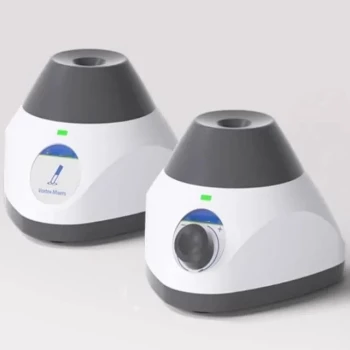
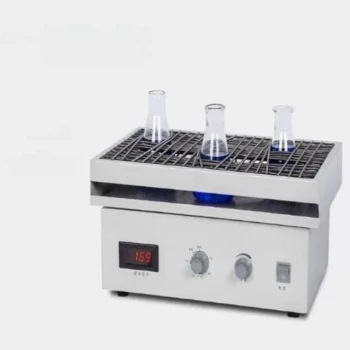
The reciprocating shaker serves as the primary driver for kinetic efficiency by providing continuous mechanical agitation that ensures coal gangue-based ceramic particles maintain maximum contact with lead ions. This action effectively eliminates the external diffusion layer, allowing ions to bypass physical barriers and reach internal active sites rapidly to demonstrate the material's true adsorption capacity.
A reciprocating shaker optimizes lead ion adsorption by minimizing mass transfer resistance and maximizing the collision frequency between the adsorbent surface and the contaminant. This mechanical energy ensures the experiment measures the ceramic's chemical potential rather than its physical diffusion limitations.
Overcoming Mass Transfer Resistance
Eliminating the Diffusion Layer
In a static environment, a stagnant liquid film or "diffusion layer" forms around ceramic particles, slowing the movement of lead ions toward the surface. The reciprocating shaker provides the mechanical power necessary to strip away this layer, significantly reducing mass transfer resistance.
Maintaining a Highly Suspended State
By keeping the coal gangue-based particles in a highly suspended state, the shaker prevents the material from settling at the bottom of the vessel. This ensures that the entire surface area of the porous ceramic is available for interaction with the simulated wastewater throughout the experiment.
Optimizing the Kinetic Environment
Promoting Internal Pore Penetration
The enhanced kinetic environment created by the shaker facilitates the movement of lead ions into the complex, internal porous structure of the coal gangue ceramic. This pressure-like agitation encourages ions to penetrate deeper into the material, accessing internal active sites that would otherwise remain underutilized.
Accelerating Chemical Bonding
Mechanical agitation increases the frequency and energy of collisions between lead ions and the ceramic's chemical functional groups. This acceleration allows the adsorption reaction to reach equilibrium quickly, providing a clear picture of the material's maximum loading capacity in a shorter timeframe.
Understanding the Trade-offs and Limitations
Risk of Particle Attrition
While agitation is necessary, excessive shaker speeds can lead to mechanical attrition, where ceramic particles collide with enough force to break or erode. This can artificially increase the surface area or create fine debris that complicates the final filtration and analysis process.
The Energy Saturation Point
There is a point of diminishing returns where increasing the shaker speed no longer improves the adsorption rate. Once the external mass transfer resistance is fully neutralized, the rate-limiting step shifts to intra-particle diffusion, which mechanical shaking cannot influence.
How to Apply These Insights to Your Research
Accurate adsorption data depends on balancing mechanical energy with material integrity to ensure the results reflect chemical reality.
- If your primary focus is determining maximum capacity: Use a shaker speed high enough to ensure full particle suspension, as this guarantees all active sites are exposed to the lead ions.
- If your primary focus is kinetic modeling: Maintain a constant, moderate agitation speed to isolate the internal diffusion rate from external variables, ensuring your kinetic constants are accurate.
- If your primary focus is material durability: Perform a "blank" shake test without lead ions to check if the ceramic particles degrade or produce fines at your chosen RPM.
By precisely controlling the agitation environment, researchers can transition from simply observing adsorption to masterfully engineering the conditions that reveal a material's full potential.
Summary Table:
| Factor | Impact of Reciprocating Shaker | Research Benefit |
|---|---|---|
| Mass Transfer | Eliminates stagnant diffusion layers around particles | Rapid ion movement to the ceramic surface |
| Surface Exposure | Maintains particles in a highly suspended state | Ensures 100% of the surface area is active |
| Pore Penetration | Forces ions into internal porous structures | Reveals the material's true adsorption capacity |
| Reaction Rate | Increases collision frequency and energy | Accelerates chemical bonding and equilibrium |
| Data Integrity | Balances agitation speed with physical integrity | Prevents particle attrition for accurate analysis |
Elevate Your Material Research with KINTEK Precision
Unlock the full potential of your adsorption experiments with KINTEK’s high-performance laboratory equipment. From precision shakers and homogenizers that ensure optimal kinetic environments to high-quality ceramics, crucibles, and porous materials, we provide the essential tools researchers need for accurate and repeatable results.
Whether you are focusing on heavy metal removal or advanced material synthesis, KINTEK offers a comprehensive range of solutions, including:
- Kinetic Tools: Shakers, stirrers, and ultrasonic homogenizers.
- Thermal Processing: Muffle, tube, and vacuum furnaces.
- Material Preparation: Crushing, milling, and hydraulic pellet presses.
Contact us today to optimize your lab setup and achieve superior experimental accuracy!
References
- Yansen Jia, Yongzhen Wang. Preparation of Coal Gangue-Based Porous Ceramics and Its Application on Pb2+ Cycling Adsorption. DOI: 10.3390/su151511879
This article is also based on technical information from Kintek Solution Knowledge Base .
Related Products
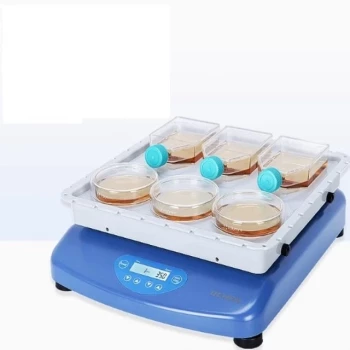
- Laboratory Oscillating Orbital Shaker
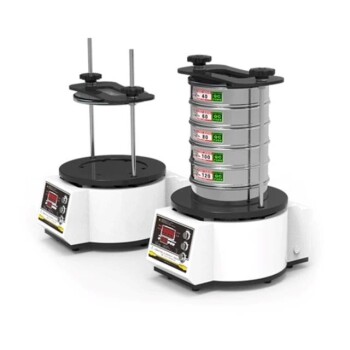
- Laboratory Vibratory Sieve Shaker Machine Slap Vibrating Sieve
- Laboratory Wet Three-Dimensional Vibratory Sieve Shaker Machine
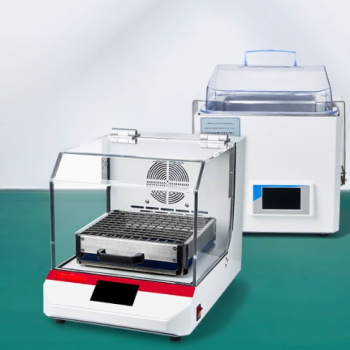
- Shaking Incubators for Diverse Laboratory Applications
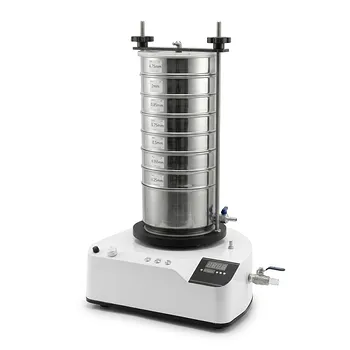
- Laboratory Vibratory Sieve Shaker Machine for Dry and Wet Three-Dimensional Sieving
People Also Ask
- What is the role of a laboratory orbital shaker in activated carbon synthesis? Maximize Pore Depth & Surface Area
- What is the role of a laboratory orbital shaker in copper recovery? Optimize Industrial Waste Liquid Processing
- Why are high-precision shakers required for graphene oxide kinetic studies? Ensure Data Accuracy and Rapid Equilibrium
- What is the role of a laboratory shaker in silane sol preparation? Master Uniform Aramid Fabric Coating
- Why is a laboratory shaker required for continuous 24-hour catalyst treatment? Achieve Deep Uniform Impregnation