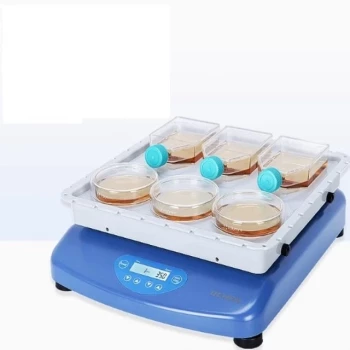
The critical role of a laboratory orbital shaker in copper recovery is to provide continuous, mechanical agitation that sustains the chemical reaction between the waste liquid and the displacement agent. By maintaining a controlled dynamic environment, the shaker prevents the recovered copper from forming a passive, blocking layer on the reactive metal, ensuring the process continues until the desired recovery rate is reached.
The orbital shaker serves as a mechanical catalyst in the displacement process. It physically prevents the "suffocation" of the reaction by stopping copper deposits from encapsulating the aluminum agent, ensuring the underlying metal remains exposed and active.
The Mechanics of Efficient Displacement
Sustaining Chemical Contact
In the displacement process, a metallic agent—typically aluminum scraps or mesh—is introduced to the industrial waste liquid. The orbital shaker ensures these solid agents maintain sufficient, uniform contact with the copper-containing solution.
Without this continuous motion, the solution at the immediate surface of the metal would become depleted, slowing the reaction. The shaker’s constant movement refreshes the liquid interface, keeping the reaction kinetics high.
Preventing Surface Passivation
The most vital function of the shaker is preventing surface coating. As the displacement reaction progresses, copper precipitates out of the liquid and deposits onto the aluminum.
In a static environment, this copper would tightly coat the aluminum, effectively sealing it off from the solution. This creates a barrier that halts further reaction. The orbital shaker’s agitation prevents this tight adhesion, keeping the aluminum surface accessible for continued displacement.
Operational Parameters and Control
Controlled Kinetic Environment
The shaker does not just mix; it provides a controlled dynamic environment. For example, operating at a specific speed, such as 65 rpm, provides enough energy to facilitate the reaction without causing chaotic turbulence.
This specific control allows for a predictable and reproducible recovery rate. It ensures the mechanical energy is sufficient to dislodge loose copper deposits without damaging the equipment or the displacement agent structure unnecessarily.
Common Pitfalls to Avoid
The Risk of Stagnation
The primary trade-off in this process involves the consistency of agitation. If the shaker is paused or operates at too low a frequency, the efficiency of the process drops precipitously.
Once the copper forms a complete coating on the aluminum (passivation), restarting the reaction is difficult. Therefore, the reliability of the shaker is as critical as the chemical composition of the displacement agent itself.
Optimizing Your Recovery Process
To maximize the efficiency of copper recovery from industrial waste, consider the following operational focuses:
- If your primary focus is Reaction Continuity: Ensure the shaker provides constant agitation to prevent copper deposits from encapsulating and deactivating the aluminum agent.
- If your primary focus is Process Efficiency: Maintain a specific, controlled speed (e.g., 65 rpm) to balance thorough mixing with the physical integrity of your displacement materials.
By utilizing the orbital shaker to maintain a strictly active kinetic environment, you transform a potential chemical stalemate into a continuous, high-yield recovery process.
Summary Table:
| Function | Role in Copper Recovery | Impact on Process Efficiency |
|---|---|---|
| Sustaining Contact | Refreshes the liquid interface around aluminum agents | Maintains high reaction kinetics without depletion |
| Preventing Passivation | Stops copper deposits from encapsulating reactive metal | Prevents reaction "suffocation" and chemical stalemates |
| Kinetic Control | Provides stable mechanical agitation (e.g., 65 rpm) | Ensures predictable, reproducible, and high-yield recovery |
| Dynamic Environment | Dislodges loose copper precipitates | Keeps aluminum surfaces active for continuous displacement |
Optimize Your Chemical Processing with KINTEK
Maximize your recovery yields and ensure process continuity with KINTEK’s high-precision laboratory equipment. Whether you are managing copper recovery from industrial waste or conducting advanced battery research, our reliable shakers, homogenizers, and cooling solutions provide the controlled environment your experiments demand.
From orbital shakers that prevent surface passivation to high-temperature furnaces, hydraulic presses, and specialized electrolytic cells, KINTEK specializes in the tools that transform laboratory challenges into industrial successes.
Ready to enhance your lab's efficiency? Contact us today to find the perfect equipment for your application!
References
- Cecilia Daniela Costa, Graciela González. Copper recovery by cementing from waste solutions derived from the manufacturing/printing industry. DOI: 10.1016/j.jece.2020.103989
This article is also based on technical information from Kintek Solution Knowledge Base .
Related Products
- Laboratory Oscillating Orbital Shaker
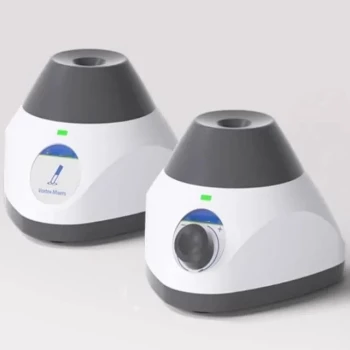
- Laboratory Vortex Mixer Orbital Shaker Multifunctional Rotation Oscillation Mixer
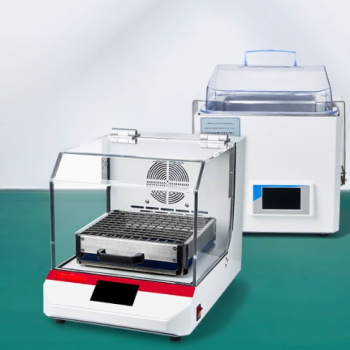
- Shaking Incubators for Diverse Laboratory Applications
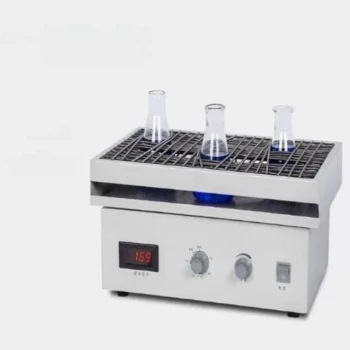
- Laboratory Multifunctional Small Speed-Adjustable Horizontal Mechanical Shaker for Lab
- Laboratory Vibratory Sieve Shaker Machine for Dry and Wet Three-Dimensional Sieving
People Also Ask
- What is the role of a laboratory orbital shaker in activated carbon synthesis? Maximize Pore Depth & Surface Area
- Why are high-precision shakers required for graphene oxide kinetic studies? Ensure Data Accuracy and Rapid Equilibrium
- What is the role of a laboratory shaker in silane sol preparation? Master Uniform Aramid Fabric Coating
- Why is a laboratory shaker required for continuous 24-hour catalyst treatment? Achieve Deep Uniform Impregnation
- How do static culture and shaking culture affect the morphology of BC? Optimize Lab Shaker Results