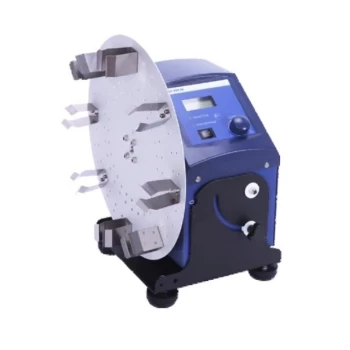
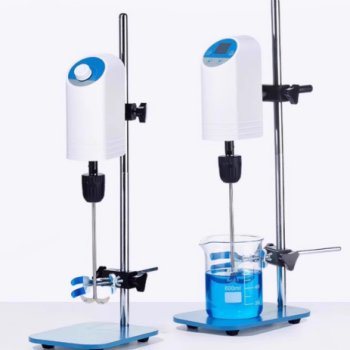
The primary function of a laboratory orbital shaker in this context is to provide constant, uniform mechanical oscillation to the reaction mixture. This motion is essential for facilitating efficient mass transfer between the solid nanoscale zero-valent iron (nZVI) catalyst, the liquid hydrogen peroxide (H2O2), and the dissolved organic pollutants present in the wastewater.
Core Takeaway The orbital shaker is not merely a mixing device; it acts as a stabilizing agent for the reaction kinetics. By preventing the agglomeration of nanoparticles, it maintains the high specific surface area required for the rapid and effective degradation of organic compounds and the removal of heavy metals like chromium.
Optimizing the Reaction Environment
Facilitating Multiphase Contact
The Fenton reaction for leather wastewater treatment involves a complex interaction between solids, liquids, and dissolved substances. The orbital shaker ensures that the solid nZVI catalyst does not settle at the bottom of the vessel.
By keeping the catalyst in suspension, the shaker forces it into continuous contact with the liquid hydrogen peroxide and the target pollutants. This efficient mass transfer is the baseline requirement for the chemical reaction to proceed.
Preventing Catalyst Agglomeration
Nanoparticles, such as nZVI, have a natural physical tendency to clump together (agglomerate) due to surface forces. Without active intervention, these particles would form larger clusters.
The shaker provides constant mechanical oscillation that disrupts these attractive forces. This keeps the nanoparticles individually dispersed throughout the solution rather than functioning as a single, less efficient mass.
Maximizing Specific Surface Area
The efficiency of a catalyst is directly tied to its surface area. When nanoparticles agglomerate, their internal surface area becomes inaccessible to the reactants.
By maintaining thorough mixing, the shaker preserves a high specific surface area for the nZVI. This allows for the maximum number of active sites to remain available for degrading organic pollutants and removing chromium.
The Impact on Process Efficiency
Accelerating Reaction Kinetics
The speed at which pollutants are broken down is governed by how frequently reactants collide. A static or poorly mixed solution results in slow, uneven reactions.
The uniform oscillation provided by the shaker ensures rapid degradation. It eliminates "dead zones" in the liquid where reactants might otherwise become depleted.
Removing Complex Pollutants
Leather wastewater contains difficult-to-treat contaminants, including organic compounds and heavy metals. The physical mechanics of the shaker support the chemical aggression needed to treat these.
Thorough mixing ensures that the oxidizing agents reach the dissolved organic pollutants and chromium ions effectively. This leads to higher removal rates and cleaner final effluent.
Operational Considerations and Pitfalls
The Risk of Inadequate Agitation
If the oscillation provided by the shaker is not uniform, the system inevitably fails to maintain the catalyst in suspension.
Once the nanoparticles agglomerate, the reaction rate drops precipitously. The result is an inefficient treatment process that leaves behind residual pollutants and unreacted chemicals.
Balancing Motion and Stability
While mixing is critical, the goal is uniformity, not chaotic turbulence. The orbital motion is specifically chosen to provide consistent turnover of the liquid volume.
Inconsistent or interrupted shaking breaks the steady state required for the Fenton reaction to operate at peak efficiency.
Ensuring Reaction Success
To maximize the effectiveness of leather wastewater treatment, the mechanical setup must support the chemical goals.
- If your primary focus is reaction speed: Ensure the oscillation is vigorous enough to fully suspend the nZVI particles, maximizing the contact rate between the catalyst and the oxidants.
- If your primary focus is treatment thoroughness: Prioritize constant, uninterrupted uniformity to prevent nanoparticle clumping, ensuring that even stubborn pollutants like chromium are exposed to active catalyst sites.
The orbital shaker is the critical mechanical driver that sustains the chemical potential of the Fenton reaction.
Summary Table:
| Feature | Role in Fenton Reaction | Impact on Wastewater Treatment |
|---|---|---|
| Mechanical Oscillation | Facilitates multiphase contact | Ensures consistent interaction between catalyst, H2O2, and pollutants |
| Suspension Maintenance | Prevents catalyst agglomeration | Maintains high specific surface area of nZVI for maximum reactivity |
| Mass Transfer | Eliminates "dead zones" | Accelerates reaction kinetics and ensures rapid degradation of organics |
| Uniform Mixing | Stabilizes reaction kinetics | Enhances the removal of complex pollutants like chromium |
Maximize Your Lab’s Reaction Efficiency with KINTEK
Precision in the Fenton reaction demands more than just chemistry; it requires reliable mechanical performance. KINTEK specializes in high-performance laboratory equipment designed to meet the rigorous demands of leather wastewater treatment and beyond.
Whether you need advanced orbital shakers and homogenizers to maintain nanoparticle suspension, or high-temperature high-pressure reactors for complex chemical synthesis, KINTEK provides the tools your research needs to succeed. Our comprehensive portfolio also includes crushing systems, hydraulic presses, and specialized consumables like PTFE products and ceramics.
Ready to optimize your laboratory workflows and achieve superior treatment results?
Contact KINTEK today for expert guidance and tailored solutions!
References
- Yaneth Vásquez, Oscar Herrera. Removal of Cr and Organic Matter from Real Tannery Wastewater via Fenton-like Process Using Commercial Nano-Scale Zero-Valent Iron. DOI: 10.3390/w16050754
This article is also based on technical information from Kintek Solution Knowledge Base .
Related Products
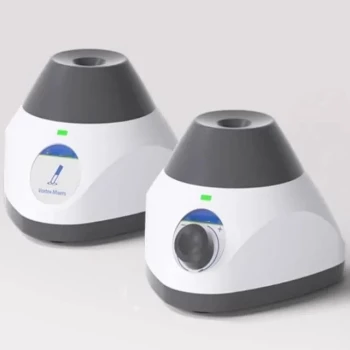
- Laboratory Vortex Mixer Orbital Shaker Multifunctional Rotation Oscillation Mixer
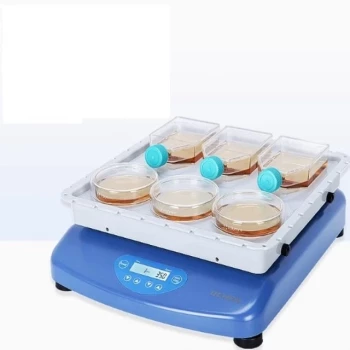
- Laboratory Oscillating Orbital Shaker
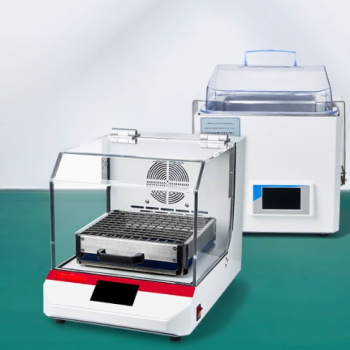
- Shaking Incubators for Diverse Laboratory Applications
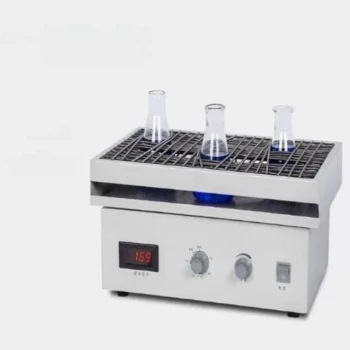
- Laboratory Multifunctional Small Speed-Adjustable Horizontal Mechanical Shaker for Lab
- Laboratory Vibratory Sieve Shaker Machine for Dry and Wet Three-Dimensional Sieving
People Also Ask
- What is the role of a laboratory orbital shaker in copper recovery? Optimize Industrial Waste Liquid Processing
- What is the role of a laboratory orbital shaker in activated carbon synthesis? Maximize Pore Depth & Surface Area
- What is a laboratory mixer used for? Choose the Right Tool for Liquids or Solids
- What is a laboratory mixer? A Guide to Achieving Perfect Sample Homogeneity
- What are laboratory mixers used for? Achieve Perfect Sample Homogeneity and Reliable Results