The primary purpose of using an orbital shaker in Porous Aromatic Framework (PAF) experiments is to facilitate continuous and uniform contact between the solid adsorbent particles and the dissolved metal ions. By providing consistent mechanical oscillation, the shaker overcomes physical diffusion barriers, driving the adsorption process toward chemical equilibrium efficiently.
The orbital shaker bridges the gap between static potential and kinetic reality. It enhances mass transfer efficiency at the liquid-solid interface, ensuring the reaction is driven by chemical affinity rather than limited by how slowly ions naturally diffuse through water.
The Mechanics of Efficient Adsorption
Ensuring Full Particle Contact
In an adsorption experiment, you are dealing with a two-phase system: solid PAF particles and an aqueous metal ion solution. Without active mixing, the solid particles may settle or clump together.
The orbital shaker provides continuous mechanical oscillation. This keeps the PAF particles suspended and dispersed throughout the liquid, ensuring that the metal ions have access to the maximum surface area of the adsorbent.
Overcoming Diffusion Limits
In a static solution, metal ions rely on natural diffusion to reach the surface of the adsorbent. This is a slow physical process that can create a "bottleneck" in the experiment.
The dynamic mixing provided by the shaker significantly enhances mass transfer efficiency. By constantly refreshing the liquid in contact with the solid surface, the shaker removes this physical barrier, allowing the reaction to proceed at a rate determined by the chemistry, not the physics of diffusion.
Achieving Reliable Equilibrium
Reaching the Endpoint
For adsorption data to be scientifically valid, the system must reach chemical adsorption equilibrium. This is the state where the amount of metal adsorbed stabilizes and no longer changes over time.
The orbital shaker ensures this state is reached within a specified timeframe. Without this mechanical assistance, the system might never reach true equilibrium during the observation window, leading to inaccurate capacity calculations.
Uniformity of Conditions
Reproducibility is critical in experimental chemistry. The shaker ensures that the mechanical forces applied to the mixture are uniform across the entire duration of the experiment.
This consistency eliminates variables such as settling rates or uneven concentration gradients. It guarantees that the resulting data reflects the true performance of the PAF material.
Understanding the Trade-offs
Mechanical Stress vs. Mixing
While the primary reference emphasizes the need for "dynamic mixing," it is important to note that the oscillation must be balanced. The goal is to maximize contact without subjecting the PAF structure to excessive shear forces that could physically degrade the material.
Time Management
The reference notes that the shaker helps reach equilibrium within a "specified timeframe." While the shaker accelerates the process, it does not eliminate the need for time. Operators must still determine the correct duration to ensure true equilibrium is reached, rather than halting the experiment prematurely.
Making the Right Choice for Your Goal
To ensure your PAF adsorption data is accurate and reproducible, consider how you configure your oscillation parameters.
- If your primary focus is kinetic analysis: Ensure the shaking speed is vigorous enough to completely eliminate external mass transfer resistance, isolating the chemical reaction rate.
- If your primary focus is maximum adsorption capacity: Prioritize a duration that guarantees the system has reached a stable equilibrium plateau.
By correctly utilizing the orbital shaker, you transform a simple mixture into a controlled reaction environment capable of yielding precise scientific data.
Summary Table:
| Feature | Function in Adsorption Experiments | Impact on Scientific Data |
|---|---|---|
| Mechanical Oscillation | Keeps PAF particles suspended and dispersed | Maximizes active surface area contact |
| Mass Transfer Enhancement | Overcomes physical diffusion barriers | Faster transition to chemical equilibrium |
| Uniform Mixing | Eliminates concentration gradients | Ensures high reproducibility and reliability |
| Kinetic Control | Refreshes liquid-solid interface | Accurate determination of adsorption rates |
Precision Lab Solutions for Advanced Material Science
Maximize the accuracy of your adsorption studies with KINTEK’s specialized laboratory equipment. From high-performance orbital shakers and homogenizers that ensure perfect mass transfer, to porous ceramics and high-purity crucibles for material synthesis, we provide the tools necessary for cutting-edge research.
Why choose KINTEK?
- Comprehensive Range: Whether you need ULT freezers for sample preservation or high-temperature furnaces for material activation, we have you covered.
- Industry Expertise: We specialize in supplying researchers focusing on battery development, metal ion adsorption, and chemical engineering.
- Uncompromising Quality: Our equipment—including hydraulic presses, electrolytic cells, and reactors—is engineered for reliability and repeatable results.
Ready to elevate your experimental results? Contact us today to find the perfect equipment for your lab!
References
- Selvan Demir, Jeffrey R. Long. Extraction of Lanthanide and Actinide Ions from Aqueous Mixtures Using a Carboxylic Acid-Functionalized Porous Aromatic Framework. DOI: 10.1021/acscentsci.6b00066
This article is also based on technical information from Kintek Solution Knowledge Base .
Related Products
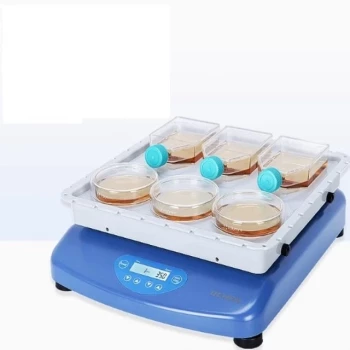
- Laboratory Oscillating Orbital Shaker
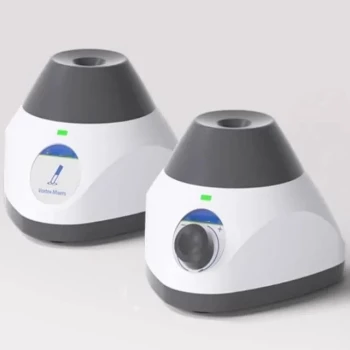
- Laboratory Vortex Mixer Orbital Shaker Multifunctional Rotation Oscillation Mixer
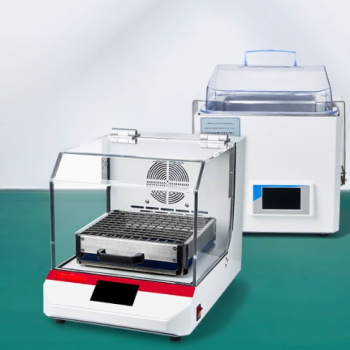
- Shaking Incubators for Diverse Laboratory Applications
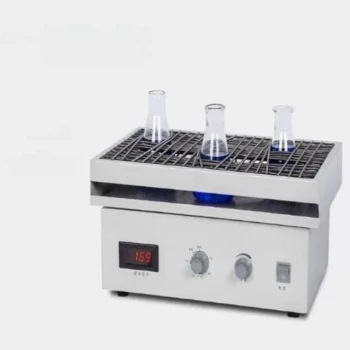
- Laboratory Multifunctional Small Speed-Adjustable Horizontal Mechanical Shaker for Lab
- Laboratory Test Sieves and Vibratory Sieve Shaker Machine
People Also Ask
- What is the role of a laboratory orbital shaker in activated carbon synthesis? Maximize Pore Depth & Surface Area
- What is the role of a laboratory orbital shaker in copper recovery? Optimize Industrial Waste Liquid Processing
- Why are high-precision shakers required for graphene oxide kinetic studies? Ensure Data Accuracy and Rapid Equilibrium
- What is the role of a laboratory shaker in silane sol preparation? Master Uniform Aramid Fabric Coating
- Why is a laboratory shaker required for continuous 24-hour catalyst treatment? Achieve Deep Uniform Impregnation