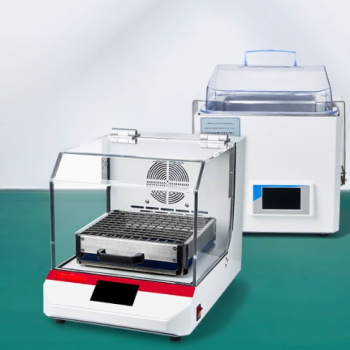
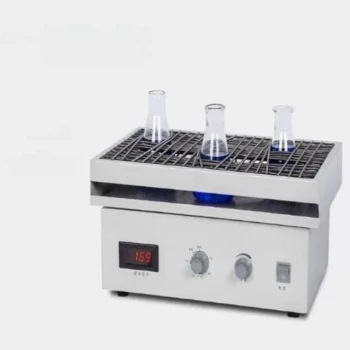
A shaking incubator serves two fundamental functions in the enzymatic hydrolysis of cassava cellulose: precise thermal regulation and consistent mechanical agitation. It maintains the reaction at a stable temperature while utilizing specific rotation speeds, such as 100 rpm, to ensure the solid cassava residue remains thoroughly mixed with the liquid enzyme solution.
By combining constant temperature control with continuous oscillation, the shaking incubator prevents substrate sedimentation. This ensures uniform physical contact between enzymes and fibers, which is the primary driver for accelerating the release of reducing sugars.
The Role of Mechanical Agitation
Preventing Phase Separation
Cassava residue is a solid substrate that naturally settles out of the liquid phase.
Without active intervention, these solids accumulate at the bottom of the vessel.
The shaking incubator uses mechanical agitation to counteract gravity, keeping the solid residue suspended throughout the liquid mixture.
Ensuring Enzyme-Substrate Contact
Enzymatic hydrolysis is a contact-dependent process.
The enzymes suspended in the liquid must physically touch the cellulose fibers to break them down.
By maintaining a homogeneous mixture, the incubator facilitates continuous physical contact between the biological catalysts and the cassava fibers.
Accelerating Sugar Release
The efficiency of the hydrolysis correlates directly with mixing quality.
When the substrate and enzymes are thoroughly mixed, the reaction rate increases.
This optimized interaction directly accelerates the release of reducing sugars, improving the overall yield of the process.
Thermal Regulation
Maintaining Reaction Stability
The "constant temperature" aspect of the device is as critical as the shaking.
Enzymes require specific thermal environments to function optimally without denaturing.
The incubator provides the precise temperature control necessary to sustain the chemical reaction over time.
Understanding the Trade-offs
The Cost of Inadequate Mixing
The primary pitfall in this process is sedimentation.
If the rotation speed is too low or the shaking mechanism fails, the solids will separate from the enzymes.
This separation halts the effective hydrolysis of the cellulose, leading to significantly lower sugar yields regardless of the temperature settings.
Balancing Speed and Suspension
The reference suggests a rotation speed of 100 rpm as a benchmark for effectiveness.
The goal is not simply to move the liquid, but to achieve a specific suspension state.
Operators must ensure the speed is sufficient to overcome the density of the cassava residue without causing unnecessary turbulence that offers no additional benefit.
Optimizing Your Hydrolysis Protocol
To maximize the efficiency of cassava cellulose hydrolysis, you must configure the incubator to solve the specific physical challenges of the substrate.
- If your primary focus is Reaction Velocity: Set the rotation speed (e.g., 100 rpm) to a level that ensures immediate and continuous suspension of solids, minimizing the time enzymes spend searching for substrate.
- If your primary focus is Process Consistency: Prioritize precise temperature stability alongside agitation to prevent environmental fluctuations that could stall enzyme activity.
The success of the hydrolysis depends on treating the incubator not just as a heater, but as a critical mixing tool that keeps the solid and liquid phases in constant interaction.
Summary Table:
| Parameter | Critical Function | Impact on Hydrolysis |
|---|---|---|
| Temperature Control | Maintains enzyme stability | Prevents denaturation and ensures optimal reaction kinetics |
| Mechanical Agitation | Prevents substrate sedimentation | Keeps solid cassava residue suspended for uniform enzyme contact |
| Rotation Speed (100 rpm) | Facilitates phase mixing | Accelerates the release of reducing sugars by maximizing contact |
| Environment Stability | Provides consistent incubation | Eliminates fluctuations that cause process inconsistency |
Maximize Your Lab’s Hydrolysis Efficiency with KINTEK
Precision is the key to successful enzymatic hydrolysis. At KINTEK, we specialize in high-performance laboratory equipment designed to meet the rigorous demands of biomass research. From our advanced shaking incubators and shakers that ensure perfect substrate suspension to our high-temperature furnaces and reactors, we provide the tools you need for consistent, reproducible results.
Whether you are optimizing cassava cellulose breakdown or conducting complex battery research, KINTEK offers a comprehensive range of solutions, including crushing and milling systems, cooling solutions, and specialized ceramics.
Ready to elevate your research outcomes? Our experts are here to help you select the ideal configuration for your specific application. Contact KINTEK today to discuss your laboratory needs!
References
- Weeraya Samnuknit, Apichat Boontawan. Efficient Process Development for Cellulosic Ethanol Fermentation from Cassava Pulp. DOI: 10.18178/ijcea.2017.8.3.650
This article is also based on technical information from Kintek Solution Knowledge Base .
Related Products
- Shaking Incubators for Diverse Laboratory Applications
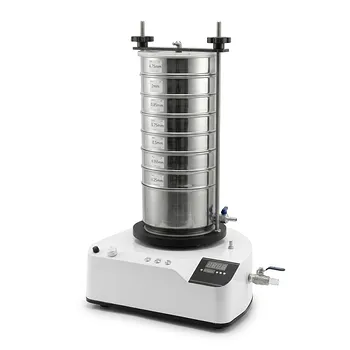
- Laboratory Vibratory Sieve Shaker Machine for Dry and Wet Three-Dimensional Sieving
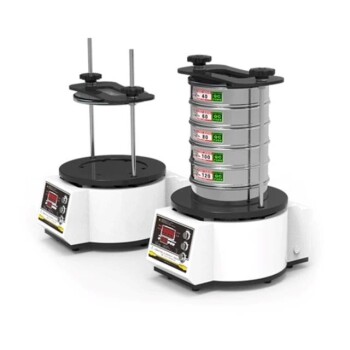
- Laboratory Test Sieves and Vibratory Sieve Shaker Machine
- Laboratory Vibratory Sieve Shaker Machine Slap Vibrating Sieve
- Laboratory Wet Three-Dimensional Vibratory Sieve Shaker Machine
People Also Ask
- What physical conditions does a shaking incubator provide for bioethanol fermentation? Optimize Yeast Productivity
- Why is the mechanical agitation provided by a shaking incubator necessary for the enzymatic hydrolysis of biomass?
- What are the primary functions of a shaking incubator? Optimize Biomass Fenton Pretreatment Efficiency
- What function does a laboratory shaking incubator serve for halophilic archaea? Optimize Your Seed Cultivation Today
- How does an incubator shaker affect the yield of reducing sugars? Optimize Pennisetum alopecuroides Hydrolysis