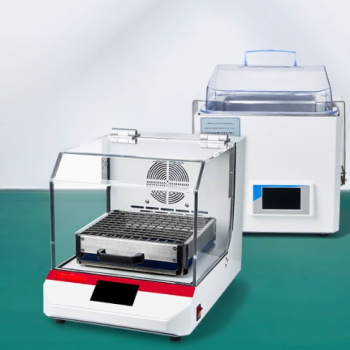
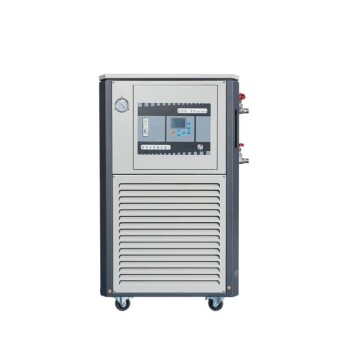
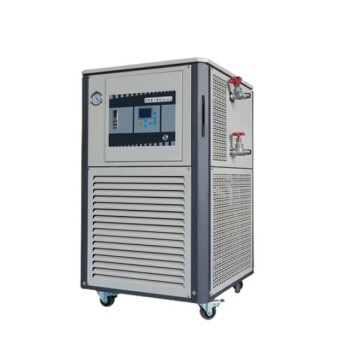
A constant temperature incubator shaker is the critical control mechanism that standardizes the physical environment during adsorption experiments. By maintaining a specific rotation speed (such as 100 rpm) and a precise temperature, it maximizes the collision frequency between Quercetin molecules and the active sites on nanocomposites like Multi-Walled Carbon Nanotubes and Titanium Dioxide (MWCNTs/TiO2).
The device functions as a kinetic stabilizer, ensuring uniform hydrodynamic conditions and thermal consistency. This allows Quercetin molecules to overcome liquid diffusion resistance and physically attach to nanomaterial surfaces with high scientific reproducibility.
The Mechanics of Efficient Adsorption
Creating a Controlled Hydrodynamic Environment
The primary function of the shaker is to introduce consistent mechanical energy into the system. This adjustable rotation creates a controlled hydrodynamic environment that dictates how fluids move around the solid particles.
By regulating the agitation speed (e.g., 100 rpm), you significantly increase the collision frequency between the adsorbate (Quercetin) and the adsorbent (MWCNTs/TiO2). This ensures that the maximum number of molecules interact with the active sites on the nanocomposite surface.
Maintaining Material Suspension
Nanocomposites are prone to settling or aggregating if left static. The shaker provides continuous mechanical agitation to keep the composite materials in a fully suspended state.
This suspension is vital for maintaining the solid-liquid interface. It ensures that the entire surface area of the nanomaterial remains accessible to the Quercetin molecules throughout the experiment.
Overcoming Physical Barriers
Breaking Down Diffusion Resistance
In any liquid adsorption process, a stagnant layer of liquid—often called the "water film"—surrounds the solid particles. This layer acts as a barrier that molecules must penetrate to reach the surface.
The mechanical force generated by the shaker helps overcome water film diffusion resistance. By disrupting this stagnant layer, the shaker facilitates thorough contact and accelerates the system toward kinetic equilibrium.
Enhancing Mass Transfer Efficiency
The combination of suspension and turbulence directly impacts mass transfer. The shaker ensures that the movement of Quercetin from the bulk solution to the boundary of the nanocomposite is efficient.
This leads to a faster and more complete physical attachment of the Quercetin to the nanomaterials compared to a static or poorly mixed setup.
The Role of Thermal Stability
Eliminating Environmental Variables
Physical adsorption is often sensitive to temperature changes. The incubator component of the device ensures the process occurs at a specific, stable temperature, regardless of changes in the ambient lab environment.
Ensuring Data Accuracy
Precise temperature control is essential for calculating thermodynamic parameters. It allows researchers to attribute changes in adsorption capacity strictly to material affinity, ensuring that kinetic data is reproducible and scientifically valid.
Common Pitfalls to Avoid
The Risk of Excessive Agitation
While mixing is critical, "more" is not always better. Excessive rotation speeds can cause splashing or force the solution up the vessel walls, reducing the effective volume interacting with the solid.
Ignoring Thermal Equilibration
A common error is assuming the solution temperature matches the incubator immediately. Users must account for the lag time required for the liquid inside the flask to reach the target equilibrium temperature before starting the timer for kinetic studies.
Making the Right Choice for Your Goal
- If your primary focus is Maximum Loading Capacity: Prioritize optimizing the rotation speed to keep particles fully suspended without splashing, ensuring every active site is available for physical attachment.
- If your primary focus is Thermodynamic Analysis: Ensure the device is calibrated to maintain strict thermal stability, as even minor fluctuations can skew the calculation of adsorption isotherms.
By controlling both the kinetics of mixing and the thermodynamics of the environment, the incubator shaker ensures your results reflect the true properties of your nanocomposites rather than experimental inconsistencies.
Summary Table:
| Feature | Function in Adsorption | Impact on Nanocomposites |
|---|---|---|
| Mechanical Agitation | Increases collision frequency | Maximizes interaction with active sites |
| Suspension Control | Prevents material aggregation | Maintains accessible solid-liquid interface |
| Incubator Function | Thermal stability & precision | Ensures reproducible thermodynamic data |
| Kinetic Energy | Overcomes diffusion resistance | Facilitates faster physical attachment |
Precision Lab Solutions for Your Advanced Material Research
Unlock the full potential of your adsorption studies and nanocomposite development with KINTEK. Whether you are optimizing loading capacities or conducting rigorous thermodynamic analysis, our high-performance laboratory equipment provides the stability your research demands.
KINTEK specializes in precision tools for target customers in material science and nanotechnology, offering:
- Advanced Shakers & Incubators for uniform hydrodynamic control.
- High-Temperature Furnaces (Muffle, Vacuum, CVD) for material synthesis.
- High-Pressure Reactors & Autoclaves for complex chemical processes.
- Homogenizers & Milling Systems for consistent nanoparticle preparation.
From battery research to ceramic consumables, we empower your lab with reliability. Contact KINTEK today to find the perfect equipment for your specific experimental goals!
References
- Diana S. Raie, Ákos T. Kovács. Effect of Novel Quercetin Titanium Dioxide-Decorated Multi-Walled Carbon Nanotubes Nanocomposite on Bacillus subtilis Biofilm Development. DOI: 10.3390/ma11010157
This article is also based on technical information from Kintek Solution Knowledge Base .
Related Products
- Shaking Incubators for Diverse Laboratory Applications
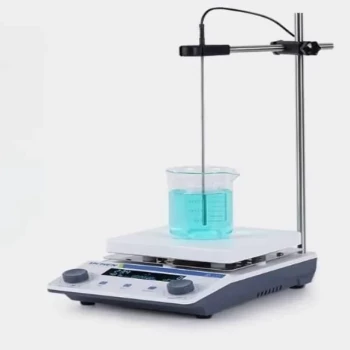
- Laboratory Small Constant Temperature Heated Magnetic Stirrer Heater and Stirrer
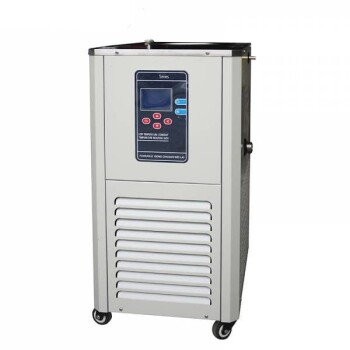
- 50L Chiller Water Bath Cooling Circulator Low Temperature Constant Temperature Reaction Bath
- High Temperature Constant Temperature Heating Circulator Water Bath Chiller Circulator for Reaction Bath
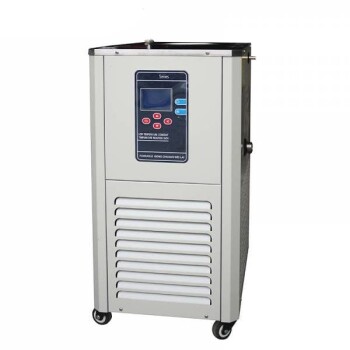
- 5L Chilling Circulator Cooling Water Bath Circulator for Low Temperature Constant Temperature Reaction Bath
People Also Ask
- What physical conditions does a shaking incubator provide for bioethanol fermentation? Optimize Yeast Productivity
- Why is the mechanical agitation provided by a shaking incubator necessary for the enzymatic hydrolysis of biomass?
- What critical reaction conditions does a shaking incubator provide? Optimize Cassava Cellulose Enzymatic Hydrolysis
- What are the primary functions of a shaking incubator? Optimize Biomass Fenton Pretreatment Efficiency
- What function does a laboratory shaking incubator serve for halophilic archaea? Optimize Your Seed Cultivation Today