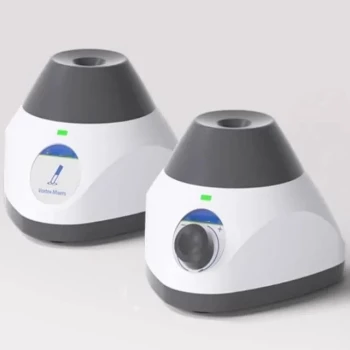
A constant temperature shaker acts as the critical control unit for adsorption experiments, serving two simultaneous functions: precise thermal regulation and continuous mechanical agitation. By stabilizing the kinetic environment and providing oscillatory energy, it ensures that heavy metal ions (like Pb(II)) or organic dyes (like Methylene Blue) have sufficient contact with the adsorbent material to yield accurate data.
The shaker removes physical barriers to the chemical reaction. By eliminating external mass transfer resistance and temperature variables, it ensures that your data reflects the true capacity of the material rather than the limitations of the mixing process.
The Mechanics of Adsorption Efficiency
Increasing Molecular Collision
The primary physical function of the shaker is to introduce oscillatory energy into the system.
In a static solution, pollutant molecules move slowly via natural diffusion. The shaker forces the fluid to move, significantly increasing the collision frequency between the pollutant molecules and the adsorbent.
This applies to both the surface of the material and its internal pores.
Overcoming Mass Transfer Resistance
Surrounding any adsorbent particle in a liquid is a stagnant film of fluid. This creates a barrier known as external mass transfer resistance (or film diffusion resistance).
Without adequate agitation, pollutants struggle to cross this barrier. The shaker’s continuous oscillation disrupts this film, allowing solutes to migrate rapidly from the bulk liquid to the solid interface.
Ensuring Homogeneity
For accurate results, the adsorbent—often in the form of composite beads or particles—must remain fully suspended.
If particles settle at the bottom, the surface area available for adsorption is drastically reduced. The shaker prevents the formation of local concentration gradients, ensuring every particle is equally exposed to the solution.
The Role of Thermal Stability
Stabilizing Reaction Kinetics
Adsorption is a thermodynamic process that is highly sensitive to temperature changes.
The "constant temperature" aspect of the device ensures a stable kinetic environment. Without this, fluctuations in ambient room temperature could alter the reaction rate, making it impossible to determine if changes in performance are due to the material or the environment.
Accurate Thermodynamic Data
To calculate parameters like enthalpy or entropy, researchers must run tests at specific, unvarying temperatures.
The shaker’s precise control eliminates thermal noise. This guarantees that the resulting adsorption kinetics data and equilibrium capacity measurements are reproducible and scientifically valid.
Understanding the Trade-offs
The Risk of Shear Force
While agitation is necessary, "more" is not always better.
Excessive oscillation speed can introduce high shear forces. This may physically damage or pulverize fragile composite beads, artificially increasing the surface area and skewing results.
The Illusion of Equilibrium
If the shaking speed is too low, the experiment may appear to reach equilibrium simply because mass transfer has stalled, not because the material is full.
This is a "false equilibrium" caused by film diffusion resistance. It leads to an underestimation of the material's maximum adsorption capacity.
Making the Right Choice for Your Goal
To get the most out of your adsorption performance tests, align your shaker settings with your specific experimental objectives:
- If your primary focus is Maximum Capacity: Ensure the oscillation speed is high enough to keep all particles fully suspended, eliminating diffusion resistance to find the true saturation point.
- If your primary focus is Kinetic Modeling: Prioritize strict temperature stability to ensure that rate constants derived from the data are thermodynamically accurate.
The constant temperature shaker is not just a mixer; it is the standardizing engine that makes comparative analysis of adsorbent materials possible.
Summary Table:
| Feature | Role in Adsorption Testing | Impact on Research Data |
|---|---|---|
| Precise Thermal Regulation | Maintains stable kinetic environment | Ensures accurate thermodynamic data (enthalpy/entropy) |
| Oscillatory Energy | Increases molecular collision frequency | Accelerates reaction rates between pollutants and adsorbent |
| Mechanical Agitation | Overcomes external mass transfer resistance | Prevents film diffusion barriers for faster solute migration |
| Particle Suspension | Ensures homogeneity of the mixture | Maximizes available surface area and prevents settling |
| Controlled Speed | Balances agitation vs. shear force | Protects fragile materials from pulverization and false equilibrium |
Elevate Your Adsorption Research with KINTEK Precision
Precise control is the difference between breakthrough data and inconsistent results. KINTEK specializes in high-performance laboratory equipment designed for the rigorous demands of material science. Our advanced constant temperature shakers and shakers provide the thermal stability and mechanical precision necessary for accurate kinetic modeling.
Beyond mixing solutions, KINTEK offers a comprehensive range of research tools, including:
- High-Temperature Furnaces & Reactors: From muffle and tube furnaces to CVD systems for advanced material synthesis.
- Sample Preparation: Crushing, milling, and hydraulic presses for creating uniform adsorbent pellets.
- Lab Essentials: Cooling solutions, homogenizers, and high-quality PTFE or ceramic consumables.
Ready to optimize your laboratory workflow? Contact our technical experts today to find the perfect equipment tailored to your research goals.
References
- Jie Qi, Fang Guo. Biopolymer Meets Nanoclay: Rational Fabrication of Superb Adsorption Beads from Green Precursors for Efficient Capture of Pb(II) and Dyes. DOI: 10.3390/nano14090766
This article is also based on technical information from Kintek Solution Knowledge Base .
Related Products
- Laboratory Small Constant Temperature Heated Magnetic Stirrer Heater and Stirrer
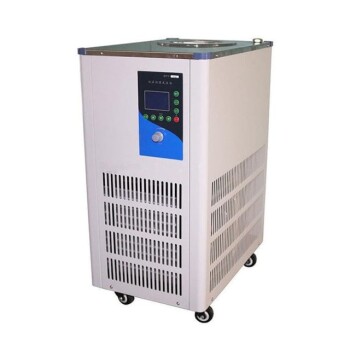
- High Temperature Constant Temperature Heating Circulator Water Bath Chiller Circulator for Reaction Bath
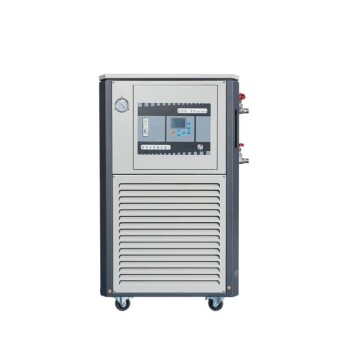
- 40L Chiller Water Bath Cooling Circulator Low Temperature Constant Temperature Reaction Bath
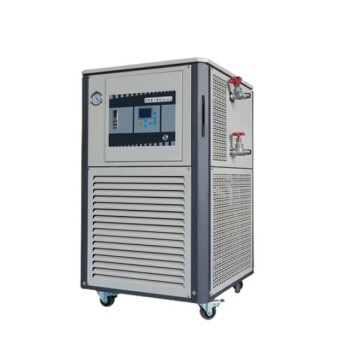
- 50L Chiller Water Bath Cooling Circulator Low Temperature Constant Temperature Reaction Bath
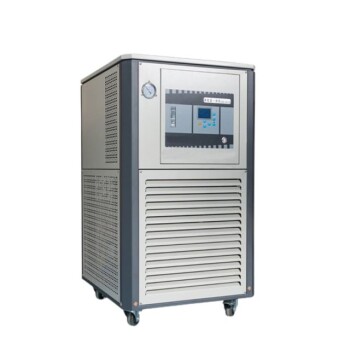
- 5L Chilling Circulator Cooling Water Bath Circulator for Low Temperature Constant Temperature Reaction Bath
People Also Ask
- What role does a magnetic stirrer with heating play in ZnO nanoparticle synthesis? Precision Control for Quality Results
- What role does a constant temperature heating magnetic stirrer play in MFC-HAp synthesis? Achieve Material Homogeneity
- What is the function of a laboratory magnetic stirrer in Ni–Cr–P electrodeposition? Optimize Ion Transport & Coating
- Why is a laboratory magnetic stirrer required for benzoic acid esters? Boost Reaction Speed & Yield with High RPM
- What role does a laboratory magnetic stirrer play in TiO2 and TiO2-Ag sol preparation? Master Chemical Kinetics