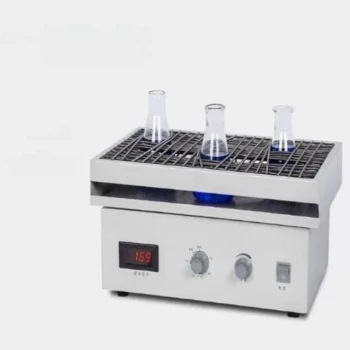
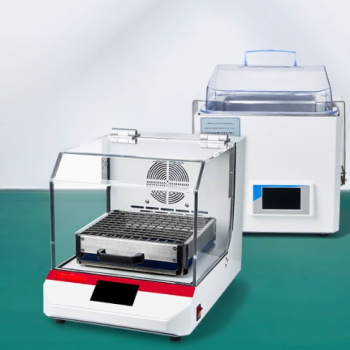
The laboratory constant temperature shaker serves as the critical control center during the liquid cultivation phase of fungal strains. It creates a dynamic, standardized environment by combining precise thermal regulation (e.g., 28°C) with continuous mechanical oscillation (e.g., 200 rpm) to optimize fungal growth. This dual action ensures uniform mixing of nutrients and oxygen, directly influencing the physiological maturity of the inoculum before it is transferred to solid-state fermentation.
Core Takeaway The shaker does more than simply mix ingredients; it engineers the physical structure of the fungi. By maintaining uniform shear force and dissolved oxygen levels, it forces the mycelium to form consistent pellets, ensuring the strain reaches a "high-activity" state essential for successful large-scale fermentation.
The Mechanics of Cultivation
Regulating the Physical Environment
The primary function of the device is to maintain a specific, unwavering environment. For fungal strains like Ganoderma lucidum, maintaining a constant temperature (such as 28°C) is non-negotiable for metabolic consistency.
Simultaneously, the shaker sets a rotation speed (often around 200 rpm). This mechanical oscillation prevents the fungal matter from settling, keeping the culture in a state of constant suspension.
Managing Shear Force
The rotation creates uniform shear force throughout the liquid medium. This physical stress is intentional and necessary.
It acts as a molding force, preventing the fungi from growing into large, unmanageable clumps. Instead, it promotes the formation of distinct mycelial pellets, which are the ideal physical form for this stage of growth.
Optimizing Fungal Physiology
Ensuring Oxygen Availability
Fungi in liquid culture face a significant challenge: access to oxygen. Static liquid creates an anaerobic barrier that suffocates the strain.
The shaker’s continuous movement breaks the liquid surface, facilitating gas exchange. This provides sufficient dissolved oxygen to the submerged mycelium, fueling aerobic respiration and rapid growth.
Uniform Nutrient Absorption
Without agitation, nutrients in the liquid medium would deplete locally around the fungal cells, creating "dead zones."
The constant mixing ensures that sugar, nitrogen, and other minerals are evenly distributed. This allows the mycelium to achieve uniform nutrient absorption, preventing starvation in dense cultures.
Understanding the Trade-offs
The Balance of Shear Force
While shear force is necessary to form pellets, it presents a critical trade-off. Excessive speed can physically damage the cellular structure of the mycelium, reducing viability.
Conversely, insufficient speed results in low oxygen transfer and large, irregular clumping. Success depends on finding the precise RPM that balances oxygenation with cellular integrity.
Temperature Sensitivity
The "constant temperature" aspect is equally unforgiving. Deviations of even a few degrees can halt the transition to the high-activity physiological state. The equipment must be calibrated to ensure no thermal gradients exist within the shaking chamber.
Making the Right Choice for Your Goal
To maximize the effectiveness of your fungal cultivation, align your shaker settings with your specific biological targets.
- If your primary focus is rapid biomass accumulation: Prioritize higher agitation speeds (within limits) to maximize dissolved oxygen levels and metabolic rates.
- If your primary focus is inoculum quality for fermentation: Focus on moderate, consistent shear force to produce uniform mycelial pellets that are easy to transfer and physically robust.
By treating the shaker as a precision tool for physiological conditioning rather than just a mixer, you ensure your fungal strains remain robust and highly active.
Summary Table:
| Key Feature | Role in Fungal Cultivation | Impact on Mycelial Growth |
|---|---|---|
| Precise Thermal Control | Maintains metabolic consistency (e.g., 28°C) | Ensures high-activity physiological states |
| Mechanical Oscillation | Prevents sedimentation and promotes suspension | Facilitates uniform nutrient distribution |
| Shear Force Management | Breaks up large clumps into mycelial pellets | Optimizes physical form for fermentation |
| Gas Exchange | Increases dissolved oxygen levels | Fuels aerobic respiration and rapid biomass accumulation |
| Speed Calibration | Balances oxygenation with cellular integrity | Prevents physical damage to cell structures |
Elevate Your Fungal Research with KINTEK Precision
Maximize your laboratory's productivity with KINTEK’s high-performance shakers and incubators. From maintaining precise thermal environments for mycelial pellet formation to providing the uniform shear force needed for high-activity strains, our equipment is engineered for excellence.
Beyond shakers, KINTEK specializes in a comprehensive range of laboratory equipment, including high-temperature furnaces, crushing systems, hydraulic presses, and specialized electrolytic cells. Whether you are focusing on biomass accumulation or complex battery research, our premium consumables—such as PTFE products, ceramics, and crucibles—ensure consistent results every time.
Ready to optimize your cultivation results? Contact us today to find the perfect solution for your lab!
References
- Onur Kırdök, Elif Esin Hameş. A Modular Chain Bioreactor Design for Fungal Productions. DOI: 10.3390/biomimetics7040179
This article is also based on technical information from Kintek Solution Knowledge Base .
Related Products
- Laboratory Small Constant Temperature Heated Magnetic Stirrer Heater and Stirrer
- High Temperature Constant Temperature Heating Circulator Water Bath Chiller Circulator for Reaction Bath
- Laboratory Multifunctional Small Speed-Adjustable Horizontal Mechanical Shaker for Lab
- 5L Chilling Circulator Cooling Water Bath Circulator for Low Temperature Constant Temperature Reaction Bath
- Laboratory Oscillating Orbital Shaker
People Also Ask
- What role does a magnetic stirrer with heating play in ZnO nanoparticle synthesis? Precision Control for Quality Results
- What role does a constant temperature heating magnetic stirrer play in MFC-HAp synthesis? Achieve Material Homogeneity
- What is the function of a laboratory magnetic stirrer in Ni–Cr–P electrodeposition? Optimize Ion Transport & Coating
- Why is a laboratory magnetic stirrer required for benzoic acid esters? Boost Reaction Speed & Yield with High RPM
- What role does a laboratory magnetic stirrer play in TiO2 and TiO2-Ag sol preparation? Master Chemical Kinetics