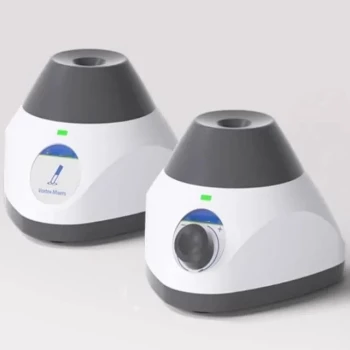
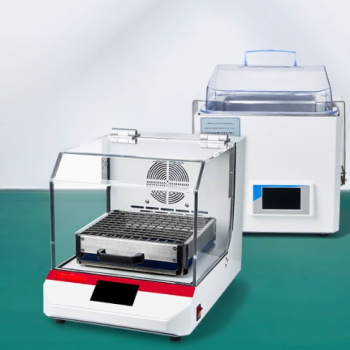
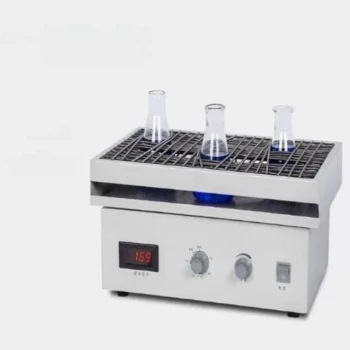
A thermostatic shaker is indispensable for Simultaneous Saccharification and Fermentation (SSF) because it combines precise thermal regulation with continuous mechanical agitation. This equipment creates a stabilized environment that allows enzymatic hydrolysis and fermentation to occur efficiently in a single vessel.
The device ensures high ethanol yields by maintaining constant temperature and facilitating continuous orbital oscillation. This motion guarantees thorough contact between enzymes and solids, preventing stratification and ensuring uniform reaction rates throughout the mixture.
The Critical Role of Physical Dynamics
To understand why this equipment is required, one must look beyond simple mixing. The shaker actively drives the physical interactions necessary for the biochemical conversion of rice husk solids.
Facilitating Enzyme-Substrate Contact
In a static environment, solids tend to settle. The continuous orbital oscillation provided by the shaker prevents this sedimentation.
It forces the cellulase enzymes into constant, thorough contact with the glucose-rich solid residues. This dynamic interaction is required to maximize the surface area available for enzymatic hydrolysis.
Ensuring Uniform Nutrient Distribution
A successful SSF process requires a homogeneous mixture.
The shaker’s motion ensures that nutrients are evenly dispersed throughout the liquid medium. This prevents the formation of localized nutrient-depleted zones that could starve the yeast or stall the fermentation process.
Managing Oxygen Mass Transfer
Oxygen availability is often a limiting factor in fermentation systems.
The mechanical agitation promotes oxygen mass transfer within the system. This ensures that the biological agents have the necessary aerobic conditions to function optimally alongside the anaerobic stages of fermentation.
Thermal Precision and Reaction Stability
While motion drives the physical interaction, thermal control dictates the speed and success of the chemical reactions.
Maintaining Optimal Reaction Temperature
The "thermostatic" capability ensures a constant temperature, typically around 50 degrees Celsius for specific stages of this process.
Enzymes are highly sensitive to thermal fluctuations. Maintaining this exact temperature without deviation is foundational for sustaining maximal enzymatic activity over the duration of the process.
Operational Dependencies
While the thermostatic shaker is the standard solution, relying on it introduces specific operational dependencies that must be managed.
The Risk of Inadequate Agitation
If the oscillation speed is too low, the solids will not remain in suspension.
This leads to poor enzyme-solid contact, significantly reducing the efficiency of hydrolysis and lowering the final glucose release.
Thermal Sensitivity
The system relies entirely on the equipment's ability to hold a set point.
Even minor deviations from the target temperature (e.g., dropping below 50°C) can cause reaction rates to plummet, directly impacting the final ethanol yields.
Maximizing Process Efficiency
To ensure the success of your SSF process using fractionated rice husk solids, consider the following based on your specific objectives:
- If your primary focus is Enzyme Efficiency: Prioritize the oscillation settings to ensure complete suspension of solid residues for maximum surface contact.
- If your primary focus is Process Stability: Ensure the heating element is calibrated to maintain a strict 50°C baseline to prevent enzymatic stalling.
The thermostatic shaker is not just a mixing device; it is the active driver of the mass transfer and thermal consistency required for high-yield ethanol production.
Summary Table:
| Parameter | Role in SSF Process | Impact on Rice Husk Fermentation |
|---|---|---|
| Temperature Control | Maintains 50°C baseline | Sustains maximal enzymatic activity and yeast health |
| Orbital Oscillation | Prevents solid sedimentation | Ensures continuous enzyme-substrate contact with residues |
| Mass Transfer | Promotes oxygen & nutrient flow | Prevents nutrient depletion and anaerobic stalling |
| Mixing Dynamics | Uniform distribution | Facilitates consistent reaction rates across the vessel |
Elevate Your Biofuel Research with KINTEK Precision
Unlock the full potential of your Simultaneous Saccharification and Fermentation (SSF) processes with KINTEK’s industry-leading laboratory solutions. Whether you are processing rice husk solids or developing advanced biofuels, our high-performance thermostatic shakers and homogenizers provide the thermal stability and mechanical precision required for maximum ethanol yields.
From high-temperature furnaces and reactors to specialized crushing, milling, and sieving equipment, KINTEK specializes in providing researchers with the robust tools needed for complex material conversion. Our comprehensive portfolio also includes high-pressure autoclaves, cooling solutions like ULT freezers, and essential consumables like PTFE products and ceramics.
Ready to optimize your lab’s efficiency and reaction stability? Contact KINTEK today to discover how our tailored equipment solutions can accelerate your research goals.
References
- Hyun Jin Jung, Kyeong Keun Oh. NaOH-Catalyzed Fractionation of Rice Husk Followed by Concomitant Production of Bioethanol and Furfural for Improving Profitability in Biorefinery. DOI: 10.3390/app11167508
This article is also based on technical information from Kintek Solution Knowledge Base .
Related Products
- Laboratory Vortex Mixer Orbital Shaker Multifunctional Rotation Oscillation Mixer
- Laboratory Wet Three-Dimensional Vibratory Sieve Shaker Machine
- Shaking Incubators for Diverse Laboratory Applications
- Laboratory Oscillating Orbital Shaker
- Laboratory Multifunctional Small Speed-Adjustable Horizontal Mechanical Shaker for Lab
People Also Ask
- What is the role of a laboratory orbital shaker in copper recovery? Optimize Industrial Waste Liquid Processing
- What is the role of a laboratory orbital shaker in activated carbon synthesis? Maximize Pore Depth & Surface Area
- What is a laboratory mixer used for? Choose the Right Tool for Liquids or Solids
- What is a laboratory mixer? A Guide to Achieving Perfect Sample Homogeneity
- What are laboratory mixers used for? Achieve Perfect Sample Homogeneity and Reliable Results