Continuous mechanical agitation provided by a laboratory orbital shaker is the primary mechanism for ensuring that acid washing effectively removes inorganic impurities from activated carbon. This process enhances the mass transfer between the solid carbon particles and the liquid acid phase, allowing the solution to penetrate deep into the material's complex internal structures.
The orbital shaker is a critical tool for clearing pore channels and removing residual salts, which directly determines the final activated carbon's surface area and adsorption performance. Without this consistent agitation, impurities remain trapped within the micropores, significantly limiting the material's quality.
Enhancing Mass Transfer and Pore Penetration
Overcoming Liquid Film Resistance
The orbital shaker provides a steady rotation that eliminates liquid film mass transfer resistance around the carbon particles. This resistance normally acts as a barrier, slowing down the movement of the acid toward the carbon surface.
By providing constant movement, the shaker ensures that the hydrochloric acid (HCl) solution stays in a state of high kinetic energy at the solid-liquid interface. This allows the acid to move rapidly from the bulk solution into the particle's microscopic entry points.
Deep Diffusion into Microporous Structures
Activated carbon contains a vast network of micropores that are difficult to reach through static soaking. The mechanical energy from the shaker forces the acid to migrate deep into these internal channels.
This deep penetration is essential for the acid to reach and react with residual zinc salts and other inorganic matter used during the activation process. Effective diffusion ensures that the entire internal volume of the carbon is treated, not just the outer surface.
Maximizing Adsorption Performance
Clearing Pore Channels for Higher Surface Area
The primary goal of acid washing is to dissolve and wash away impurities that "clog" the carbon's pores. The orbital shaker ensures these dissolved impurities are transported out of the pores and into the surrounding liquid.
Clearing these channels is vital for the activated carbon to achieve its maximum theoretical surface area. A higher surface area directly translates to better performance in practical applications like water filtration or gas adsorption.
Eliminating Concentration Gradients
Continuous agitation prevents the formation of concentration gradients, where the acid near the carbon particles becomes depleted of its potency. The shaker maintains a uniform distribution of acid throughout the reaction vessel.
This uniformity ensures that every carbon particle undergoes the same level of leaching. The result is a consistent, homogeneous product with predictable adsorption kinetics and capacity across different batches.
Understanding the Trade-offs and Pitfalls
Mechanical Attrition and Particle Damage
While agitation is necessary, excessively high rotation speeds (RPM) can cause mechanical attrition. Carbon particles may collide with each other or the vessel walls, leading to the formation of unwanted fine powders or "fines."
Balancing Speed and Liquid Volume
The efficiency of the shaker depends on the ratio of the carbon mass to the acid volume. If the vessel is too full, the orbital motion will not create enough turbulence to ensure thorough mixing, leaving some particles stagnant.
Incomplete Washing from Low Agitation
If the shaker speed is set too low, the acid may fail to overcome the surface tension required to enter the smallest micropores. This leads to incomplete impurity removal, which can cause the final product to leach contaminants during its end-use.
How to Apply This to Your Synthesis Process
Selecting the Right Agitation Strategy
To optimize your acid washing stage, consider the specific requirements of your precursor material and the desired purity of your final activated carbon.
- If your primary focus is Maximum Pore Development: Use a consistent rotation speed (e.g., 150-200 RPM) for an extended duration to ensure complete dissolution of zinc or chemical residues.
- If your primary focus is Particle Size Uniformity: Opt for a lower frequency oscillation to minimize physical impact and prevent the creation of fine carbon dust.
- If your primary focus is Process Efficiency: Ensure the shaker speed is high enough to eliminate the liquid film barrier, which accelerates the time required to reach leaching equilibrium.
Reliable mechanical agitation is the cornerstone of converting raw carbonized material into a high-performance, porous adsorbent.
Summary Table:
| Agitation Role | Mechanism | Impact on Activated Carbon |
|---|---|---|
| Mass Transfer | Eliminates liquid film resistance | Accelerates acid penetration into carbon particles. |
| Deep Diffusion | Forces acid into internal micropores | Removes residual zinc salts and inorganic impurities. |
| Pore Clearing | Transports dissolved matter to bulk liquid | Increases total surface area and adsorption capacity. |
| Uniformity | Prevents concentration gradients | Ensures consistent quality across the entire batch. |
Elevate Your Material Synthesis with KINTEK Precision
High-performance activated carbon requires precision at every stage—from thermal treatment to final purification. KINTEK specializes in providing the robust laboratory equipment necessary to achieve superior material properties.
Whether you need reliable orbital shakers for effective acid washing, high-performance muffle or tube furnaces for precise activation, or crushing and milling systems to control particle size, KINTEK has the solution. Our comprehensive portfolio also includes high-temperature high-pressure reactors, centrifuges, and cooling solutions designed to streamline your research and production workflows.
Ready to optimize your lab's efficiency and product quality? Contact our experts today to find the perfect equipment for your synthesis needs!
References
- Ashleigh J. Fletcher, Oluwagbemi Aladeokin. Production of High Surface Area Activated Carbon from Peanut Shell by Chemical Activation with Zinc Chloride: Optimisation and Characterization. DOI: 10.1007/s12155-023-10683-7
This article is also based on technical information from Kintek Solution Knowledge Base .
Related Products
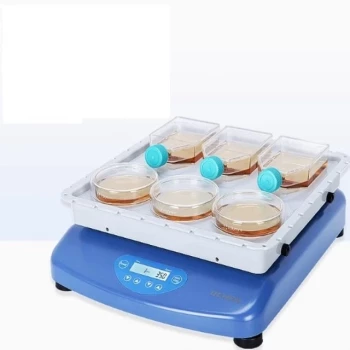
- Laboratory Oscillating Orbital Shaker
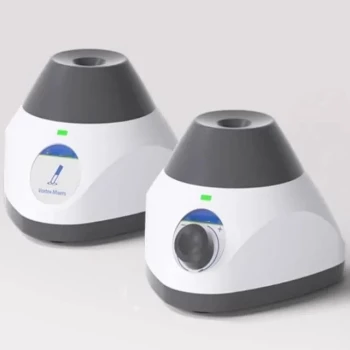
- Laboratory Vortex Mixer Orbital Shaker Multifunctional Rotation Oscillation Mixer
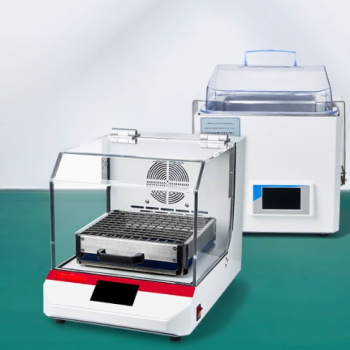
- Shaking Incubators for Diverse Laboratory Applications
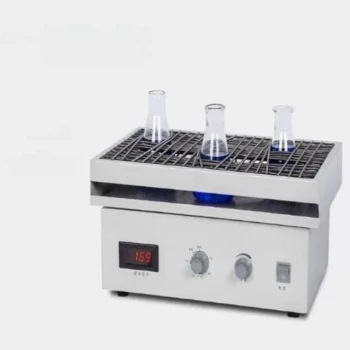
- Laboratory Multifunctional Small Speed-Adjustable Horizontal Mechanical Shaker for Lab
- Laboratory Vibratory Sieve Shaker Machine for Dry and Wet Three-Dimensional Sieving
People Also Ask
- What is the role of a laboratory orbital shaker in copper recovery? Optimize Industrial Waste Liquid Processing
- Why are high-precision shakers required for graphene oxide kinetic studies? Ensure Data Accuracy and Rapid Equilibrium
- What is the role of a laboratory shaker in silane sol preparation? Master Uniform Aramid Fabric Coating
- Why is a laboratory shaker required for continuous 24-hour catalyst treatment? Achieve Deep Uniform Impregnation
- How do static culture and shaking culture affect the morphology of BC? Optimize Lab Shaker Results