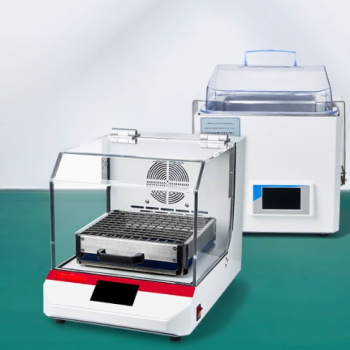
A laboratory shaker is a critical requirement for continuous 24-hour treatment because it provides the constant mechanical agitation necessary to overcome liquid-phase mass transfer resistance. This dynamic motion forces the active metal ions (such as cobalt and manganese) to diffuse deeply into the internal micropores of the porous ceramic carrier, rather than simply coating the exterior surface.
Core Takeaway The 24-hour shaking process is not merely about mixing ingredients; it is a diffusion-driving mechanism. By eliminating resistance at the liquid-solid interface, the shaker ensures deep, uniform loading of active components, which is the defining factor for the catalyst's long-term stability.
The Physics of Impregnation
Overcoming Mass Transfer Resistance
In a static liquid environment, a stagnant boundary layer often forms around solid particles. This layer acts as a barrier, slowing down the movement of ions from the bulk liquid to the solid surface.
The laboratory shaker creates a dynamic environment that disrupts this boundary layer. This agitation effectively minimizes liquid-phase mass transfer resistance, allowing the aqueous mixture of cobalt and manganese acetates to interact directly and efficiently with the carrier surface.
Ensuring Complete Submersion
For uniform impregnation, the solid carrier must remain fully wetted by the precursor solution.
Without agitation, air pockets may remain trapped in the pores, or the carrier might settle unevenly. The continuous motion ensures the porous ceramic carrier is completely submerged throughout the entire 24-hour cycle, guaranteeing that every surface area is available for ion exchange.
Achieving Deep Internal Loading
Penetrating the Micropores
A high-quality catalyst relies on surface area, much of which is located deep within the microscopic pores of the ceramic carrier.
Simple immersion is often insufficient to drive liquid into these tiny spaces. The continuous agitation facilitates the diffusion of metal ions into deep internal micropores. This ensures that the active components are not just deposited on the shell, but are loaded throughout the internal structure of the material.
Uniform Distribution of Active Components
The ultimate goal of the impregnation stage is homogeneity.
By maintaining constant motion for 24 hours, the process prevents localized concentration gradients (hotspots) where too much metal might deposit in one area. The result is a highly uniform distribution of active components throughout the carrier, which is vital for consistent catalytic performance.
The Trade-off: Static vs. Dynamic Treatment
The Risks of Static Impregnation
It may be tempting to reduce energy usage or equipment wear by shortening the shaking time or using static immersion. However, this approach creates significant quality risks.
Without the mechanical drive of the shaker, the metal ions are likely to deposit shallowly near the surface of the carrier ("egg-shell" distribution). While this may look sufficient initially, it fails to utilize the full volume of the support material.
Impact on Stability
The primary trade-off is between process simplicity and product longevity.
The primary reference indicates that the deep loading achieved by the shaker is essential for long-term stability. Skipping or shortening this dynamic treatment results in a catalyst that may deactivate quickly or suffer from poor mechanical strength during operation.
Making the Right Choice for Your Goal
To ensure your catalyst preparation yields a viable product, align your process with the following recommendations:
- If your primary focus is maximum durability: Ensure the shaker runs continuously for the full 24-hour period to guarantee deep micropore penetration and long-term stability.
- If your primary focus is process uniformity: Verify that the agitation speed is sufficient to keep the ceramic carrier fully submerged and moving, preventing uneven settling or distinct concentration gradients.
The shaker is not a passive tool; it is the active driver of the diffusion process that defines your catalyst's lifespan.
Summary Table:
| Feature | Static Impregnation | Dynamic Shaking (24 hrs) |
|---|---|---|
| Mass Transfer | High resistance (stagnant layer) | Low resistance (disrupted boundary) |
| Ion Distribution | Surface-only "Egg-shell" coating | Deep internal micropore loading |
| Submersion | Risks of air pockets/uneven wetting | Complete and continuous wetting |
| Stability | Rapid deactivation likely | Enhanced long-term stability |
| Uniformity | Localized concentration gradients | High homogeneity across carrier |
Elevate Your Catalyst Research with KINTEK Precision
Don't let mass transfer resistance compromise your catalyst's performance. KINTEK specializes in high-performance laboratory equipment designed for rigorous 24-hour cycles. Beyond our precision shakers and shakers, we provide a comprehensive suite of tools for material science, including high-temperature furnaces, crushing systems, and hydraulic presses.
From battery research tools to PTFE consumables and ceramics, KINTEK empowers researchers to achieve the uniform distribution and deep penetration required for stable, high-quality catalysts.
Ready to optimize your impregnation process? Contact our technical experts today to find the perfect equipment solution for your lab's specific needs.
References
- Bingzhi Li, Liang Zhu. Catalytic ozonation-biological coupled processes for the treatment of industrial wastewater containing refractory chlorinated nitroaromatic compounds. DOI: 10.1631/jzus.b0900291
This article is also based on technical information from Kintek Solution Knowledge Base .
Related Products
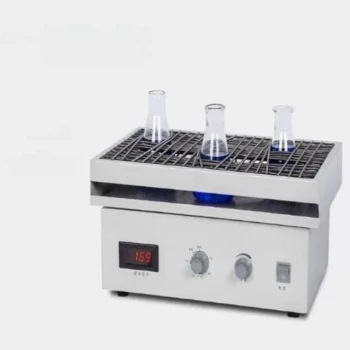
- Laboratory Multifunctional Small Speed-Adjustable Horizontal Mechanical Shaker for Lab
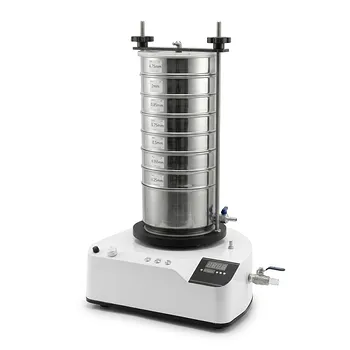
- Laboratory Vibratory Sieve Shaker Machine for Dry and Wet Three-Dimensional Sieving
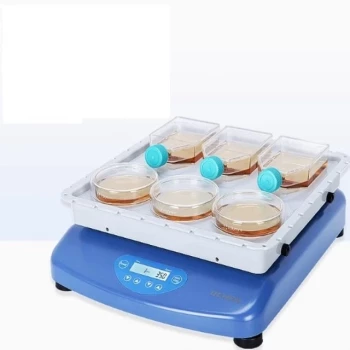
- Laboratory Oscillating Orbital Shaker
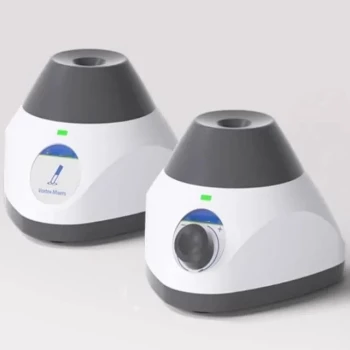
- Laboratory Vortex Mixer Orbital Shaker Multifunctional Rotation Oscillation Mixer
- Shaking Incubators for Diverse Laboratory Applications
People Also Ask
- How do static culture and shaking culture affect the morphology of BC? Optimize Lab Shaker Results
- What is the role of a laboratory shaker in silane sol preparation? Master Uniform Aramid Fabric Coating
- What is the function of a laboratory shaker in evaluating Fe-C@C nanoparticles? Optimize Methylene Blue Adsorption
- How do laboratory shakers or stirrers influence the efficiency of hydrogen production during dark fermentation?
- What is the function of a laboratory shaker during the wet chemical synthesis of Pd/Fe3O4 nanocatalysts?