The cultivation method—static versus shaking—is the single most significant factor determining the macroscopic morphology of bacterial cellulose (BC). Static culture produces a cohesive, membrane-like pellicle at the air-liquid interface, whereas shaking culture utilizes continuous mechanical agitation to generate dispersed, irregular granules or spherical pellets.
The choice of cultivation method dictates the material's final utility: static culture yields uniform sheets ideal for structural applications, while shaking culture produces discrete particles optimized for further processing and dispersion.
Static Culture: The Formation of Uniform Membranes
Growth at the Air-Liquid Interface
In a static environment, the culture medium remains undisturbed. Bacteria congregate at the air-liquid interface, where oxygen availability is highest.
The 3D Interconnected Network
Because the bacteria are not disrupted, they synthesize cellulose fibrils that accumulate in layers. This results in a continuous, three-dimensional interconnected network structure.
Resulting Morphology
The final product is a membrane-like pellicle. This sheet is characterized by excellent texture uniformity and structural integrity, resembling a cohesive fabric or skin.
Shaking Culture: The Creation of Dispersed Pellets
The Impact of Mechanical Agitation
When a laboratory shaker is used, the culture medium is subjected to continuous mechanical shear. This physical force prevents the bacteria from forming a continuous surface layer.
Changes in Oxygen Mass Transfer
Shaking alters how oxygen is distributed throughout the liquid. Unlike static culture, where oxygen is concentrated at the surface, shaking increases dissolved oxygen within the bulk liquid, changing the bacterial growth kinetics.
Resulting Morphology
Instead of a sheet, the cellulose forms into irregular granular or spherical pellets. These discrete units are suspended throughout the medium rather than floating as a single mass.
Understanding the Trade-offs: Structure vs. Processability
Suitability for Direct Material Use
The cohesive nature of statically grown BC is its primary advantage for applications requiring surface continuity. Its uniform structure makes it physically robust without further processing.
Convenience for Downstream Processing
While shaking culture produces a less structured form, the resulting pellets are significantly easier to manipulate for secondary uses. They can be dispersed or broken down more readily than a tough, interconnected pellicle.
Selecting the Right Method for Your Application
To choose the correct cultivation method, you must look at the final form required for your specific industry application.
- If your primary focus is leather substitutes or protective barriers: Utilize static culture to leverage the uniform, membrane-like structure that mimics natural skin or textiles.
- If your primary focus is fiber spinning or composite fillers: Choose shaking culture, as the spherical pellets are more convenient to process into slurries or spin into new fiber strands.
By aligning the cultivation mechanics with your end goal, you ensure the bacterial cellulose possesses the exact morphological traits required for success.
Summary Table:
| Feature | Static Culture | Shaking Culture (Lab Shaker) |
|---|---|---|
| Oxygen Location | Concentrated at air-liquid interface | Distributed throughout bulk liquid |
| Structural Formation | Continuous 3D interconnected network | Dispersed, irregular granules/pellets |
| Final Morphology | Cohesive, membrane-like pellicle | Spherical or granular particles |
| Best Application | Leather substitutes, protective barriers | Fiber spinning, composite fillers |
| Processability | High structural integrity | Easier downstream dispersion |
Elevate Your Research with KINTEK’s Precision Lab Shakers
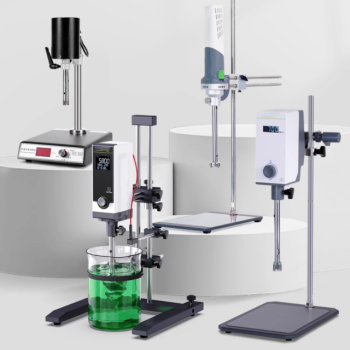
Whether you aim to produce uniform bacterial cellulose pellicles or optimized spherical pellets, the right equipment is key to consistent morphology. KINTEK specializes in high-performance laboratory equipment, including advanced shakers, homogenizers, and cooling solutions designed to provide the precise mechanical agitation and temperature control required for high-yield BC preparation.
From high-temperature furnaces for material processing to crushing and milling systems for pellet refinement, we offer the tools needed to scale your innovation from the lab to production.
Ready to achieve superior material properties? Contact KINTEK today for a customized equipment solution!
References
- J.C. Dias, Carla Silva. Biopolymers Derived from Forest Biomass for the Sustainable Textile Industry. DOI: 10.3390/f16010163
This article is also based on technical information from Kintek Solution Knowledge Base .
Related Products
- Laboratory Multifunctional Small Speed-Adjustable Horizontal Mechanical Shaker for Lab
- Laboratory Vibratory Sieve Shaker Machine for Dry and Wet Three-Dimensional Sieving
- Laboratory Oscillating Orbital Shaker
- Laboratory Vortex Mixer Orbital Shaker Multifunctional Rotation Oscillation Mixer
- Shaking Incubators for Diverse Laboratory Applications
People Also Ask
- What is the role of a laboratory shaker in silane sol preparation? Master Uniform Aramid Fabric Coating
- Why is a laboratory shaker required for continuous 24-hour catalyst treatment? Achieve Deep Uniform Impregnation
- What is the function of a laboratory shaker in evaluating Fe-C@C nanoparticles? Optimize Methylene Blue Adsorption
- How do laboratory shakers or stirrers influence the efficiency of hydrogen production during dark fermentation?
- What is the function of a laboratory shaker during the wet chemical synthesis of Pd/Fe3O4 nanocatalysts?