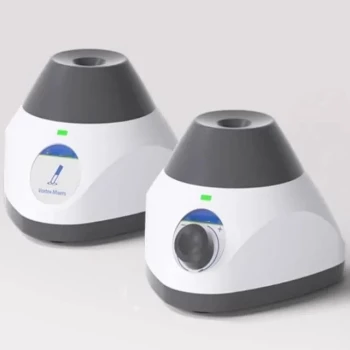
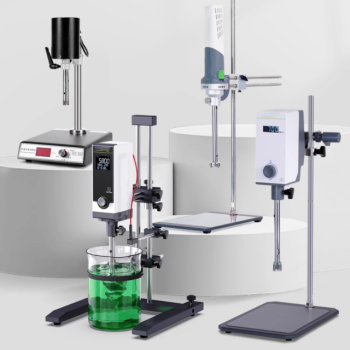
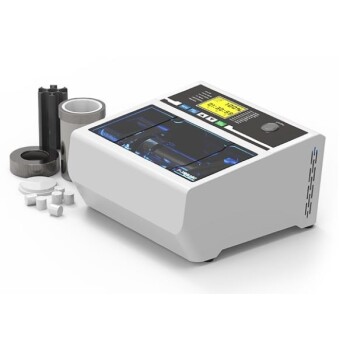
High-precision laboratory shakers or stirrers are strictly required in batch adsorption kinetic studies to eliminate physical variables that distort data. These devices provide the constant, uniform shear force necessary to guarantee thorough contact between graphene oxide adsorbents and contaminated liquids, ensuring that the measured results reflect the material's true chemical performance rather than mechanical inefficiencies.
Core Takeaway To validate a material's potential, you must isolate chemical kinetics from physical diffusion limitations. Precision mixing overcomes mass transfer resistance at the solid-liquid interface, allowing the system to reach thermodynamic equilibrium rapidly and yielding accurate data on adsorption rates and capacity.
The Role of Mass Transfer in Kinetic Studies
Overcoming Interfacial Resistance
Adsorption occurs at the boundary where the solid material meets the liquid sample. In static or poorly mixed systems, a "boundary layer" of liquid can form around the adsorbent.
This layer acts as a barrier. It prevents contaminants like lead or chromium from physically reaching the graphene oxide surface.
High-precision shakers apply a constant shear force to this mixture. This force disrupts the boundary layer and minimizes mass transfer resistance. This ensures the limiting factor in your study is the reaction speed, not the mixing speed.
Achieving Thermodynamic Equilibrium
Kinetic studies measure how adsorption changes over time. For valid data, the system must move toward a stable state—thermodynamic equilibrium—as efficiently as possible.
Inconsistent stirring creates fluctuations in concentration. This prevents the system from settling into equilibrium predictably.
By maintaining uniform agitation, high-precision equipment ensures the process reaches equilibrium rapidly. This allows for precise measurement of the time required for the adsorbent to become saturated.
Validating Data for Real-World Application
Determining Accurate Rate Constants
The calculation of adsorption rate constants relies on the assumption of uniform concentration throughout the liquid.
If mixing is uneven, your mathematical models will fail. The resulting rate constants will be erratic and irreproducible.
Precision equipment standardizes the mixing environment. This guarantees that the calculated rates accurately define the interaction between the graphene oxide hybrid and the toxic substances.
Assessing Industrial Viability
The ultimate goal of studying graphene oxide hybrids is often industrial wastewater treatment.
To assess if a material is practical for industry, you must know its maximum adsorption capacity. This is specifically relevant for heavy metals like uranium, chromium, and lead.
Reliable lab-scale data acts as the baseline for this assessment. Without the controlled environment provided by high-precision shakers, you cannot confidently predict how the material will perform in large-scale operations.
Understanding the Trade-offs
Idealized Conditions vs. Operational Reality
While precision shakers are necessary for accurate kinetics, they create an idealized environment.
In a laboratory shaker, contact is perfect and shear force is constant. Real-world industrial tanks may not achieve this level of uniformity.
You must recognize that the "maximum adsorption capacity" determined in the lab represents the material's theoretical ceiling. Actual performance in a treatment plant may be lower due to less efficient mixing mechanics.
The Risk of False Negatives
Using low-precision equipment introduces a significant risk of underestimating a material.
If a graphene oxide hybrid appears effective only slowly, it might be a mixing issue, not a material issue.
Without high-precision agitation, you risk discarding a highly effective adsorbent simply because the mechanical setup failed to facilitate the necessary contact.
Making the Right Choice for Your Goal
To ensure your kinetic studies provide actionable data, align your experimental setup with your specific objectives:
- If your primary focus is fundamental chemical analysis: Ensure your equipment can generate high shear force to completely eliminate film diffusion resistance, isolating the intrinsic reaction rate.
- If your primary focus is industrial application: Use the maximum capacity derived from these high-precision studies as the absolute benchmark for designing large-scale treatment protocols.
Precision in the laboratory is the only way to guarantee certainty in the field.
Summary Table:
| Factor | Low-Precision Mixing | High-Precision Shaking (KINTEK) | Impact on Kinetic Data |
|---|---|---|---|
| Boundary Layer | Thick, stagnant layer forms | Disrupted by constant shear force | Minimizes mass transfer resistance |
| Equilibrium | Slow and unpredictable | Rapid and stable | Accurate measurement of saturation time |
| Rate Constants | Erratic and irreproducible | Standardized and uniform | Validates mathematical models |
| Capacity | Underestimated (False Negatives) | Represents true chemical potential | Critical for industrial scaling benchmarks |
Elevate Your Adsorption Research with KINTEK Precision
Accuracy in the lab is the foundation of success in the field. KINTEK specializes in high-performance laboratory equipment designed to eliminate mechanical variables and isolate true material performance. Whether you are developing graphene oxide hybrids for heavy metal removal or optimizing wastewater treatment, our range of precision shakers, shakers, and homogenizers ensures your kinetic data is reproducible and industry-ready.
Beyond mixing solutions, KINTEK offers a comprehensive portfolio including:
- High-Temperature Furnaces & Crushing Systems for advanced material synthesis.
- High-Pressure Reactors & Autoclaves for complex chemical interactions.
- Hydraulic Presses & Battery Research Tools for cutting-edge energy storage studies.
Don't let mechanical inefficiencies compromise your scientific breakthroughs. Contact KINTEK today to discover how our high-precision tools can bring certainty to your laboratory results!
References
- Edith Flora Joel, Galina Lujanienė. Progress in Graphene Oxide Hybrids for Environmental Applications. DOI: 10.3390/environments9120153
This article is also based on technical information from Kintek Solution Knowledge Base .
Related Products
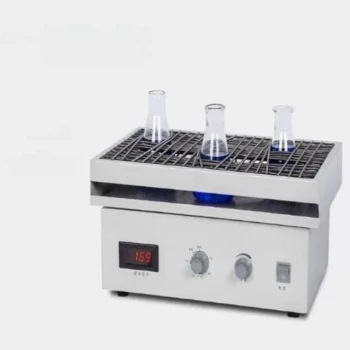
- Laboratory Multifunctional Small Speed-Adjustable Horizontal Mechanical Shaker for Lab
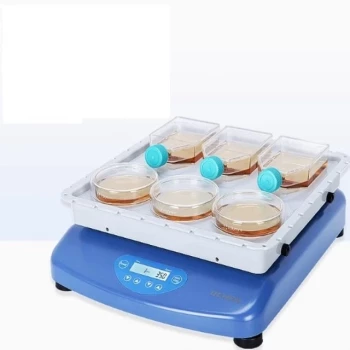
- Laboratory Oscillating Orbital Shaker
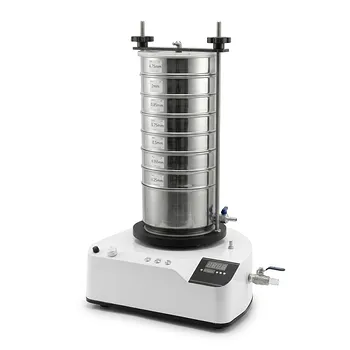
- Laboratory Vibratory Sieve Shaker Machine for Dry and Wet Three-Dimensional Sieving
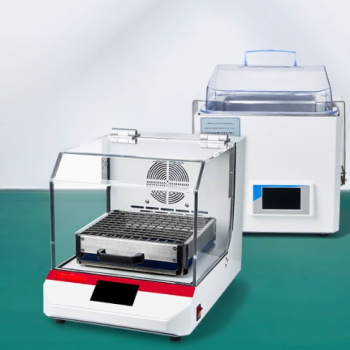
- Shaking Incubators for Diverse Laboratory Applications
- Laboratory Vibratory Sieve Shaker Machine Slap Vibrating Sieve
People Also Ask
- How do static culture and shaking culture affect the morphology of BC? Optimize Lab Shaker Results
- What is the role of a laboratory shaker in silane sol preparation? Master Uniform Aramid Fabric Coating
- Why is a laboratory shaker required for continuous 24-hour catalyst treatment? Achieve Deep Uniform Impregnation
- What is the function of a laboratory shaker in evaluating Fe-C@C nanoparticles? Optimize Methylene Blue Adsorption
- How do laboratory shakers or stirrers influence the efficiency of hydrogen production during dark fermentation?