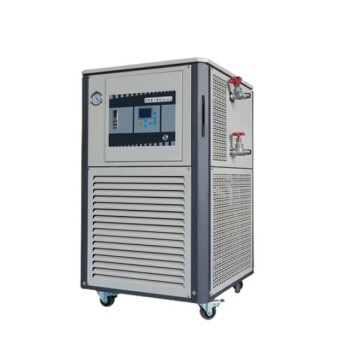
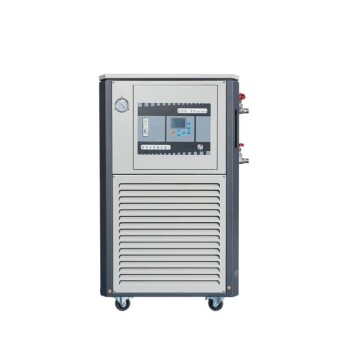
A constant temperature rotary shaker acts as the critical control mechanism for ensuring the reliability of degradation experiments. By maintaining a precise thermal environment (such as 298 K) and a fixed rotational speed (such as 150 r/min), it creates the optimal conditions for iron nanoparticles to interact with malachite green dye. This equipment is the primary driver for maximizing particle-to-dye collisions and ensuring the reaction is not hindered by poor mixing or temperature fluctuations.
The device is not merely a mixer; it is an instrument of standardization. By eliminating diffusion limitations and thermal variability, it ensures that the measured degradation efficiency reflects the true chemical potential of the nanoparticles rather than inconsistent experimental conditions.
Optimizing the Physical Reaction Environment
Maximizing Molecular Contact
The primary challenge in heterogeneous catalysis—where solid nanoparticles react with liquid dye—is contact.
The rotary shaker ensures a consistent rotational speed (e.g., 150 r/min). This keeps the iron nanoparticles in a state of uniform suspension rather than letting them settle at the bottom of the flask.
Eliminating Diffusion Limitations
In a static or poorly mixed solution, a "boundary layer" of treated liquid can form around the nanoparticle, slowing down further reactions.
The constant motion of the shaker refreshes the liquid around the particles. This effectively eliminates diffusion limitations, ensuring that fresh malachite green molecules are constantly brought into contact with the reactive iron surface.
The Role in Kinetic Modeling
Stabilizing Thermal Energy
Chemical reaction rates are highly sensitive to temperature changes.
By providing a stable thermal environment (e.g., 298 K), the shaker ensures that any change in degradation rate is due to the chemical process, not environmental cooling or heating. This isolation of variables is crucial for validity.
Deriving Accurate Parameters
To determine how well a material works, scientists use kinetic models (mathematical descriptions of the reaction speed).
Maintaining precise conditions is essential for calculating accurate kinetic model parameters. Without this stability, the data would be too "noisy" to fit a model, making it impossible to predict how the treatment would perform at a larger scale.
Understanding the Constraints
The Necessity of Controlled Variables
While the shaker optimizes the reaction, it also reveals the strict requirements for accurate data.
If the rotational speed fluctuates, the collision frequency changes, rendering the data useless for comparison. The equipment must be capable of maintaining its set parameters without deviation for the duration of the experiment.
Distinguishing Efficiency from Mixing
It is important to note that the shaker optimizes the conditions for the reaction, not the chemistry itself.
If the degradation is poor despite the shaker removing diffusion limitations, it confirms the issue lies with the iron nanoparticles' chemical properties, not the mixing process. This distinction is vital for troubleshooting material design.
Making the Right Choice for Your Goal
To ensure your evaluation of iron nanoparticles is scientifically sound, consider your specific experimental objectives:
- If your primary focus is Kinetic Modeling: Ensure the shaker maintains thermal stability within a tight margin (e.g., ±1 K) to derive precise reaction rate constants.
- If your primary focus is Wastewater Treatment Capacity: Prioritize rotational consistency to ensure the suspension mimics the maximum contact achievable in a treatment facility.
By controlling the kinetic environment, you transform a simple mixture into a measurable, reproducible scientific system.
Summary Table:
| Feature | Role in Degradation Evaluation | Benefit to Experiment |
|---|---|---|
| Precise Temperature (298 K) | Stabilizes thermal energy for chemical processes | Ensures accurate kinetic model parameters |
| Rotational Speed (150 r/min) | Maintains uniform nanoparticle suspension | Maximizes molecular contact and collision frequency |
| Constant Motion | Eliminates boundary layer/diffusion limitations | Ensures reaction reflects true chemical potential |
| Environmental Control | Isolates variables from external fluctuations | Guarantees reproducibility and data validity |
Elevate Your Research Precision with KINTEK
Consistency is the backbone of reliable scientific discovery. At KINTEK, we specialize in high-performance laboratory equipment designed to eliminate experimental variables and deliver reproducible results.
Whether you are conducting kinetic modeling with our advanced shakers and homogenizers, performing complex thermal synthesis in our high-temperature furnaces (CVD, Vacuum, Tube), or preparing samples with our precision crushing, milling, and hydraulic presses, KINTEK provides the tools you need for success.
From battery research consumables to high-pressure reactors and autoclaves, we empower laboratories to push the boundaries of material science and wastewater treatment.
Ready to optimize your lab's performance? Contact KINTEK today to find the perfect equipment solutions for your specific research goals!
References
- K. A. P. Gaminda, R. Senthilnithy. Degradation of Malachite Green using Green Synthesized Iron Nanoparticles by <em>Coffea arabica</em> Leaf Extracts and its Antibacterial Activity. DOI: 10.4038/kjms.v5i2.76
This article is also based on technical information from Kintek Solution Knowledge Base .
Related Products
- Laboratory Small Constant Temperature Heated Magnetic Stirrer Heater and Stirrer
- High Temperature Constant Temperature Heating Circulator Water Bath Chiller Circulator for Reaction Bath
- 50L Chiller Water Bath Cooling Circulator Low Temperature Constant Temperature Reaction Bath
- 40L Chiller Water Bath Cooling Circulator Low Temperature Constant Temperature Reaction Bath
- Laboratory Vortex Mixer Orbital Shaker Multifunctional Rotation Oscillation Mixer
People Also Ask
- What role does a magnetic stirrer with heating play in ZnO nanoparticle synthesis? Precision Control for Quality Results
- What role does a constant temperature heating magnetic stirrer play in MFC-HAp synthesis? Achieve Material Homogeneity
- What is the function of a laboratory magnetic stirrer in Ni–Cr–P electrodeposition? Optimize Ion Transport & Coating
- Why is a laboratory magnetic stirrer required for benzoic acid esters? Boost Reaction Speed & Yield with High RPM
- What role does a laboratory magnetic stirrer play in TiO2 and TiO2-Ag sol preparation? Master Chemical Kinetics