A laboratory orbital shaker acts as the critical kinetic driver in the silanization process, moving beyond simple mixing to ensure precise molecular deposition. By providing continuous, low-frequency oscillation, it guarantees that aluminum alloy specimens maintain complete and constant contact with the silane solution. This dynamic movement prevents localized stagnation, enabling the uniform distribution of chemicals necessary for high-quality surface modification.
The shaker transforms a static chemical bath into a dynamic kinetic environment, facilitating the organized arrangement of silanol molecules required to build structurally stable, uniform self-assembled monolayers.
The Mechanics of Silanization
Maintaining Full Contact
For self-assembly to occur effectively, the substrate—in this case, an aluminum alloy—must never be starved of the reactive solution.
The orbital shaker ensures the specimen remains fully immersed and bathed in fresh solution. This continuous fluid motion eliminates "dead zones" where the chemical concentration might otherwise deplete.
Creating a Kinetic Environment
Static dipping often leads to uneven coatings due to the slow diffusion of molecules.
The shaker introduces a constant kinetic energy to the system. This energy drives the movement of silanol molecules, transporting them efficiently from the bulk solution to the metal surface.
Facilitating Molecular Alignment
Organizing the Liquid-Solid Interface
The quality of a silane coating depends on how well the molecules line up on the surface.
The low-frequency oscillation provides the necessary agitation to help silanol molecules arrange themselves at the liquid-solid interface. This controlled motion encourages an orderly packing of molecules rather than a chaotic accumulation.
Building Structural Stability
The ultimate goal of this process is durability.
By ensuring uniform arrangement and contact, the shaker facilitates the formation of structurally stable self-assembled monolayers (SAMs) or multilayer networks. A highly organized layer provides superior adhesion and protection compared to a disordered one.
Operational Considerations
The Importance of Frequency Control
While motion is essential, the intensity of that motion is a critical variable.
The process relies on low-frequency oscillation. If the shaking is too vigorous, it may disrupt the delicate self-assembly process or introduce turbulence that hampers uniform deposition. Conversely, insufficient motion will result in a lack of uniformity and weak bonding at the interface.
Optimizing Your Assembly Process
To maximize the effectiveness of your silane coupling agents, tailor your approach to your specific outcome:
- If your primary focus is Coating Uniformity: Ensure the shaker acts continuously to prevent concentration gradients at the liquid-solid interface.
- If your primary focus is Layer Durability: Utilize low-frequency settings to allow time for the silanol molecules to form a dense, structurally stable network without disruption.
Controlled kinetic energy is the difference between a loose chemical deposit and a robust, engineered surface.
Summary Table:
| Feature | Role in Silanization | Impact on Self-Assembly |
|---|---|---|
| Kinetic Energy | Drives silanol molecular transport | Prevents localized stagnation and concentration gradients |
| Low-Frequency Motion | Organizes the liquid-solid interface | Facilitates orderly packing of structurally stable monolayers |
| Continuous Oscillation | Eliminates "dead zones" | Ensures constant contact between specimen and reactive solution |
| Process Control | Regulates agitation intensity | Minimizes turbulence to protect delicate molecular bonding |
Elevate Your Surface Engineering with KINTEK Precision
Achieving the perfect self-assembled monolayer requires more than just chemistry—it requires precise kinetic control. KINTEK specializes in high-performance laboratory equipment designed to meet the rigorous demands of material science and chemical research. From our high-stability orbital shakers and homogenizers to advanced crushing, milling, and furnace systems, we provide the tools necessary to ensure uniform, durable, and repeatable results for your aluminum alloy treatments and beyond.
Whether you are developing next-generation coatings or conducting complex battery research, KINTEK offers a comprehensive portfolio including:
- Laboratory Shakers & Homogenizers for precise molecular deposition.
- High-Temperature Furnaces (Muffle, Vacuum, CVD) for advanced thermal processing.
- Hydraulic Presses & Milling Systems for specimen preparation.
- Essential Consumables including PTFE products and specialized ceramics.
Ready to optimize your lab's performance? Contact our technical experts today to find the ideal equipment solution for your specific application.
References
- Cheng‐fu Chen. Polystyrene Coating on APTES-Primed Hydroxylated AA2024-T3: Characterization and Failure Mechanism of Corrosion. DOI: 10.3390/solids4030016
This article is also based on technical information from Kintek Solution Knowledge Base .
Related Products
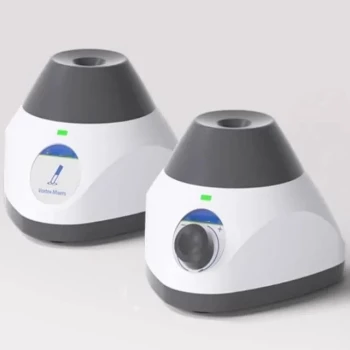
- Laboratory Vortex Mixer Orbital Shaker Multifunctional Rotation Oscillation Mixer
- Laboratory Oscillating Orbital Shaker
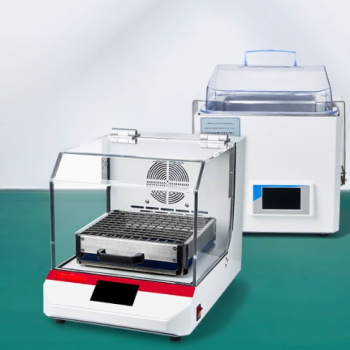
- Shaking Incubators for Diverse Laboratory Applications
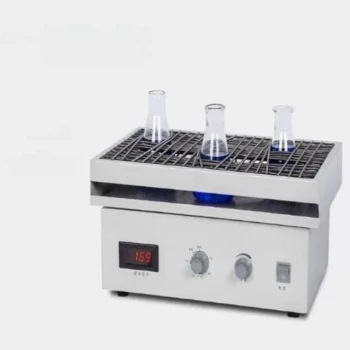
- Laboratory Multifunctional Small Speed-Adjustable Horizontal Mechanical Shaker for Lab
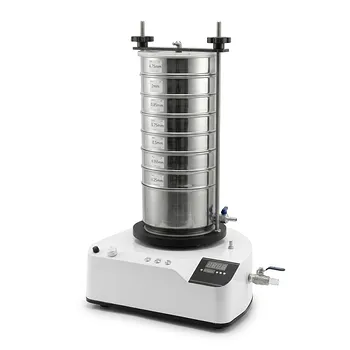
- Laboratory Vibratory Sieve Shaker Machine for Dry and Wet Three-Dimensional Sieving
People Also Ask
- What is the role of a laboratory orbital shaker in copper recovery? Optimize Industrial Waste Liquid Processing
- What is the role of a laboratory orbital shaker in activated carbon synthesis? Maximize Pore Depth & Surface Area
- What is a laboratory mixer used for? Choose the Right Tool for Liquids or Solids
- What is a laboratory mixer? A Guide to Achieving Perfect Sample Homogeneity
- What are laboratory mixers used for? Achieve Perfect Sample Homogeneity and Reliable Results